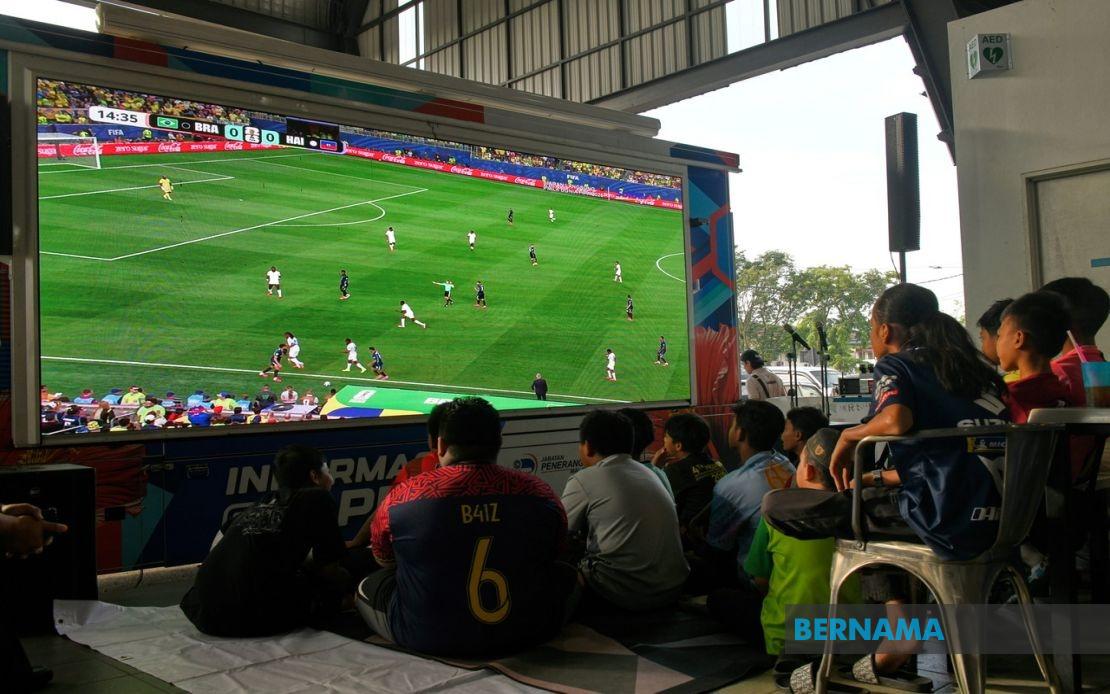
The Malaysian government's decision to provide free broadcasts of the 2026 FIFA World Cup matches represents a timely intervention to ease the financial pressures facing businesses and households across the nation. Communications Minister Datuk Fahmi Fadzil underscored the positive reception of this initiative, noting that the free transmission through Radio Televisyen Malaysia (RTM) and Unifi TV has generated meaningful savings for restaurant operators and the general public. The announcement reflects a growing recognition within government circles that major sporting events, while immensely popular, can impose significant costs on small and medium-sized enterprises that traditionally rely on paid broadcasting services to attract customers during matches.
The backdrop to this initiative reveals the economic challenges confronting Malaysia's food and beverage sector. Restaurant owners have long faced the burden of purchasing expensive broadcasting rights to air major sporting events, particularly the FIFA World Cup, which attracts massive viewership and consumer spending. By circumventing the need for costly subscriptions, the government's move directly addresses a longstanding complaint within the hospitality industry. The Malaysian Muslim Restaurant Owners Association praised the arrangement, highlighting that this arrangement has created substantial operational savings at a time when businesses are grappling with multiple cost pressures. One trader speaking with Fahmi disclosed that this marks the first time in over twenty years that he has been able to access World Cup coverage without incurring charges—a testament to the rarity and significance of such a policy decision.
From a consumer perspective, the implications are equally substantial. The availability of matches through RTM, RTMKlik, and Unifi TV means that Malaysian households can enjoy world-class sporting entertainment without additional subscription expenses. This democratization of access aligns with broader government objectives to ensure that major cultural and sporting events remain accessible across socioeconomic strata. For a nation with passionate football fans spanning urban centers to rural communities, removing financial barriers to viewership strengthens the shared experience of following Malaysia's interest in international football tournaments.
During his visit to the Seberang Jaya Public Market food court in Butterworth, Fahmi engaged directly with traders and the public, observing the first half of a Brazil versus Haiti match whilst gathering feedback on business conditions. This hands-on approach yielded insights into the multifaceted challenges confronting local entrepreneurs. Beyond broadcasting costs, traders articulated concerns regarding broader economic pressures, particularly the ripple effects of geopolitical tensions in West Asia. Regional conflicts have contributed to supply chain disruptions and elevated commodity prices, creating a compounding effect on operational expenses for food business proprietors who face rising ingredient costs, transportation charges, and utility expenses simultaneously.
The minister emphasized that this initiative carries particular significance for the food and beverage sector, which relies heavily on foot traffic during major sporting events. When matches are freely accessible, establishments benefit from increased patronage as consumers are more inclined to congregate in venues offering a communal viewing experience alongside dining. This symbiotic relationship between entertainment availability and consumer spending patterns suggests that the free broadcast strategy may generate indirect economic benefits that extend beyond the immediate cost savings realized by individual proprietors.
Fahmi's communication of trader concerns to Prime Minister Datuk Seri Anwar Ibrahim and Penang Chief Minister Chow Kon Yeow indicates that ground-level feedback collected during such visits informs higher-level policy considerations. The minister stressed the importance of governmental representatives maintaining direct contact with business communities and citizens, a practice he advocates should become more widespread among cabinet members, parliamentarians, and state legislators. Such engagement bridges the gap between policy formulation in capital cities and the lived experiences of those implementing and affected by governmental decisions.
The geopolitical dimension underlying current economic pressures deserves particular attention for Malaysian policymakers and businesses. Regional instability in West Asia has created global commodity price volatility, with Malaysian importers of goods sourced from affected regions facing steeper procurement costs. Food businesses purchasing ingredients, packaging materials, or fuel face compressed profit margins even as consumer spending power remains constrained by inflation. Against this backdrop, government initiatives that reduce operational costs represent meaningful, if partial, relief from broader macroeconomic headwinds beyond the control of individual entrepreneurs.
The broadcasting arrangement also reflects an acknowledgment that media infrastructure represents a public resource that government can leverage to support social and economic objectives. By utilizing the existing transmission capabilities of RTM, a state broadcaster, and negotiating broadcasting rights for Unifi TV, the government avoided requiring restaurants and consumers to shoulder commercial licensing fees. This approach demonstrates how strategic deployment of public assets and governmental negotiating power can yield distributed benefits across multiple constituencies—businesses achieve cost reductions, consumers enjoy expanded access, and the government strengthens its responsiveness to constituent economic concerns.
Looking ahead, the success of this World Cup initiative may establish a precedent for how Malaysia handles other major international sporting events. The 2026 tournament represents the first World Cup expansion to include 48 teams and a broader geographic distribution of matches, meaning extended viewing opportunities and prolonged commercial seasons for businesses. If the free-broadcast model generates the economic stimulus anticipated—through increased customer visits to food establishments and broader consumer engagement—it may provide empirical justification for similar arrangements during future tournaments or major sporting competitions.
The broader implication for Southeast Asian media policy and sports accessibility is noteworthy. As digital platforms increasingly dominate content distribution and proprietary broadcasters seek expanded revenues from major events, the Malaysian approach illustrates how governments can act as countervailing forces ensuring that cultural touchstones remain accessible to populations across income levels. In a region where football commands passionate engagement and where economic disparities shape access to entertainment and social experiences, the commitment to free World Cup broadcasting carries symbolic and practical importance extending well beyond the immediate 2026 tournament.

