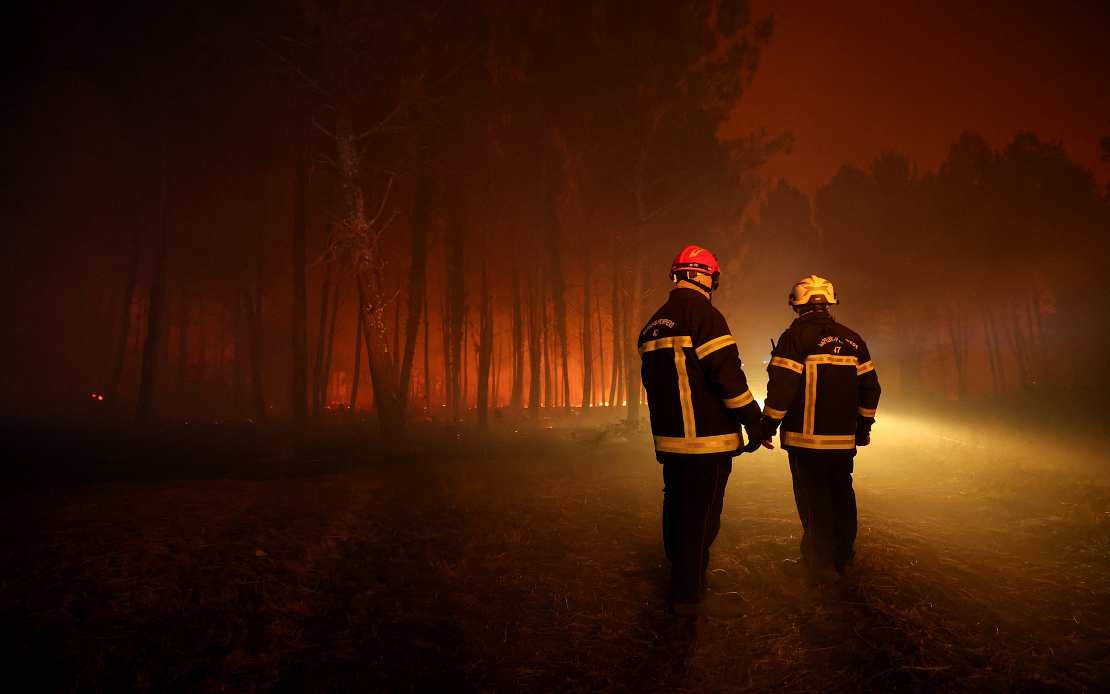
A 15-year-old boy has been formally charged in France following a deadly fire in Merignac, a town near Bordeaux airport, that claimed the lives of two firefighters last month. The teenager appeared before a judge on Thursday and was subsequently placed in a closed educational facility as authorities pursue charges related to the July incident. His case marks another tragic reminder of how seemingly minor actions can cascade into devastating consequences, particularly when emergency responders are placed in harm's way.
The circumstances surrounding the fire reveal a mundane scenario that spiralled into tragedy. According to reporting from French daily Sud Ouest, the teenager and his 22-year-old brother had stopped in the area while smoking cigarettes. While the older brother disposed of his cigarette responsibly in the parking lot, the 15-year-old allegedly discarded his on nearby grass, inadvertently igniting a fire that would rapidly spread beyond initial containment. The distinction between the brothers' actions proved consequential, with investigators determining that the teenager's carelessness directly sparked the conflagration.
Both siblings were initially detained as police conducted their investigation into the fire's origins and circumstances. The older brother, who was arrested on Wednesday, was subsequently released after the teenager took full responsibility for starting the blaze. His exoneration underscores how thorough police work can distinguish between involvement and culpability when multiple parties are present at an incident. The younger sibling's willingness to accept accountability may have expedited the investigation's conclusion, though it does not diminish the gravity of the consequences that followed.
The fire that erupted from the discarded cigarette rapidly engulfed a building in the Merignac area, creating an inferno that overwhelmed the structural integrity of the facility. Two firefighters lost their lives on July 21 while attempting to contain and extinguish the blaze. Their deaths occurred under particularly harrowing circumstances, as their emergency vehicle became trapped by advancing flames, leaving them unable to escape the intensifying heat and smoke. The loss of these two individuals represents an incalculable tragedy for their families, the local fire service, and the broader community they served with their courage and dedication.
The Bordeaux prosecutor's office initiated a comprehensive investigation immediately following the incident, examining both the immediate cause of the fire and the broader circumstances that contributed to the catastrophic outcome. French legal authorities have focused their inquiry on establishing a clear chain of causation between the teenager's actions and the deaths of the firefighters. Such investigations are typically meticulous, as prosecutors must demonstrate not only negligence but also the degree to which the defendant's conduct directly resulted in loss of life.
This incident carries significant implications for discussions surrounding youth culpability and responsibility in France and across Europe. At 15 years old, the teenager occupies a legal grey zone between childhood and adulthood, prompting questions about appropriate accountability mechanisms and rehabilitation pathways. The French judicial system's decision to place him in an educational facility rather than a traditional prison reflects an ongoing European emphasis on reform and education for juvenile offenders, even in cases involving serious consequences. Such approaches aim to address underlying behavioural issues while acknowledging the defendant's developing maturity and capacity for change.
The case also underscores the grave risks that firefighters face daily in their professional duties. Emergency responders place themselves in extraordinary danger to protect communities, yet incidents like this reveal how swiftly circumstances can become life-threatening. The two firefighters who died were caught in a situation where escape routes were blocked by rapidly advancing flames, a scenario that highlights the unpredictability and intensity of structural fires. Their sacrifice serves as a sobering reminder of the human cost embedded within emergency services across all nations.
For Malaysian readers and observers across Southeast Asia, this incident provides a sobering perspective on how individual actions, however momentary, can trigger cascading consequences affecting multiple lives. Despite significant differences in legal frameworks and cultural contexts between France and Malaysia, the fundamental principle remains universal: carelessness with fire in public spaces endangers not only bystanders but also the dedicated professionals who rush toward danger to protect others. The incident demonstrates why public education campaigns emphasising fire safety and proper cigarette disposal remain essential across all developed nations.
The charged teenager now faces the French legal system's assessment of his culpability and the appropriate response to his actions. The outcome of this case will likely influence how French authorities approach similar incidents involving minors and public safety violations. Whether the educational approach ultimately succeeds in rehabilitating the teenager while acknowledging the magnitude of harm caused remains an open question, one that will unfold through the country's juvenile justice proceedings in the coming months.

