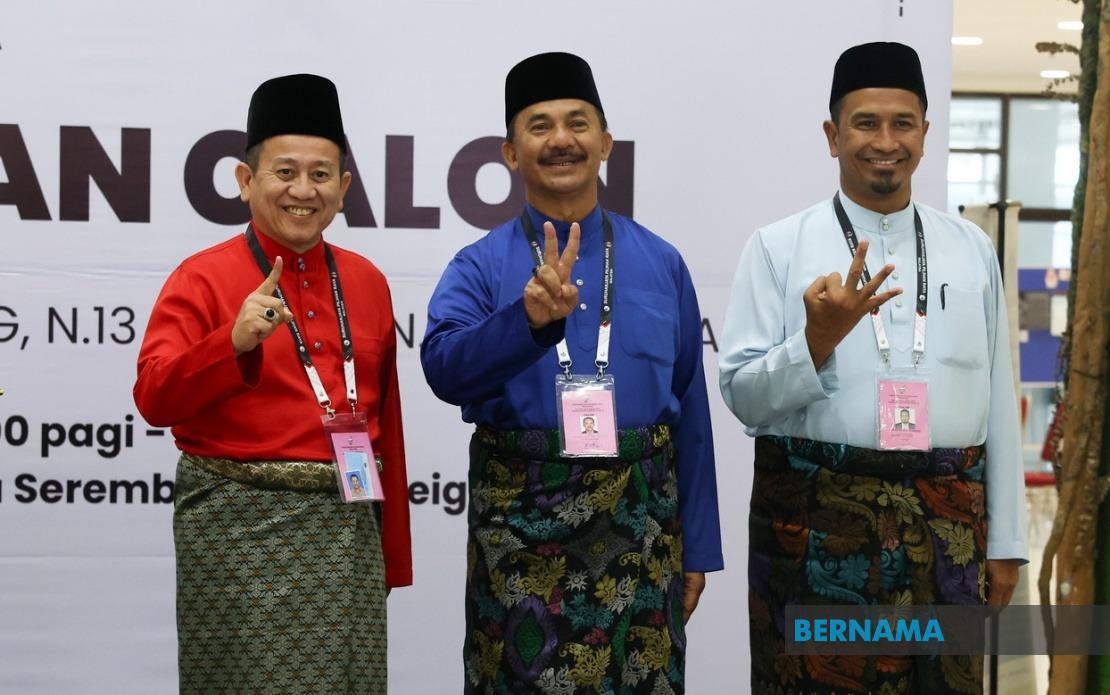
A generational reshuffling is underway in Negeri Sembilan's electoral landscape as major political coalitions prepare for the 16th State Legislative Assembly election, strategically mixing seasoned veterans with untested newcomers across the 36 contested seats. This calculated approach reflects a broader recalibration within Malaysia's political establishment, where parties seek to balance institutional memory with the appeal of fresh perspectives to voters increasingly fatigued by familiar faces and long-standing controversies. The composition of candidate lists now serves as a barometer of each coalition's confidence and electoral strategy heading into polling day on August 1.
Pakatan Harapan's decision to contest all 36 seats demonstrates its determination to govern the state outright, but its fielding of 24 new candidates against 12 incumbents signals a recognition that wholesale reinvention may be necessary to capture voter enthusiasm. Among the retained experienced figures is Datuk Seri Aminuddin Harun, the PH chairman for Negeri Sembilan, who has notably abandoned his previous Sekamat stronghold to contest Linggi instead—a strategic repositioning that raises questions about either internal party dynamics or shifting electoral calculations regarding his safest pathway to assembly. This move underscores how even established leaders navigate evolving political terrain with considerable caution.
The continued prominence of federal-level figures such as DAP Secretary-General and Transport Minister Anthony Loke defending the Chennah seat exemplifies how national political architecture intersects with state-level contests in Malaysia. Loke's presence on the Negeri Sembilan ballot provides PH with both symbolic weight and direct linkage to federal governance, yet simultaneously exposes the coalition to criticism that it relies excessively on national personalities rather than cultivating fresh state-based leadership. The tension between deploying proven national names and nurturing local talent reflects an ongoing strategic dilemma for coalition partners seeking electoral victory while building sustainable long-term party structures.
Barisan Nasional's candidacy profile—comprising 13 newcomers and 12 existing representatives across 25 contested seats—reveals a coalition exercising more measured restraint than its principal rival. The decision to field fewer candidates than available seats represents a calculated withdrawal from some constituencies, potentially ceding ground while concentrating resources on defendable positions. Mohamad Hasan, UMNO Deputy President and Foreign Minister, defends his Rantau seat, securing a linchpin of federal-level UMNO representation in the state, while other notable figures like Jalaluddin Alias contest established positions within their respective party strongholds.
The reshuffling within BN ranks, exemplified by Ismail Lasim's transition from Senaling to Juasseh, illustrates how internal party mechanics operate independently from grand coalition strategy. These repositionings often reflect demographic shifts, internal factional considerations, or assessments of individual candidate viability, yet communicate little to external observers about broader strategic intent. Such manoeuvres, multiplied across dozens of candidates, collectively constitute the intricate choreography through which established political machinery perpetually regenerates itself while maintaining continuity of power.
Perikatan Nasional's more limited presence, contesting merely 11 seats through a coalition embracing PAS, Gerakan, Wawasan, and MIPP, positions the bloc as a secondary challenger unlikely to govern but potentially influential in a fragmented outcome. This narrower candidacy footprint reflects PN's status as a newer, less consolidated political entity compared to either PH or BN, though its presence ensures three-way competition rather than a straight bilateral contest. The coalition's strategic deployment of limited resources in select constituencies suggests careful targeting of winnable seats rather than aspirational carpet-bombing across all available positions.
Bersatu's independent candidacy submission—fielding 24 candidates under its own logo rather than the PN umbrella used in the 2023 contest—represents a significant organizational statement about the party's evolving political positioning. Information Chief Datuk Tun Faisal Ismail Aziz joins 23 others as new faces within the Bersatu slate, while Chairman Hanifah Abu Bakar represents the party's retained senior cadre defending the Labu seat. This bifurcation between national coalition affiliation and state-level electoral presentation suggests tactical flexibility or potentially deeper organizational tensions regarding Bersatu's long-term political identity and strategic direction.
The presence of marginal contestants—Parti Berjasa, ASLI, and PSM each fielding single candidates, alongside four independent hopefuls—enriches the democratic marketplace despite their negligible probability of electoral victory. These minor players serve as protest vessels for disaffected voters, potential kingmakers in extraordinarily close contests, and indicators of specific constituency concerns or personalities commanding local followings. Their cumulative presence ensures that voting becomes a nuanced exercise encompassing not merely binary choice between major coalitions but rather engagement with a complex political ecosystem.
The demographic spectrum among candidates illustrates generational succession patterns within Malaysian politics, with 70-year-old PH's Datuk Abd Latiff A Tambi representing an aging political establishment while 23-year-old Bersatu's Leevineshwaraan Murugan embodied youthful political entry. This near-50-year age differential encapsulates Malaysia's ongoing struggle to transition political leadership across generational boundaries, where youth entry into electoral competition remains exceptional rather than systematic. The rarity of such young candidates reflects structural barriers within party hierarchies that privilege seniority and accumulated factional standing over dynamism or demographic representation.
With 103 total candidates confirmed following nomination closure, the Negeri Sembilan contest represents a moderately competitive election where multiple political forces can credibly contest outcomes, distinguishing this state from situations where results appear preordained. The establishment of early voting on July 28 and standard polling on August 1 provides all candidates equivalent timelines and logistical frameworks for campaign execution. For Malaysian voters accustomed to observing federal and state dynamics with considerable cynicism regarding predictability, Negeri Sembilan presents a genuinely competitive laboratory testing whether fresh candidates genuinely alter electoral calculus or whether institutional and factional machinery ultimately supersedes individual candidacy novelty.

