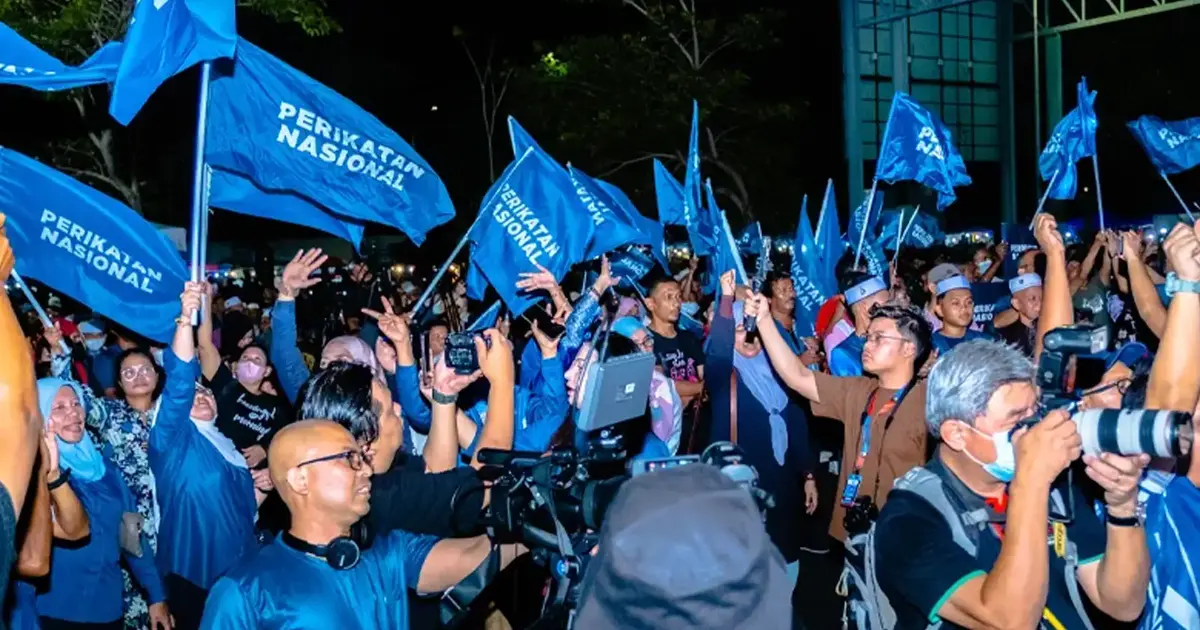
The expansion of Perikatan Nasional to include Wawasan and Pejuang has triggered fresh concerns among political observers about intensified internal competition within the coalition, with analysts warning that the incoming parties will vie for the same constituencies that have historically been Bersatu's stronghold. The prospect of multiple coalitionmates chasing identical voter demographics threatens to fragment what had become a relatively consolidated opposition bloc, potentially weakening its overall electoral prospects even as it expands numerically.
The structural problem facing PN stems from its focus on recruiting parties that appeal predominantly to Malay and Muslim voters. Rather than complementing each other geographically or demographically, Wawasan and Pejuang largely overlap with Bersatu's electoral appeal, creating redundancy rather than strategic breadth. This configuration contrasts sharply with the approach taken by Barisan Nasional and Pakatan Harapan, which have traditionally balanced their coalition composition by including parties with distinct ethnic and religious constituencies. The absence of such structural diversity within PN suggests the coalition prioritises ideological alignment over electoral efficiency.
Bersatu's vulnerability in this scenario warrants particular scrutiny. The party, which broke away from UMNO to form PN with PAS, has built its political identity around claiming to represent Malay and Muslim interests independently from UMNO's framework. However, the addition of Wawasan and Pejuang introduces rivals with similar messaging, forcing Bersatu to compete on its home turf rather than expanding into new territory. This dynamic mirrors classic coalition tension where smaller parties fear being sidelined by newer entrants with potentially superior organisational capacity or leadership appeal.
Analysts point to the mechanics of seat distribution as the inevitable flashpoint. Coalition partners typically negotiate seat allocations before elections, but when multiple parties claim the same constituencies as their natural base, negotiations become acrimonious and zero-sum. Seat-sharing arrangements that satisfy all parties become mathematically impossible, inevitably leading to selection choices that favour certain partners over others. This process, if mishandled, can generate resentment that persists well beyond campaign season and into parliamentary cooperation.
The historical context of Malay-Muslim political fragmentation adds weight to these concerns. Malaysia's political landscape has repeatedly witnessed situations where parties claiming similar constituencies spiral into destructive competition rather than coalition building. The fissures that emerged between UMNO and PAS in Kelantan and Terengganu during previous electoral cycles demonstrate how internal coalition conflicts can undermine overall performance and even benefit opposition candidates who run unopposed due to vote-splitting among rival coalition partners.
Pejuang's entry introduces an additional complication, as the party carries the political legacy and personal brand of former premier Mahathir Mohamad. While Mahathir's influence commands respect within certain circles, his unpredictable trajectory and shifting alliances have created uncertainty among voters and party insiders alike. The question of how Pejuang's leadership intends to differentiate itself from Bersatu's existing positioning remains unclear, suggesting potential for message confusion that could dilute PN's overall coherence.
Wawasan's profile suggests a party attempting to carve out space as a Malay-centric alternative to existing players, but its ability to mobilise voters independently of PN's broader infrastructure remains unproven. If Wawasan relies heavily on PN for campaign resources and organisational support, it may struggle to justify its existence to voters and coalition partners alike. This dynamic could intensify demands from Wawasan for special considerations in seat allocation, further complicating internal negotiations.
The implications for Malaysian electoral competition extend beyond internal PN dynamics. If competition within the coalition becomes heated enough to discourage cooperation or generate factionalisation, the resulting divisions could inadvertently benefit Pakatan Harapan and Barisan Nasional by presenting them with opportunities to exploit PN's internal weaknesses. Alternatively, if PN manages to suppress internal tensions through strict hierarchical control or seat-sharing mechanisms, the coalition might strengthen its Malay-Muslim voter base sufficiently to pose a significant electoral challenge to established alternatives.
Regional dynamics within Southeast Asia suggest that coalition fragmentation along ideological or demographic lines has become increasingly common as political volatility reshapes traditional party systems. Whether PN can transcend these pressures through institutional discipline or whether it succumbs to competitive pressures that historically plague Malaysian coalitions will significantly influence not only the next general election but also the broader trajectory of Malaysian political realignment. The test of PN's viability lies not in its numerical expansion but in its capacity to manage the internal contradictions that such expansion necessarily creates.

