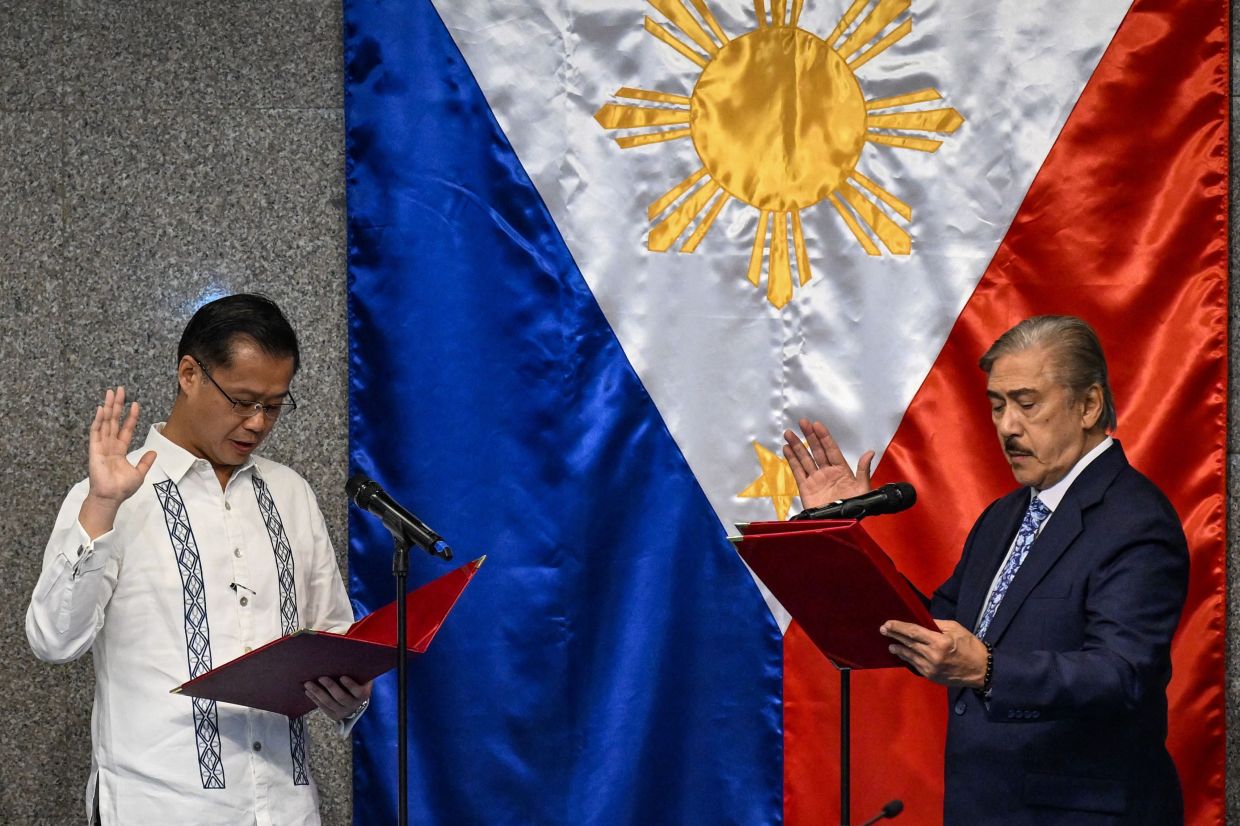
Senator Sherwin Gatchalian has been elected as the new president of the Philippine Senate, marking a significant turn in the chamber's internal power dynamics. The election took place during a special session on June 17, with exactly thirteen senators casting their votes to install Gatchalian in the top leadership position. This minimum threshold represents the bare quorum required under Senate rules to conduct such elections, underscoring just how narrow the margin of victory was in what became a closely contested institutional battle.
Gatchalian's political ascent reflects a long career navigating Philippine governance at multiple levels. Before entering the Senate, he served as Mayor of Valenzuela City, a major urban centre in the Metro Manila region, and also held a seat in the House of Representatives during an earlier phase of his political life. His elevation to the Senate presidency positions him as a significant power broker in legislative affairs during a period of considerable institutional tension and competing leadership claims.
The path to Gatchalian's election was anything but straightforward. On June 3, a group of twelve senators had previously moved to elect him as Senate president pro tempore, simultaneously declaring that Alan Peter Cayetano had vacated the Senate presidency that he had assumed just weeks earlier on May 11. This earlier manoeuvre appeared to be a coordinated challenge to Cayetano's authority, though the legality and constitutional standing of removing a Senate president remained disputed among observers and legal analysts.
Cayetano did not accept this characterisation of events. The outgoing Senate president immediately countered that he had not relinquished his position and that Senate rules explicitly required a minimum of thirteen votes to elect or remove Senate officers. This technical dispute over voting thresholds became the crux of the institutional conflict, as Cayetano argued that the June 3 move by twelve senators fell short of the constitutional requirement and therefore held no legal weight.
The political arithmetic in the chamber proved decisive. Senator Joel Villanueva, who had previously aligned with Cayetano's faction, made a critical decision to switch his support to Gatchalian's bloc. This defection tipped the balance decisively in Gatchalian's favour. On Tuesday, the day before the special session, Cayetano acknowledged this shifting political landscape, indicating that he had come to recognise the new numerical reality after conversations with Villanueva and would likely step down from the presidency.
The institutional composition of the Senate itself complicated the political calculations throughout this episode. The chamber currently operates with only twenty-two sitting members, creating a considerably smaller player pool than the full twenty-four-member complement. Senator Jinggoy Estrada, a prominent legislator, surrendered to police earlier in the month and was subsequently ordered suspended from office for ninety days by the Sandiganbayan, the Philippines' anti-graft court, in connection with graft allegations. Additionally, Senator Ronald Dela Rosa remains a fugitive, having been sought by the International Criminal Court on unspecified charges, with his current whereabouts unknown to the public.
These absences significantly altered the Senate's internal dynamics and the mathematics of any internal election. With four seats effectively unavailable, the votes required for various procedural actions became more concentrated among those present, making the defection of single senators like Villanueva exceptionally consequential. The situation highlights how institutional vacancies and member absences can rapidly destabilise leadership arrangements that might otherwise appear secure.
Gatchalian's election carries implications extending beyond internal Senate management. As Senate president, he will exercise considerable influence over legislative priorities, committee assignments, and the scheduling of bills for debate and passage. His political platform and relationships with both government and opposition blocs will shape the legislative agenda for the remainder of the congressional term. The Senate, as an institution, functions as a check on presidential power in the Philippine system, and its leadership thus occupies a position of genuine structural importance.
The circumstances of this transition also expose the fragility of coalition arrangements in Philippine legislative bodies. Cayetano's relatively swift departure from the Senate presidency, following only a month in office, suggests that Senate leadership positions remain vulnerable to rapid shifts in political sentiment and strategic calculations by individual members. The willingness of senators to change allegiances relatively quickly indicates that ideological commitments may often be secondary to personal political interests or tactical manoeuvres.
For Malaysian observers monitoring Southeast Asian political developments, the Philippine Senate's institutional turbulence offers instructive lessons regarding the management of plural legislatures and coalition politics. The episode demonstrates both the vulnerabilities that can emerge when legislative majorities become fragmented and the significance of individual legislators in determining institutional outcomes. The Philippine model differs substantially from Malaysia's system, yet both nations struggle with questions of how to maintain stable governance while accommodating diverse political interests and competing power bases within legislative chambers.