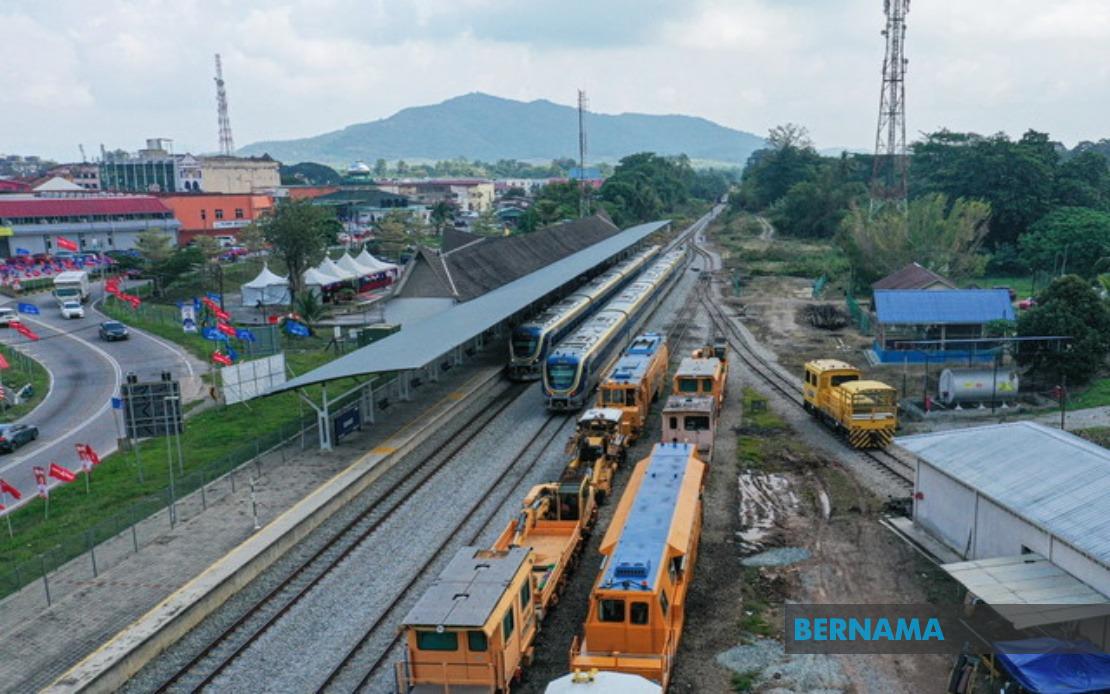
Malaysia's Transport Ministry has announced the successful completion of a major railway infrastructure project linking Negeri Sembilan and Pahang, marking a significant milestone in the country's rail modernisation efforts. The Gemas-Mentakab track upgrade, which reached completion on June 19 after nearly a decade of work, cost RM41.7 million and represents an essential investment in the nation's East-West rail connectivity. Transport Minister Anthony Loke made the announcement at KTMB Bahau station, underscoring the strategic importance of the project to Malaysia's broader transportation network.
The journey to completion proved far longer than originally envisioned. When the project commenced in 2016, planners anticipated finishing by 2019, but a combination of circumstances disrupted that timeline. Severe flooding events that ravaged the East Coast caused extensive damage to the railway infrastructure, while the initial contractor also failed to maintain work schedules. These setbacks, spanning several years, reflected the complexity of maintaining and upgrading Malaysia's ageing rail network, particularly in regions vulnerable to natural disasters. The delays underscore ongoing challenges in managing large infrastructure projects across diverse geographical and climatic conditions.
The project's completion holds particular significance for Malaysia's regional connectivity strategy. Gemas now functions as a critical interchange hub where the East Coast railway line converges with the West Coast route, creating a vital junction for passenger and freight movement across the peninsula. This integration enables commuters and cargo operators to transition between different rail services with greater efficiency, reducing travel times and logistics costs. For communities stretched across multiple states including Negeri Sembilan, Pahang, and Kelantan, the restored track ensures reliable transportation links that were previously compromised.
The upgraded infrastructure represents a substantial technical improvement to the existing network. The new track configuration can accommodate carriage loads up to 20 tonnes, a significant capacity increase that aligns with Malaysia's road-to-rail policy framework. This enhanced capability encourages freight operators to shift cargo transportation from highways to rail, potentially reducing road congestion and associated environmental impacts. For Malaysian logistics companies and manufacturers, particularly those operating along the corridor, this represents an opportunity to adopt more cost-effective and sustainable supply chain practices.
Transport Minister Loke highlighted how the Gemas-Mentakab completion integrates with other railway modernisation initiatives currently underway. The Gemas-Johor Bahru double-track project and the extension of Electric Train Service operations to Johor Bahru Sentral represent concurrent investments that collectively strengthen Malaysia's rail infrastructure. These complementary projects demonstrate a coordinated approach to network development, where upgrades across different segments create synergies that enhance overall system performance and passenger experience.
Progress on the project has been uneven across different sections. Package B, covering the Mentakab-Gua Musang segment, actually finished ahead of schedule, showcasing successful project management in that portion. However, Package C, involving the challenging Gua Musang-Tumpat stretch, continues experiencing delays related to contractor performance. This section presents extraordinary difficulties; it endured the most catastrophic flood damage along the entire route, traverses densely forested terrain, includes remote interior regions, and crosses multiple landslide-prone slopes. Such geographical and environmental challenges explain why this portion requires extended timelines and specialised construction expertise.
Passenger service enhancement represents a critical next phase for the recovered railway infrastructure. The government has instructed Keretapi Tanah Melayu Berhad, the national railway operator, to conduct feasibility studies on increasing service frequency along the Gemas-Kuala Lipis route. Currently, only three return trips operate daily, a frequency that may constrain demand among potential passengers seeking reliable commuting options. The ministry envisions seamless connections at Gemas, where passengers can transfer between conventional rail and ETS services with minimal waiting periods, ideally between 10 and 15 minutes, thereby creating an integrated passenger experience.
The restoration project carries broader implications for Malaysia's transport policy objectives. By recovering a functional East-West rail corridor, the country enhances its capacity to move people and goods efficiently across the peninsula without over-relying on highway networks. This investment reflects recognition that sustainable economic development requires diversified transport infrastructure, with rail playing a complementary role alongside road networks. For Malaysian commuters in East Coast states, the project translates into improved access to West Coast employment centres and commercial hubs, potentially facilitating greater regional economic integration.
The multi-year struggle to complete this project reveals structural challenges within Malaysia's infrastructure development ecosystem. Contractor accountability, weather-related disruptions, and the inherent complexity of upgrading heritage railway lines all contributed to delays. These lessons carry relevance for future transport projects, suggesting the need for more robust contractor performance mechanisms, enhanced contingency planning for climate-related disruptions, and potentially increased engineering budgets for challenging terrain work. As Malaysia continues developing its infrastructure under climate change pressures, such experiences inform more realistic project timelines and resource allocations.
For Southeast Asian regional connectivity, Malaysia's investment in rail infrastructure carries strategic weight. As ASEAN nations increasingly recognise the importance of integrated transport networks for intra-regional trade and tourism, Malaysia's efforts to restore and upgrade rail corridors contribute to this broader development agenda. The Gemas-Mentakab project, while domestically significant, forms part of longer-term plans for pan-Asian rail connectivity that could eventually link Malaysia with Thailand, Singapore, and other neighbouring economies, enhancing regional competitiveness and facilitating cross-border commerce.

