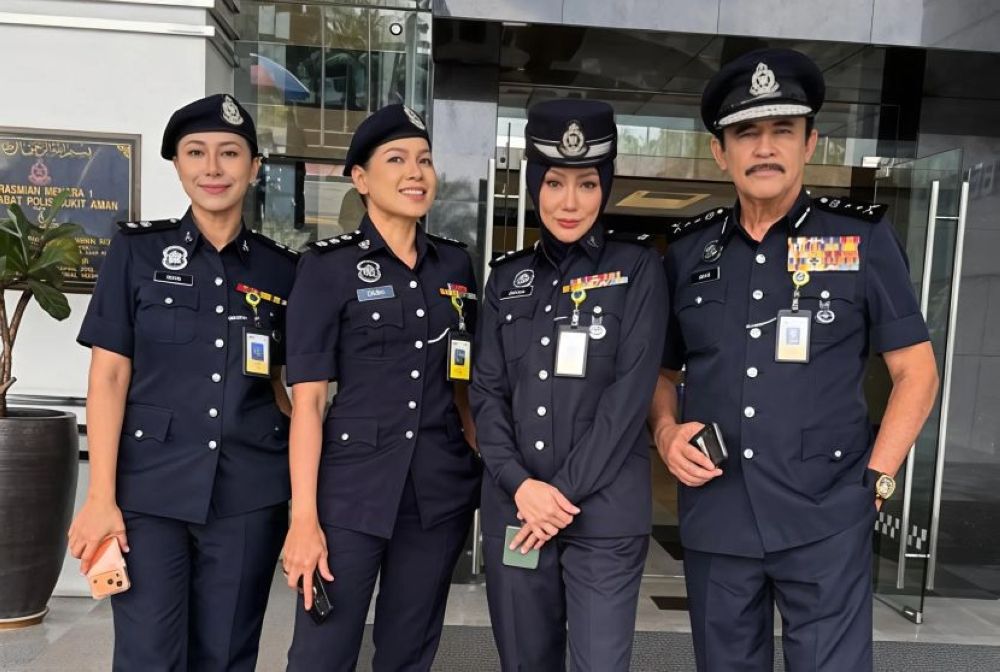
Just days after premiering, the highly anticipated Gerak Khas 2.0 drama faced a significant setback when producer Datuk Yusof Haslam announced the removal of one of its cast members following a drug-related arrest. The decision underscores growing tensions in Malaysia's entertainment industry regarding personal conduct and its impact on major productions, particularly those depicting law enforcement.
The actress in question was apprehended during a police raid conducted by officers from the Dang Wangi district police headquarters on July 7. During the operation, she tested positive for three types of drugs, triggering immediate consequences for her involvement in the 26-episode police drama. Haslam's swift response reflects the production's commitment to protecting the show's credibility, especially given its sensitive subject matter centred on the Royal Malaysia Police (PDRM).
With filming already 90 percent complete at the time of the actress's arrest, the production team faced limited options for damage control. The actress retained scenes in Episodes 23 and 24 of the series, and producers made the decision to excise every remaining appearance featuring her character. This surgical approach to post-production editing allows the drama to proceed without her involvement while minimising the costly need for extensive reshoots. The firm action demonstrates that even when projects near completion, ethical considerations can override logistical convenience.
Haslam expressed frustration that the situation could have been avoided entirely with earlier knowledge of the actress's personal situation. He acknowledged that she had previously worked on Skop Production projects without incident, suggesting that her arrest came as an unwelcome surprise to the production team. The producer's comments reflect the inherent challenge facing filmmakers in policing the off-set behaviour of cast members, particularly when such behaviour violates Malaysian law and public expectations of those working on high-profile projects.
The decision to remove the actress carries broader implications for the entertainment industry's approach to accountability. Haslam framed the removal not merely as punishment but as an educational moment for the entire production ecosystem. He revealed that he had personally issued warnings to the actress on two separate occasions prior to her arrest, cautioning her against involvement in activities that could compromise the drama's reputation. These repeated warnings suggest that concerns about her conduct may have existed before the police intervention.
For a production focused on police officers and law enforcement, the contradiction between on-screen messaging and off-screen behaviour becomes especially stark. Haslam noted his consistent emphasis on maintaining integrity and discipline throughout the filming process, themes he reinforced across the entire cast and crew. The irony of promoting these values while a cast member faced drug-related charges underscores the vulnerability of major productions to individual actors' decisions and the reputational risks they carry.
Haslam's stance towards the actress after her removal appears unforgiving. He rejected any attempts on her part to negotiate, appeal, or offer explanations for her actions. His statement that "it's too late" signals a permanent severing of professional ties, suggesting that the production company will not reconsider its position. This approach sends a message to other industry participants about consequences, though it also raises questions about rehabilitation, second chances, and the proportion of professional punishment to legal penalties.
The producer's broader commentary on the actress's future carries weight within Malaysia's competitive entertainment landscape. His observation that "once you make a mistake, people will forget all the good things you've done before" reflects harsh realities of public perception and career longevity in the Malaysian film and television industry. For an actress who had maintained a clean record on previous Skop Production projects, one arrest has effectively erased her professional standing with at least one major producer.
The cast changes reflect only part of the drama's complications. The series features established names including Hans Isaac, Erra Fazira, C. Kumaresan, and Salina Saibi, with other actresses playing police inspectors including Tisha Shamsir, Nabiha Aimi, and Emily Elizabeth. The removal of one character from this ensemble creates narrative gaps that post-production editing must now address, potentially affecting character development and storyline coherence across multiple episodes.
For Malaysian viewers anticipating the drama's full release, the behind-the-scenes controversy adds an unexpected layer to their engagement with the series. The Gerak Khas franchise carries significant cultural weight in Malaysia, having established itself as a pioneering police drama franchise. This sequel project carries expectations to maintain those standards while adapting to contemporary production practices and social concerns. The drug arrest and subsequent casting changes may overshadow the drama's reception, potentially becoming the dominant conversation point rather than the show's actual narrative quality.
The incident also reflects broader societal debates within Malaysia regarding substance abuse, entertainment industry conduct, and the boundaries between private behaviour and public employment. As digital media amplifies news of such incidents, the stakes for maintaining professional reputation have intensified considerably. The swift and decisive action taken by Haslam suggests that Malaysian producers increasingly view risk management and ethical compliance as central to their business operations, prioritising institutional reputation over individual career considerations.
Moving forward, this case may establish precedents for how Malaysian production companies respond to cast member arrests and positive drug tests. The industry will likely monitor whether other producers adopt similar zero-tolerance approaches or whether circumstances lead to more nuanced responses. For the actress involved, the removal from Gerak Khas 2.0 represents more than lost screen time; it signals potential broader blacklisting within production circles, fundamentally affecting her career prospects in an industry where professional networks and reputation carry substantial weight.

