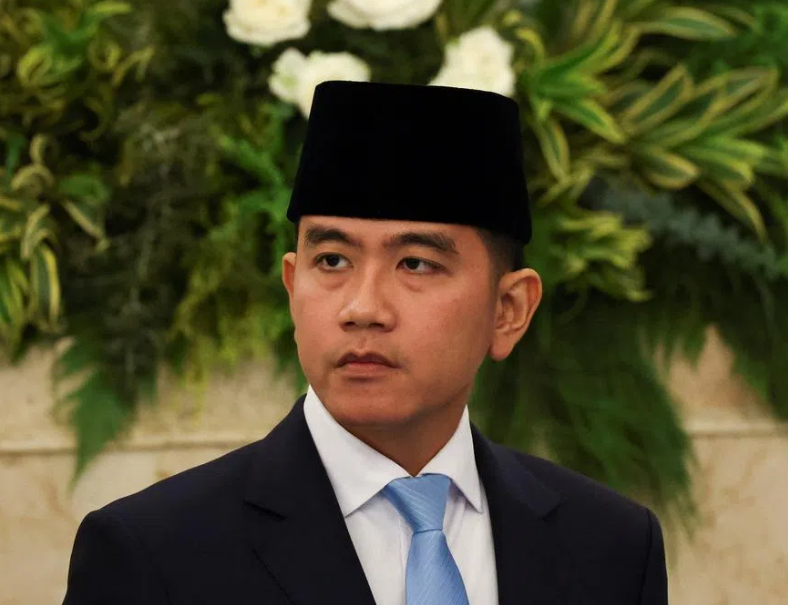
Just three days after student protesters took to Jakarta's streets demanding changes to government policies, Vice-President Gibran Rakabuming Raka invited five university representatives aboard a plane bound for eastern Indonesia on June 18 for what was framed as a working visit. The gesture followed a closed-door meeting where Gibran heard grievances regarding two of the administration's most contentious flagship initiatives: the free meals programme and the Red and White Cooperative scheme, an ambitious plan to establish thousands of village-run businesses nationwide. The calculated nature of the engagement underscores a broader question about the 38-year-old vice-president's evolving role within the Prabowo administration and his potential trajectory in Indonesian politics.
Official statements from Gibran's office painted the encounter in positive terms. Muhammad Abdi Maludin, a student leader from Bung Karno University, reported that the Vice-President had listened attentively to research findings and pledged to audit the issues raised before briefing President Prabowo Subianto. Yet the carefully curated nature of the interaction became apparent when social media reactions revealed scepticism among observers. Critics questioned why invitation lists appeared to exclude representatives from Indonesia's most prestigious universities, with one commenter suggesting the selection looked anything but organic. Another dismissed the entire exercise as performative.
The outreach reflects Gibran's efforts to carve out meaningful political space within an administration where his actual authority remains decidedly circumscribed. Since assuming office alongside President Prabowo in October 2024, the eldest son of former president Joko Widodo has grappled with defining a substantive role. Although public statements link him to high-profile assignments including Papua's development and construction of the new capital Nusantara, substantive decision-making power has largely eluded him. Unlike certain predecessors, he has not been granted a major policy portfolio, leaving him effectively sidelined from crucial governmental functions.
Analysts from the Centre for Strategic and International Studies see clear political calculation underlying Gibran's engagement strategy. Nicky Fahrizal observed that the Vice-President is consciously cultivating an image as a communicative bridge between ordinary citizens and the administration, a perception particularly valuable given mounting public discontent with flagship programmes. The timing is notably significant: Indonesia's next presidential election is scheduled for 2029, positioning Gibran within a crucial window for building political capital and establishing himself as a potential candidate, despite his publicly non-committal stance on future electoral ambitions.
The limited actual authority Gibran exercises over the contested programmes complicates any genuine policy influence. The National Nutrition Agency, which oversees the free meals initiative, reports directly to President Prabowo, not the Vice-President. Similarly, the Red and White Cooperative programme operates as a presidential priority coordinated across multiple ministries and agencies, placing it beyond Gibran's jurisdiction. Scholars at Padjadjaran University and CSIS acknowledge that his heightened visibility around these initiatives masks minimal involvement in their design or implementation. Irman Lanti suggested that both programmes appear to operate largely under military and police oversight, further diminishing vice-presidential input.
The free meals programme itself has attracted intense scrutiny following corruption allegations. In June, National Nutrition Agency chief Dadan Hindayana was arrested alongside two former deputies amid investigations into procurement irregularities, creating a political opening for Gibran's intervention. During his June 18 visit to a primary school in East Nusa Tenggara, the Vice-President acknowledged shortcomings in programme governance and called for improvements, while instructing officials to accelerate implementation in areas with completed infrastructure. This rhetorical positioning allows him to appear responsive without necessarily committing to structural changes.
Questions about the authenticity of student engagement intensified following revelations about monetary transfers. Local news outlets reported that student leaders who attended the palace meeting subsequently received substantial sums, with payments ranging from 2 million to 20 million rupiah. The Presidential Palace stated it was investigating these claims, but the incidents fuelled perceptions that the engagement had been carefully orchestrated rather than spontaneous. Observers noted that selected student participants derived from universities considerably smaller than Indonesia's flagship institutions, suggesting deliberate curation rather than representative sampling of the broader protest movement.
Edbert Gani Suryahudaya, a CSIS researcher specialising in politics and social change, characterised Gibran's strategy as deliberately designed to appease public anger while acknowledging its limited transformative potential. The Vice-President appears to be employing what Suryahudaya termed "low-cost" attention-grabbing tactics—relatively simple gestures that generate media coverage without requiring fundamental policy commitments. In a political environment where public criticism targets the government broadly, such performative engagement provides measurable benefits for personal visibility and relevance without necessitating either substantive policy changes or genuine institutional power.
The broader context reveals a vice-presidency struggling for definition within Indonesia's governmental architecture. Gibran's predecessors enjoyed more clearly delineated portfolios and demonstrable influence over specific policy domains. In contrast, his current position appears designed primarily as a ceremonial and supportive role, leaving substantial latitude for self-directed activities but minimal formal authority. His engagement with student protesters thus represents an opportunistic response to momentary political circumstances rather than evidence of expanded influence over governmental decisions.
Looking toward the 2029 electoral horizon, Gibran's strategic positioning becomes increasingly transparent. By visibly engaging with critics and demonstrating apparent responsiveness to public concerns, he constructs a political narrative useful for future campaigns. Whether such engagement translates into meaningful policy influence remains questionable; analysts generally conclude it does not. Nevertheless, the ability to appear as a communicative and concerned government figure potentially strengthens his political brand, particularly among younger demographics increasingly engaged in protest movements. The calculation appears straightforward: build public recognition and favour now, capitalise on accumulated political capital during future electoral contests, all while maintaining plausible deniability regarding substantive policy commitments.
For Malaysian and Southeast Asian observers, Gibran's manoeuvres illustrate broader patterns in how contemporary Asian politicians navigate limited formal authority through strategic communication and media management. The tension between perceived influence and actual decision-making power characterises governance across the region, where institutional positions often diverge significantly from real-world political influence. Gibran's case suggests that in increasingly mediated political environments, the ability to generate positive public perception may matter as much as formal governmental authority—a dynamic with profound implications for how Southeast Asian democracies function and evolve.

