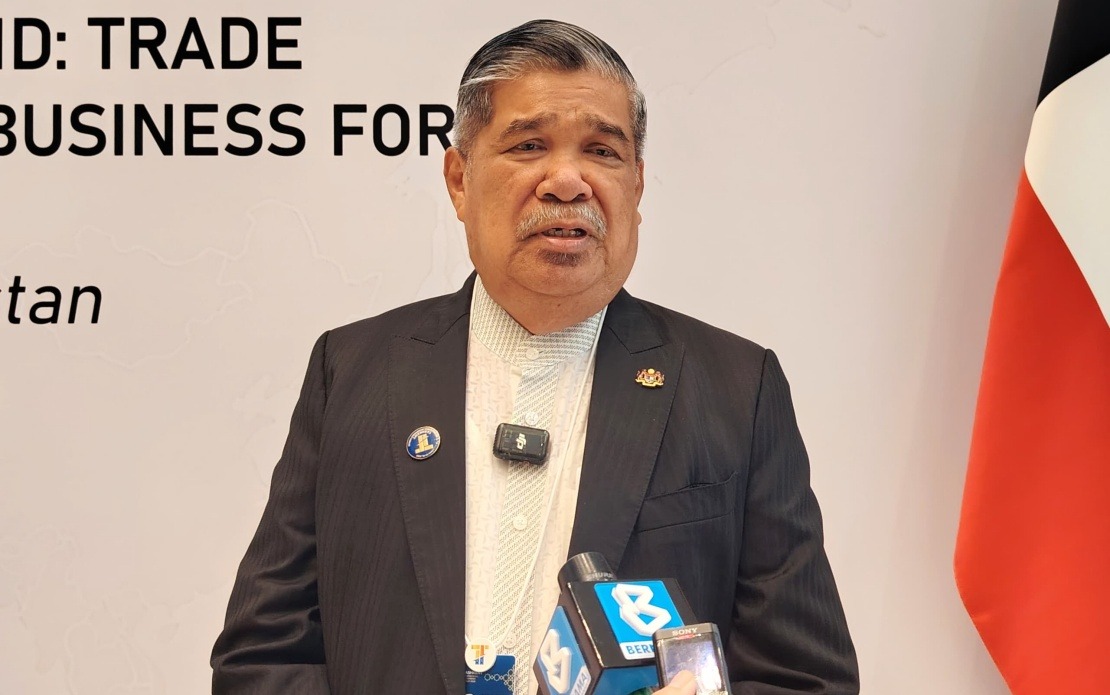
Ongoing geopolitical tensions spanning the Middle East conflict, compounded by climate phenomena such as El Niño, have crystallised the case for elevating food security to a cornerstone of Malaysia's strategic planning. Agriculture and Food Security Minister Datuk Seri Mohamad Sabu articulated this imperative while launching Labuan's Road to MAHA 2026 programme, signalling that food security has transitioned from a peripheral concern to an essential pillar of national resilience.
The minister emphasised that contemporary global shocks—warfare, climatic volatility and fractures within international supply networks—have demonstrated the fragility of conventional food systems. These disruptions ripple outward, directly imperiling domestic food production capacity and the steady flow of vital provisions to consumers. By framing food security as a strategic necessity rather than optional policy, Mohamad underscored the stakes for nations like Malaysia, which remain structurally dependent on international food flows.
Despite headwinds from global economic instability, energy constraints and climate-related hazards, the government has pledged sustained commitment to fortifying the nation's food security framework. This pledge becomes meaningful through institutional collaboration, particularly the partnership between the Agriculture and Food Security Ministry and the Federal Territories Department to catalyse the agri-food sector's expansion and modernisation.
The Malaysia Agriculture, Horticulture and Agrotourism Exhibition (MAHA) 2026, scheduled for August 28 to September 6 at Malaysia Agro Exposition Park Serdang (MAEPS), encapsulates this strategic vision. Themed 'Value Creation for Food Security', the biennial showcase will pivot on modernisation, demonstrating to industry players and the public how technological advancement reshapes agricultural production. The exhibition will feature cutting-edge innovations—automation systems, robotics, Internet of Things infrastructure and artificial intelligence applications—designed to catalyse the sector's digital transformation.
Modernisation carries tangible implications for Malaysian agriculture. A technology-enabled farming ecosystem promises heightened productivity, greater resilience against climatic shocks and the sustainable yield expansion necessary to feed a growing population. By showcasing these technologies at scale, MAHA 2026 serves as both inspiration and practical roadmap for farmers and agricultural entrepreneurs navigating the transition toward high-tech, knowledge-intensive farming.
The nationwide Road to MAHA 2026 series functions as a preparatory mechanism, building momentum and public engagement ahead of the main exhibition. Organisers target four million visitors and RM58 million in direct sales—metrics reflecting confidence in the sector's growth trajectory and consumer appetite for agricultural innovation. For Malaysia's farming communities and agribusiness enterprises, this roadshow circuit offers networking opportunities, technology previews and market intelligence.
Labuan presents a particularly acute case study in food security vulnerability. The Federal Territory imports approximately ninety per cent of its food requirements, sourcing most supplies from Sabah while generating merely ten per cent domestically. This extreme dependency renders Labuan acutely exposed to supply shocks—a vulnerability starkly exposed during the COVID-19 pandemic when international logistics networks experienced severe disruptions. These disruptions underscored the risks of over-reliance on external sources and prompted strategic reckoning.
In response, the government has formulated the Labuan Food Security Strategic Plan 2026-2030, targeting enhanced local agricultural output, strengthened logistics infrastructure and accelerated adoption of modern farming technologies. The plan recognises that sustainable food security cannot rely on perpetual importation; instead, it demands localised production capacity augmented by efficient distribution networks. For an island community, achieving meaningful self-sufficiency requires both technological upgrading and strategic investment in growing indigenous food supply chains.
A generational dimension underpins Malaysia's food security challenge. The minister appealed to younger Malaysians to embrace agricultural entrepreneurship, acknowledging that the sector faces demographic headwinds as rural youth migrate toward urban employment. Reversing this trend requires repositioning agriculture as an innovative, technology-driven career pathway offering competitive returns—a narrative shift from traditional small-farming models toward agribusiness ventures blending technology, sustainability and market acumen. The emergence of a new cohort of agropreneurs becomes essential for expanding productive capacity and ensuring sectoral dynamism.
For Southeast Asia broadly, Malaysia's emphasis on food security reflects a regional awakening to structural vulnerabilities. As geopolitical competition intensifies and climate volatility increases, nations across the region confront similar pressures: fragmented production bases, dependence on distant suppliers and populations growing faster than local agricultural output. Malaysia's policy trajectory—combining technological modernisation, strategic local production initiatives and youth mobilisation—offers a template other Southeast Asian governments may adapt to their circumstances.
The intersection of geopolitics, climate stress and demographic change has recalibrated policymakers' understanding of food security. What once occupied a peripheral space within development agendas now commands strategic primacy. Malaysia's forthcoming MAHA exhibition and Labuan's comprehensive food security plan signal a maturing recognition that agricultural resilience constitutes national security in an increasingly unstable world.

