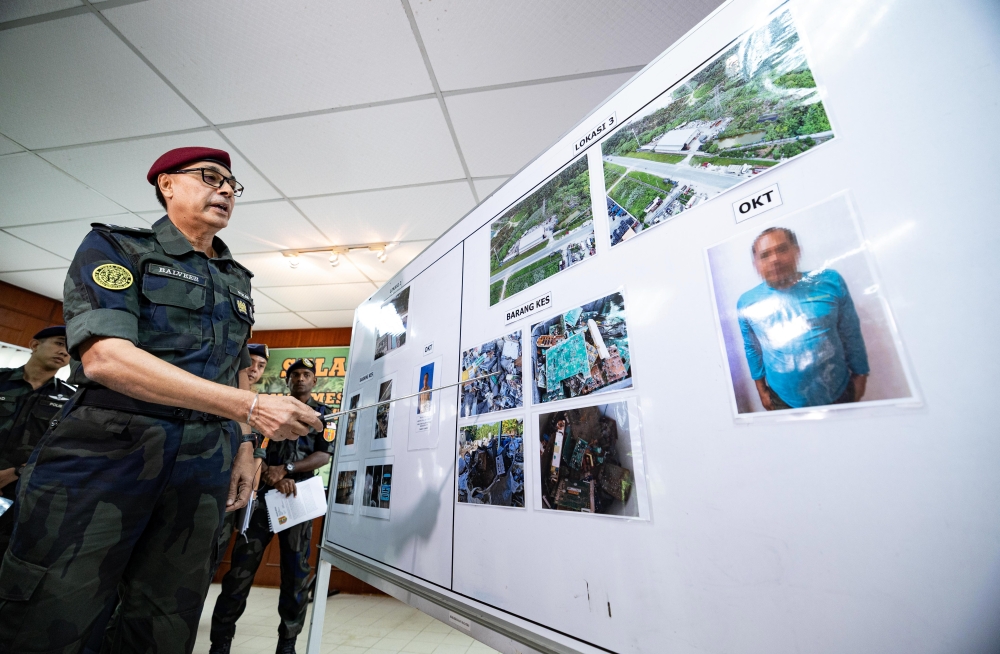
Law enforcement authorities in Perak have dealt a substantial blow to organised illegal recycling operations after the General Operations Force Northern Brigade uncovered an extensive e-waste smuggling enterprise in Ipoh. The coordinated raids resulted in the seizure of 120,220 kilogrammes of discarded electronics valued at RM9.39 million, with 14 individuals detained as investigators work to dismantle what appears to be a sophisticated criminal network focused on importing and processing hazardous electronic waste.
The discovery represents one of the largest enforcement actions against illegal e-waste operations in northern Malaysia this year and underscores growing concerns about how unscrupulous operators circumvent regulations designed to protect both public health and the environment. Electronic waste contains toxic substances including lead, mercury, and cadmium that pose serious risks when processed without proper safeguards. The illegal recycling sector thrives in developing economies where enforcement capacity remains constrained and penalties have historically been perceived as insufficient deterrents.
Investigators conducting the operation identified multiple locations suspected of involvement in the import and processing of prohibited electronic materials. The targeted approach, likely informed by intelligence gathering and regulatory surveillance, suggests an escalation in enforcement sophistication by authorities tasked with combating transnational waste trafficking. Malaysia has increasingly become a destination for illegal e-waste shipments, as operators exploit gaps between strict regulations in developed countries and Malaysia's relative lack of stringent border controls and processing oversight.
The detained individuals are expected to face charges under Malaysia's environmental protection legislation, though specific offences remain under investigation. Penalties for illegal waste importation and handling can include substantial fines and imprisonment, particularly when organised criminal enterprise elements are established. The scale of this operation—involving hundreds of tonnes of material—suggests the suspects may have been engaged in extended illegal activity rather than isolated incidents.
For Malaysia's environmental management authorities and waste regulators, the seizure highlights persistent challenges in controlling the transnational flow of hazardous materials. While Malaysia has ratified the Basel Convention on the Control of Transboundary Movements of Hazardous Wastes, enforcement remains inconsistent. Port authorities, customs officials, and environmental enforcement agencies must coordinate effectively to identify suspicious shipments, yet resource constraints and the sophistication of smuggling methods continue to enable contraband passage.
The incident carries significant implications for legitimate recycling and electronics refurbishment sectors operating in Malaysia. Legal operators face competitive pressures from criminals who ignore environmental compliance costs, undercutting prices and capturing market share. By removing large volumes of illegal material from circulation, enforcement actions theoretically improve market conditions for compliant businesses, though widespread awareness of illegal operations suggests limited market advantage accrues in practice.
Regional and international dimensions also merit consideration. Malaysia's position as a major electronics manufacturing and export hub makes it simultaneously a target for waste dumping and a source of industrial e-waste requiring responsible end-of-life management. Southeast Asian countries collectively receive millions of tonnes of imported e-waste annually, with authorities often overwhelmed by the volume and complexity of prevention efforts. Cooperation frameworks between ASEAN member states remain underdeveloped compared to enforcement capabilities in developed economies.
The GOF's involvement in this operation reflects a broader shift toward deploying paramilitary law enforcement resources against environmental crimes rather than restricting them to traditional security functions. The Northern Brigade's capacity to conduct major raids suggests environmental crime has achieved sufficient policy priority to warrant significant operational resources. This institutional evolution, whilst positive, remains inadequate without complementary improvements in port surveillance, customs training, and inter-agency coordination at Malaysia's maritime boundaries where smuggling typically occurs.
Public health ramifications extend beyond occupational hazards faced by illegal processors themselves. Communities surrounding unregulated e-waste operations face contamination of soil and groundwater through improper material handling and disposal of processing residues. Previous investigations into illegal recycling sites have documented dangerous chemical exposure among workers and nearby residents, particularly affecting vulnerable populations including migrant labourers who may not fully comprehend workplace hazards or possess capacity to demand protective equipment.
The RM9.39 million valuation indicates substantial illicit financial flows associated with this operation. Proceeds from illegal e-waste trafficking often fund other criminal enterprises and leave little revenue for government use in environmental remediation or public health initiatives. The financial incentive structure for smuggling remains compelling given that legitimate recycling disposal costs far exceed revenues from recovered materials, pushing cost-conscious operators toward illegal pathways.
Moving forward, successful disruption of these networks requires sustained enforcement intensity rather than isolated crackdowns. Malaysia should consider increasing penalties for organised e-waste trafficking, enhancing port surveillance capabilities, and developing greater forensic capacity to trace material origins and identify upstream suppliers and downstream recipients. Regional cooperation mechanisms for intelligence sharing and coordinated enforcement actions would strengthen responses to trafficking networks operating across multiple jurisdictions.
The Ipoh operation demonstrates that significant illegal e-waste processing capacity exists within Malaysia's borders despite regulatory frameworks nominally prohibiting such activity. Authorities have signalled commitment to addressing the problem, yet the frequency and scale of seizures suggest enforcement remains reactive rather than proactive. Sustained reduction in illegal e-waste operations requires political commitment to environmental protection that translates into adequate funding, staff training, and enforcement consistency across all relevant agencies.

