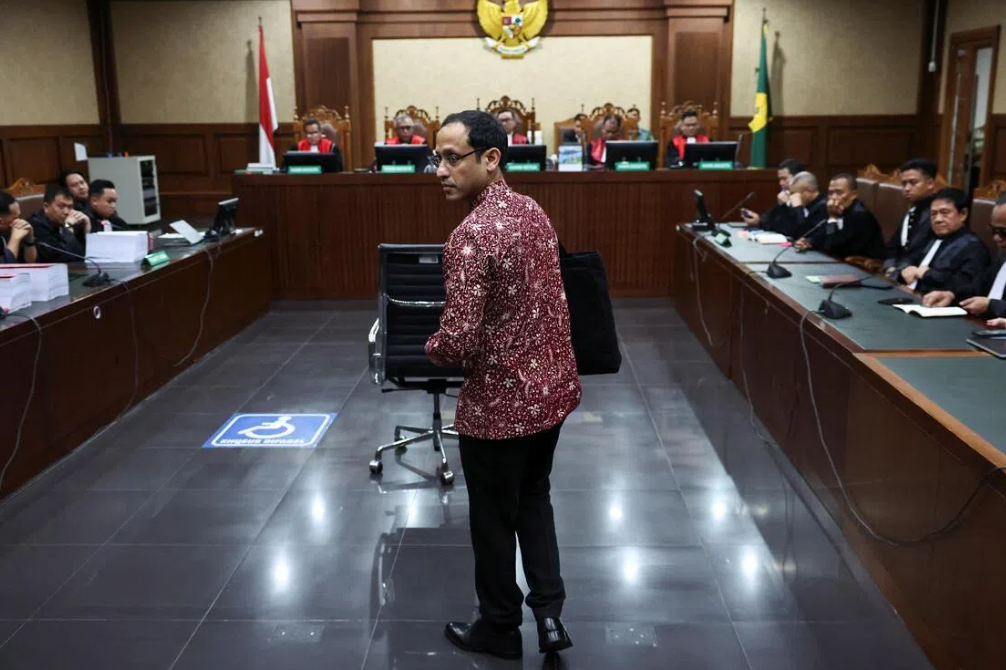
The corruption conviction of Nadiem Makarim, once celebrated as a symbol of Indonesia's digital-savvy generation entering public service, represents one of the nation's most significant high-profile prosecutions in recent memory. On June 30, the Jakarta Corruption Court handed down a 10-year prison sentence against the 41-year-old former education minister, concluding a lengthy trial that captivated national attention and raised fundamental questions about the intersection of private enterprise and government responsibility. The sentence, coupled with a 1 billion rupiah fine and a substantial 809.6 billion rupiah restitution order, marks a sobering epilogue to what had seemed a promising chapter in Indonesia's governance modernisation efforts.
The legal proceedings centred on the government's procurement of approximately 1.1 million Chromebook laptops during 2020 and 2022, a period when Indonesian schools faced unprecedented disruption from pandemic-related lockdowns. Chief Judge Purwanto's ruling determined that Makarim had deliberately manipulated the procurement policy to benefit particular interests, specifically to advance strategic business ties between Google and PT Aplikasi Karya Anak Bangsa, the parent company of his ride-hailing and delivery empire Gojek. The court panel concluded that such actions constituted an egregious breach of ministerial duty, fundamentally contradicting the oath Makarim swore upon taking office in 2019.
Makarim's trajectory from startup visionary to convicted official exemplifies the hazards facing technology entrepreneurs who transition into political roles without the traditional political infrastructure. When he joined former president Joko Widodo's cabinet, he was already celebrated for building Gojek into Indonesia's first unicorn company, valued at approximately US$10 billion by 2019. His appointment represented an apparent validation of meritocratic principles in government, signalling that talented private-sector innovators could drive institutional reform. Yet this very dynamism, when combined with the pressures and complexities of public administration, ultimately became the foundation for serious allegations of impropriety.
Prosecutors had pursued an 18-year sentence alongside demanding 5.6 trillion rupiah in restitution, arguing the laptop programme inflicted approximately 2.18 trillion rupiah in state losses and that Makarim personally gained roughly 809 billion rupiah through related transactions. The state's case relied partly on evidence suggesting that Google's corporate investment in Gojek influenced the educational technology decisions, an allegation Makarim consistently denied. Notably, Google itself was not charged, complicating the narrative of clear conspiracy and raising questions about whether responsibility was appropriately distributed across all parties with influence over the procurement process.
The defence mounted a substantially different interpretation of events, arguing that the Chromebook initiative was executed with genuine intent to maintain educational continuity during one of Indonesia's most destabilising periods. Makarim's legal team documented that approximately 97 per cent of the 1.1 million devices reached 77,000 schools by 2023, suggesting widespread implementation rather than a scheme designed primarily for personal enrichment. They emphasised that Makarim received no direct monetary benefit from the transactions and characterised the programme as a reasonable policy response to unprecedented circumstances, rather than a calculated abuse of ministerial authority.
Background context reveals additional complexity in the case. The Attorney-General's Office had cited a 2018 ministry study—conducted before Makarim's appointment—noting that Chromebooks might prove inadequate in remote and rural regions lacking reliable internet infrastructure. Prosecutors further highlighted an August 2019 group chat they claimed demonstrated pre-appointment discussions about a Chromebook-focused digitalisation strategy, suggesting early alignment between Makarim's personal interests and his eventual government decisions. The defence countered that such early-stage discussions reflected legitimate technological assessment rather than corruption, and that subsequent policy implementation proceeded through proper governmental channels.
The trial itself became a cultural phenomenon within Indonesian society, attracting extraordinary public engagement rarely seen in judicial proceedings. Dozens of Gojek motorcycle taxi drivers attended court hearings as moral support, while Makarim famously arrived wearing a Gojek driver jacket before changing into formal courtroom attire. The proceedings were livestreamed, generating widespread social media discussion and organised public watch parties, transforming what might ordinarily remain a specialised legal matter into genuine mass-public spectacle. This intensity of public attention underscores both the fascination with high-profile corruption cases and the particular interest Indonesians maintain regarding whether talented outsiders can succeed within their political system.
Makarim's family background enhanced the case's social significance. His father, Nono Anwar Makarim, maintains prominence as a lawyer within Indonesia's legal establishment, while his maternal grandfather participated in the nation's independence struggle. This elite positioning meant the trial was observed not merely as a corruption prosecution but as a test of whether Indonesia's institutions would apply accountability equally across social strata. The prominence of amicus curiae briefs—written interventions from third parties supporting his case—reflected broader anxieties within professional and entrepreneurial circles about whether service in government remained viable for capable individuals outside traditional political networks.
As the trial progressed toward its conclusion, Makarim shifted his defence strategy to emphasise broader implications for Indonesian society and governance. In a June 23 defence plea, he argued that the court's verdict would significantly influence whether young Indonesians would consider public service viable and whether professionals from outside politics would remain willing to enter government. His appeal directly invoked the generational implications of the proceedings, asking the judges to consider what message conviction would send to Indonesia's youth and diaspora communities: whether the nation remained genuinely welcoming to talented outsiders seeking to contribute through government roles. This rhetorical move transformed the trial from a narrow corruption question into a referendum on Indonesia's capacity to incorporate external talent into its institutions.
The sentencing carries substantial implications for Southeast Asian governance models more broadly. As regional nations seek to modernise administrations through technology-driven approaches and the recruitment of private-sector talent, the Makarim case illustrates the institutional risks attending such transitions. The conviction—falling significantly short of the 18-year sentence prosecutors requested but still substantial—may deter future technology entrepreneurs from accepting government positions, potentially depriving nations of valuable expertise precisely when digital transformation remains essential. Conversely, the court's willingness to convict despite considerable public sympathy and elite advocacy suggests that Indonesian anti-corruption institutions retain meaningful independence and capacity for accountability, even against politically connected defendants with substantial resources.
Looking forward, Makarim's assertion on the eve of sentencing that he "still believed in justice" despite months of proceedings reflects the complex posture maintained by many defendants within high-profile cases. His statement through a LinkedIn account managed by his legal team suggested resignation to the verdict while maintaining faith in Indonesia's institutional framework—a carefully calibrated message to supporters suggesting that while he contests conviction's justice, he respects the judicial system itself. The case's ultimate legacy will likely depend on subsequent appellate decisions and whether Makarim's conviction withstands legal challenge, but it has already fundamentally altered the trajectory of Indonesia's most celebrated technology entrepreneur and reshaped perceptions of government service within the nation's innovation sector.

