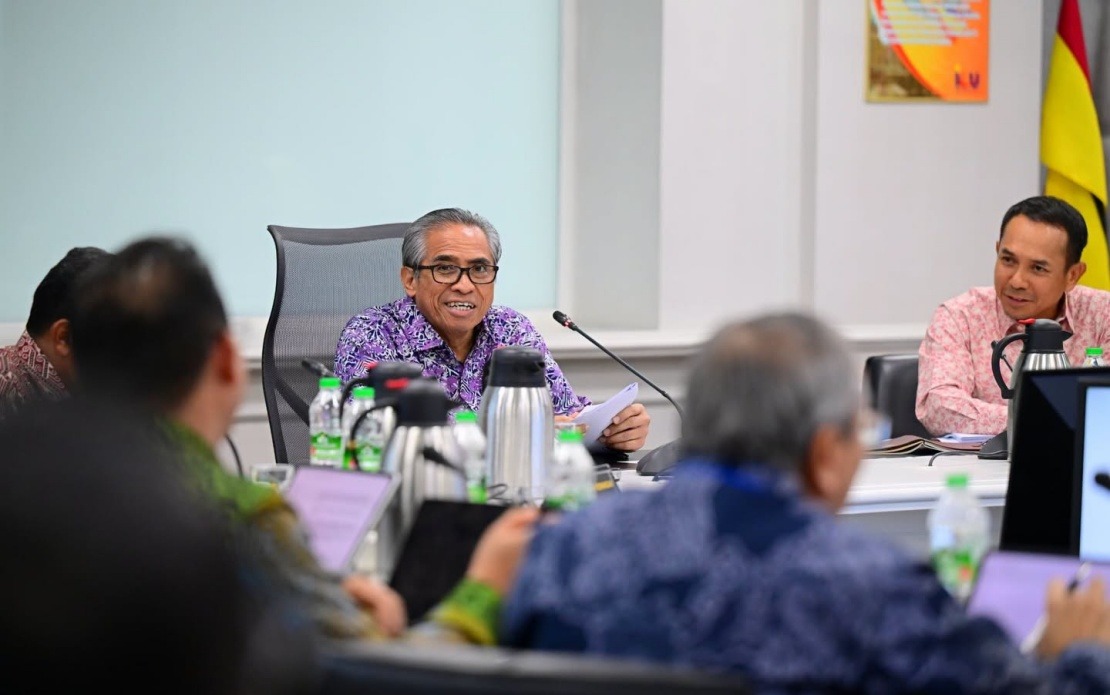
The Malaysian government has shifted into high gear on grassroots infrastructure development, with Chief Secretary to the Government Tan Sri Shamsul Azri Abu Bakar issuing a directive to all ministry secretaries-general (KSUs) to prioritise the swift implementation of more than 40,000 small-scale projects across the nation. The decision, announced through a Facebook post on June 25, represents a strategic pivot towards delivering tangible benefits to citizens in the immediate term rather than waiting for larger, long-term development initiatives to materialise.
The directive emerged from deliberations at the National Development Action Committee meeting chaired by Shamsul Azri. Rather than dispersing attention across multiple large-scale undertakings, the government has identified a portfolio of projects termed "low-hanging fruit"—interventions that are administratively manageable, financially feasible, and capable of generating visible improvements in daily life. This approach acknowledges that many citizens experience infrastructure deficiencies in their immediate surroundings, and addressing these concerns swiftly can reinforce public confidence in government responsiveness.
The scope of projects spans practical maintenance and upgrading work across various government agencies and public facilities. Road repairs form a significant component, addressing deteriorating asphalt and surface conditions that affect commuters nationwide. Drainage maintenance initiatives aim to resolve persistent flooding issues during monsoon seasons—a perennial problem affecting residential areas and business districts. Government residential quarters require refurbishment to ensure adequate housing standards for civil servants and their families, while school classroom repairs target educational infrastructure that impacts learning environments for hundreds of thousands of students.
Healthcare facility upgrades constitute another pillar of this initiative, recognising that clinic and hospital conditions directly influence the quality of public health service delivery. Public market and food stall improvements reflect an understanding of the role informal commerce plays in Malaysian economic activity and community gathering spaces. These projects, though individually modest in scope and budget, collectively represent an investment in the mundane infrastructure that underpins ordinary life—the very infrastructure that often deteriorates without headline-grabbing construction projects to draw attention or resources.
A critical advantage of this approach lies in its timeline. Shamsul Azri emphasised that the majority of identified projects can reach completion within three to six months, a window substantially shorter than conventional government procurement cycles. This compressed timeframe means Malaysian citizens will witness tangible progress and benefits within a single calendar year, rather than the extended delays that characterise larger infrastructure schemes. The psychological and practical impact of rapid delivery should not be underestimated, as it demonstrates government capacity to execute and build momentum across ministries.
The directive places explicit responsibility on ministry secretaries-general to conduct site visits and maintain close monitoring of implementation progress. This hands-on oversight requirement represents a departure from purely administrative distance, signalling that senior government officials are expected to engage directly with ground realities and resolve obstacles in real time. The emphasis on problem-solving at the implementation stage rather than after project completion reflects lessons learned from past initiatives where bureaucratic delays accumulated unaddressed until projects spiralled beyond scope and budget.
For Malaysian citizens, particularly in smaller towns and less-developed areas often overlooked in major infrastructure announcements, this initiative addresses the genuine frustration of crumbling public infrastructure. A pothole-ridden road or a neglected school facility affects quality of life daily, yet these issues rarely command the resources or political attention that accompany megaprojects. By systematically cataloguing and executing these smaller interventions, the government acknowledges this governance gap and commits resources proportionate to the scale of the problem.
The initiative also carries implications for inter-ministerial coordination and accountability. By tasking all KSUs with implementation responsibilities and requiring progress monitoring, the government creates a distributed delivery network where multiple agencies move simultaneously rather than sequentially. This parallel implementation model should accelerate overall delivery timelines compared to traditional linear project scheduling. The public communication through social media also represents a transparency mechanism, allowing citizens to track government action against announced commitments.
From a regional perspective, Malaysia's pivot towards rapid-delivery, distributed infrastructure investment offers an instructive model for other Southeast Asian economies struggling to maintain public facilities amid budgetary constraints. Rather than pursuing capital-intensive megaprojects that absorb resources and extend timelines, Malaysia demonstrates that systematic completion of maintenance and upgrading work can deliver measurable improvements across broader populations. This approach may prove particularly relevant for developing economies where infrastructure maintenance has been chronically underfunded relative to new construction.
The timing of this directive, coinciding with discussions about economic efficiency and government productivity, suggests that the administration views rapid project delivery as a means to demonstrate competence and responsiveness. Successfully executing 40,000 projects would constitute a significant administrative achievement, providing evidence that Malaysian government machinery can function effectively when directed toward achievable targets. The emphasis on citizen-centred outcomes—roads, schools, clinics, and markets—grounds the initiative in tangible public welfare rather than abstract development statistics.
Looking ahead, the critical test will be execution fidelity. Announcing ambitious targets is invariably easier than achieving them, particularly when distributed across multiple government agencies with varying institutional capacities. The requirement that KSUs conduct site visits suggests the government recognises that remote management fosters delays and cost overruns. Whether this monitoring intensity translates into consistent project completion across all 40,000 initiatives will ultimately determine the initiative's success and its credibility as a model for future government action.

