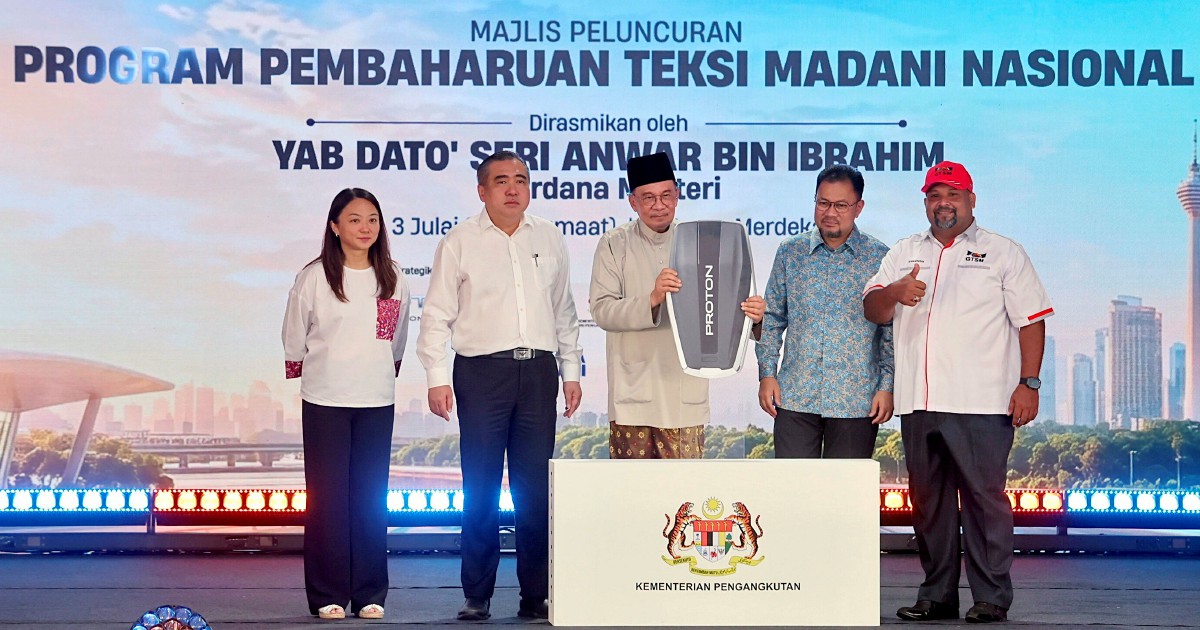
Prime Minister Datuk Seri Anwar Ibrahim has announced the release of an additional RM10 million in government funding to bolster the nation's taxi replacement initiative, underscoring the administration's commitment to modernizing public ground transportation across Malaysia. The matching grant programme, designed to lighten the financial burden on individual taxi operators, represents a targeted policy response to an industry struggling with ageing vehicle fleets and rising operational costs.
The matching grant mechanism operates as a cost-sharing arrangement between the government and participating taxi drivers, effectively doubling the purchasing power available to operators seeking to upgrade from older vehicles to more contemporary models. By contributing directly to this initiative, the government acknowledges the structural challenges facing independent and fleet taxi operators, many of whom have operated the same vehicles for over a decade and now face escalating maintenance expenses alongside consumer expectations for cleaner, safer transport options.
The taxi industry in Malaysia has long encountered difficulties in managing its transition to newer vehicles, partly because individual drivers and small operators lack access to the favourable financing terms available to larger commercial entities. The ageing fleet contributes to elevated emissions levels across major urban centres, particularly in Kuala Lumpur, Selangor, and Penang, where traffic congestion concentrates vehicle pollutants. Replacement with modern vehicles equipped with contemporary emission control systems would meaningfully reduce the transportation sector's environmental footprint while improving air quality in densely populated metropolitan regions.
Beyond environmental considerations, the upgrade programme carries significant quality-of-life dimensions for both taxi workers and passengers. Newer vehicles typically incorporate advanced safety features, improved climate control systems, and enhanced reliability, reducing both breakdowns that disrupt driver income and passenger dissatisfaction that undermines the industry's reputation. This initiative therefore represents an intersection of economic support, public health, and service quality enhancement that extends beyond simple fleet modernization.
The timing of this announcement reflects broader policy priorities within the current administration, which has emphasized inclusive economic growth and support for small-to-medium enterprise operators who form the backbone of Malaysia's informal and semi-formal transportation sectors. Taxi drivers, whilst working within a regulated framework, operate predominantly as independent economic actors who bear the full cost of vehicle acquisition, maintenance, insurance, and fuel. Without targeted government support, many would face an impossible choice between continued operation with increasingly unreliable older vehicles or exiting the profession entirely.
The matching grant structure also incentivizes financial discipline and planning among participating drivers, as they must contribute their own capital alongside the government's matching funds. This shared investment mechanism creates alignment between public policy objectives and individual operator interests, reducing the moral hazard concerns that might arise from outright subsidies. Drivers who invest their own savings in replacement vehicles have clear motivation to maintain them properly and operate them commercially, maximizing the return on both public and private investment.
Regional and international comparisons demonstrate that similar replacement programmes have generated positive outcomes across multiple dimensions. Cities that have modernized taxi fleets through matching grant schemes or mandatory vehicle age policies have observed simultaneous improvements in service quality, reduction in emissions, enhanced safety outcomes, and strengthened operator income stability through reduced maintenance disruptions. The Malaysian programme, if effectively implemented and monitored, could generate comparable benefits whilst maintaining the social contract inherent in supporting working-class transportation sector participants.
Implementation effectiveness will ultimately determine whether this RM10 million injection achieves its intended impact. Questions around eligibility criteria, application processes, fund disbursement mechanisms, and whether the allocation sufficiently addresses demand from the taxi operator community remain consequential. Experience from previous government vehicle replacement schemes suggests that careful administrative design and transparent processes are essential to ensuring funds reach intended beneficiaries without excessive bureaucratic friction.
For Malaysian readers monitoring transport policy, this announcement signals continued government engagement with transportation modernization as a shared responsibility rather than a purely market-driven transition. As the nation works toward its climate commitments and urban sustainability objectives, initiatives supporting the replacement of older commercial vehicles represent pragmatic, incremental progress toward cleaner cities and improved public services. The announcement also provides a degree of certainty for taxi operators planning capital investments, potentially encouraging more rapid uptake of available subsidized replacement opportunities that might otherwise be delayed by financial constraints.

