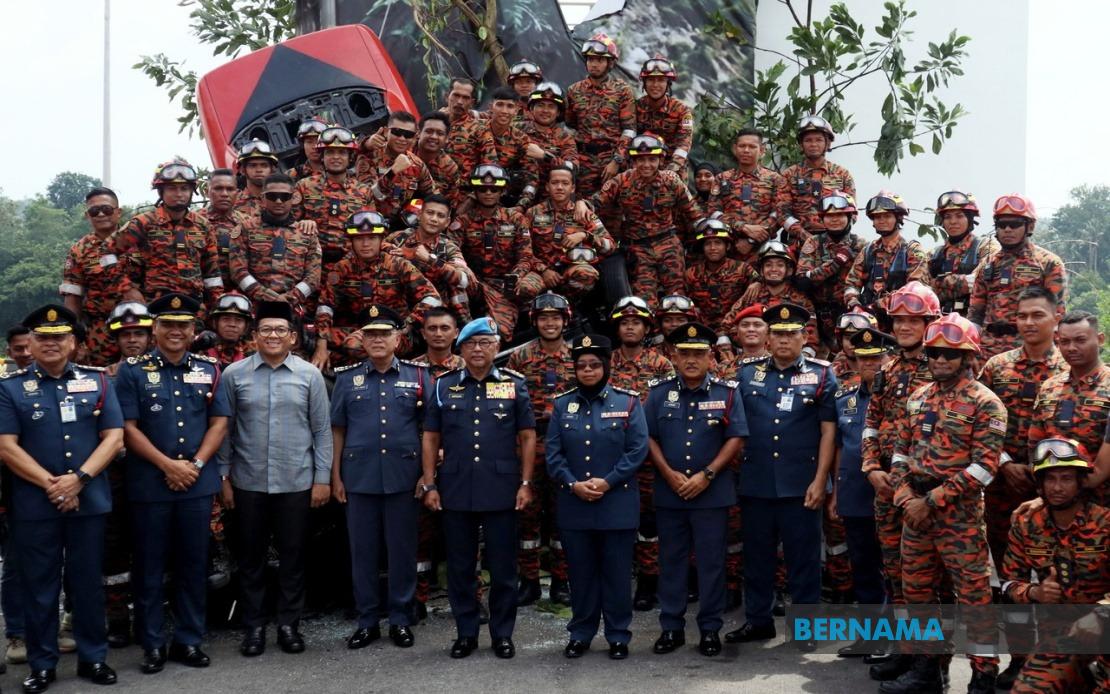
The Federal Government has greenlit an annual development budget of RM278.9 million for the Malaysian Fire and Rescue Department (JBPM) to execute 86 projects as part of the inaugural rolling plan phase of the 13th Malaysia Plan (13MP). The investment encompasses 27 recently launched undertakings alongside 59 projects already in motion across the nation during the financial year, underscoring the administration's commitment to bolstering emergency response infrastructure nationwide.
Deputy Minister of Housing and Local Government Datuk Aiman Athirah Sabu unveiled the substantial funding commitment during ceremonies in Kuantan marking the inauguration of the Sungai Lembing Fire and Rescue Station (BBP). She detailed how Pahang state alone is benefiting from seven facility development initiatives spanning both the 12th Malaysia Plan and the current 13MP rolling phase. These undertakings include purchasing and establishing the Gohtong Jaya station building with residential quarters, constructing the Benta facility, and developing infrastructure at Tioman alongside related accommodation.
Beyond new construction, the department is simultaneously pursuing modernisation efforts across existing installations. Pahang's station network is undergoing systematic enhancement through facility upgrades at both Bentong and Kuantan stations, comprehensive reconstruction of the Triang facility, and preparatory groundworks for the forthcoming Tanjung Lumpur establishment. This dual approach of simultaneous expansion and refurbishment demonstrates a strategic effort to strengthen fire and rescue capacity across geographic divisions whilst maintaining operational standards at established locations.
The newly operational Sungai Lembing station, completed at a cost of RM6 million on a seven-acre parcel, marks the 29th such facility within Pahang. The station commenced regular operations on February 15 following formal approval, extending professional fire and rescue coverage to approximately 15,000 residents in Sungai Lembing and neighbouring communities. The facility's strategic location enables faster emergency response times and enhanced service delivery throughout the district, particularly vital given the township's terrain and industrial heritage.
Beyond its primary firefighting function, the Sungai Lembing station has been conceived as a multi-purpose community hub. Deputy Minister Aiman Athirah envisioned the facility evolving into a comprehensive public education centre where residents can acquire essential safety knowledge and skills whilst promoting community awareness initiatives. This holistic vision positions emergency infrastructure as engines of social development, transforming stations from purely operational facilities into spaces where civilians can learn lifesaving techniques and disaster preparedness, thereby cultivating a more resilient population.
Sungai Lembing's broader revitalisation programme provides important context for the fire station investment. Deputy Economy Minister and Paya Besar Member of Parliament Datuk Mohd Shahar Abdullah outlined complementary heritage conservation and tourism development efforts restructuring the historic township. These encompass restoration of the PCCL Cinema, establishment of ecotourism enterprises, construction of a digital museum documenting local history, modernisation of the Sungai Lembing Tunnel, and collaborative endeavours pursuing UNESCO World Heritage Site designation. The fire station consequently anchors a comprehensive community transformation agenda rather than functioning in isolation.
Mohd Shahar articulated how emergency infrastructure development intertwines with broader township prosperity objectives. He stressed that heritage preservation and tourism initiatives lack meaningful foundation without contemporaneous investment in public safety systems. The Sungai Lembing station exemplifies this integrated approach, functioning simultaneously as operational necessity, economic development catalyst, and community safety commitment. By prioritising emergency preparedness infrastructure alongside heritage marketing, the government positions Sungai Lembing as demonstrating how historical towns can modernise whilst safeguarding residents and visitors through comprehensive emergency response networks.
The Sungai Lembing development emerges within Malaysia's expanding provincial infrastructure investment patterns under the 13th Malaysia Plan framework. The RM278.9 million annual allocation reflects escalating government prioritisation of emergency services outside metropolitan zones, acknowledging that effective national safety coverage demands consistent rural and smaller-town facility development. This provincial focus carries particular significance for Southeast Asian readers observing Malaysia's decentralisation efforts and resource distribution philosophies, as the allocation demonstrates commitment to standardising service quality nationwide rather than concentrating expenditure in urban corridors.
The broader implications extend beyond Pahang's borders, establishing benchmarks for fire and rescue infrastructure development throughout Malaysia. The comprehensive project portfolio—encompassing station acquisitions, new constructions, facility upgrades, and preparatory works—reflects sophisticated infrastructure planning balancing immediate operational needs with long-term capacity building. This multi-year rolling approach enables departments to implement complex projects sequentially whilst maintaining continuity, providing lessons for other government agencies pursuing sustained development across dispersed geographic territories.
The ceremonial opening witnessed attendance from senior state officials including Pahang Menteri Besar Datuk Seri Wan Rosdy Wan Ismail and State Legislative Assembly Speaker Datuk Seri Mohd Sharkar Shamsuddin, alongside presiding by His Majesty Sultan Al-Sultan Abdullah Ri'ayatuddin Al-Mustafa Billah Shah. Such high-level engagement signals government seriousness regarding emergency services infrastructure, elevating fire and rescue investment from routine budgeting matters to matters of state priority warranting ceremonial recognition.

