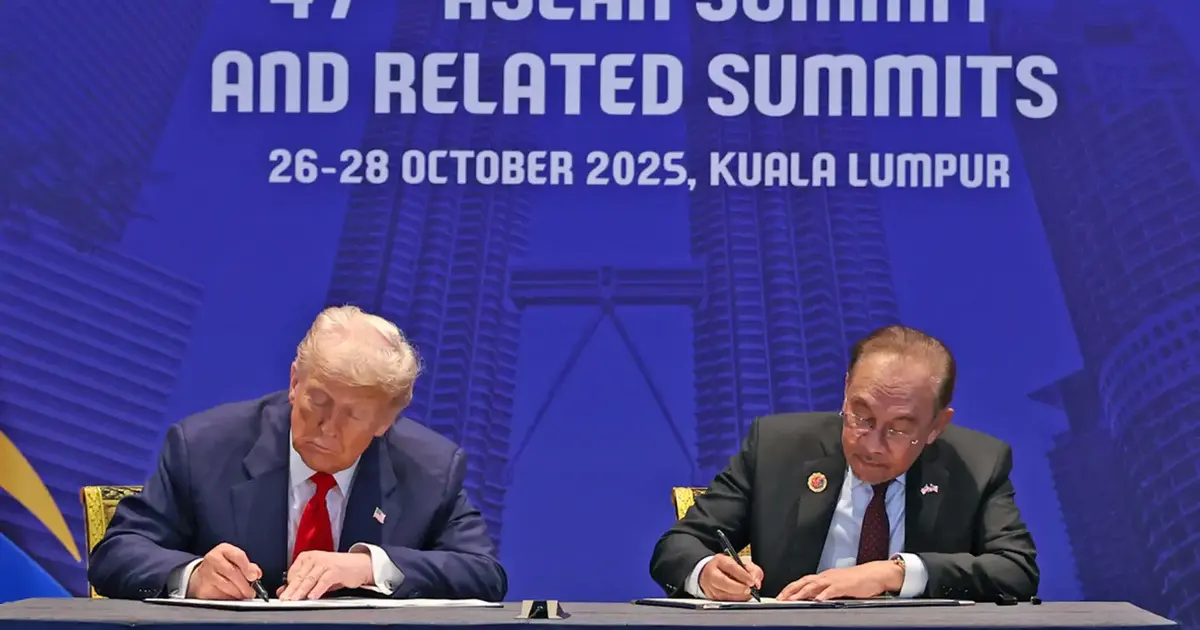
Prime Minister Anwar Ibrahim's government has escalated its legal defence against parliamentary opposition to a reciprocal trade agreement with the United States by seeking to have the case dismissed entirely. The application, filed jointly by the administration and the Prime Minister himself, challenges the standing and merit of the lawsuit initiated by opposition Members of Parliament, marking a significant procedural battle over trade policymaking authority in Malaysia's constitutional framework.
The dispute centres on the bilateral trade arrangement between Malaysia and the United States, a cornerstone of the government's economic engagement strategy in the Indo-Pacific region. Opposition MPs have mounted a legal challenge questioning the government's authority to enter into such agreements without parliamentary ratification or explicit statutory approval, arguing that trade pacts of this magnitude affect citizens' economic rights and therefore warrant fuller legislative scrutiny. This tension reflects broader questions about executive prerogative in international commerce versus parliamentary oversight.
Concurrently, the opposition MPs have filed a parallel application requesting that constitutional questions arising from the dispute be referred to the Federal Court. This procedural move seeks to elevate fundamental issues of constitutional interpretation regarding the Executive's treaty-making powers and the scope of parliamentary authority over international trade agreements. Such referrals allow the apex court to clarify constitutional boundaries when lower courts face novel questions of constitutional importance, potentially establishing precedent for how Malaysia handles future trade negotiations.
The government's bid to strike out the MPs' suit represents a pre-emptive effort to eliminate the case on technical or preliminary grounds, bypassing full judicial examination of the substantive arguments. Should this application succeed, the court would dispose of the matter without requiring the government to substantively address the MPs' claims about procedural deficiencies or constitutional violations. Conversely, if the strike-out bid fails, the case would proceed to full hearing where the merits of each party's position would be comprehensively argued and evaluated.
This legal standoff emerges against the backdrop of Malaysia's strategic economic repositioning. The US trade relationship remains crucial for Malaysian exporters, manufacturers, and technology sectors seeking market access and supply chain integration. However, domestic political sensitivities around trade liberalisation—particularly concerns about agricultural imports, labour standards, and regulatory harmonisation—have fuelled parliamentary scrutiny of such agreements. Opposition MPs appear motivated partly by these substantive policy concerns and partly by assertions that the government has circumvented proper constitutional procedures.
The constitutional referral application by MPs addresses the interpretive vacuum at the heart of this dispute. Malaysia's Federal Constitution does not explicitly delineate the procedures for ratifying or approving international trade agreements, leaving significant ambiguity about whether reciprocal trade pacts require parliamentary approval or fall within executive discretion. By seeking Federal Court clarification, MPs are attempting to establish firm constitutional ground rules that would bind future governments, regardless of their political complexion. This reflects recognition that winning this particular case matters less than establishing durable legal principles.
From a comparative perspective, Malaysian governance of trade negotiations resembles patterns across the Commonwealth, where tension between executive flexibility and legislative accountability remains chronic. Governments typically argue that detailed parliamentary involvement in trade negotiations compromises negotiating flexibility and commercial confidentiality, while opposition voices contend that democratic legitimacy requires legislative input on agreements affecting citizens' economic interests. Malaysia's approach has historically favoured executive discretion, but this case signals growing parliamentary assertiveness about demanding transparency and proper procedure.
The timing carries additional significance within Malaysia's political context. The government's slim parliamentary majority makes legislative management delicate, and opposition MPs may calculate that judicial intervention offers leverage when legislative defeats appear unlikely. Simultaneously, the government faces pressure to demonstrate effective governance and deliver on economic commitments to international partners, necessitating decisive legal action to prevent protracted litigation from undermining bilateral relations. The court's handling of both the strike-out application and the constitutional referral will substantially influence Malaysia's trajectory on trade governance for years ahead.
Industry observers anticipate that prolonged legal uncertainty could complicate Malaysia's negotiating position in future trade discussions, as international partners may question the enforceability or durability of agreements entered into under such disputed constitutional authority. This consideration may pressure the government toward seeking legislative accommodation or clearer constitutional underpinnings for trade policy, potentially shifting dynamics toward greater parliamentary involvement in trade approval processes. The outcome could reshape how Malaysian administrations manage their economic diplomacy.
Both applications will require judicial determination before substantive arguments about the trade agreement's merits receive consideration. The courts must first decide whether the MPs possess legal standing to bring such challenges, whether the case raises justiciable issues appropriate for judicial resolution, and which constitutional questions warrant Federal Court attention. These procedural determinations will prove as consequential as any ultimate judgment on the agreement itself, potentially affecting how Malaysian courts approach future parliamentary challenges to government policy.
The unfolding legal proceedings represent more than a technical dispute about one trade arrangement. They constitute a foundational test of how Malaysia's constitutional order allocates authority over international economic policy between the Executive and Legislature. Whether the courts ultimately affirm executive prerogative or mandate greater parliamentary participation will establish crucial precedent for Malaysia's governance framework in an era of expanding global trade engagement and increasing domestic demand for democratic accountability in economic policymaking.

