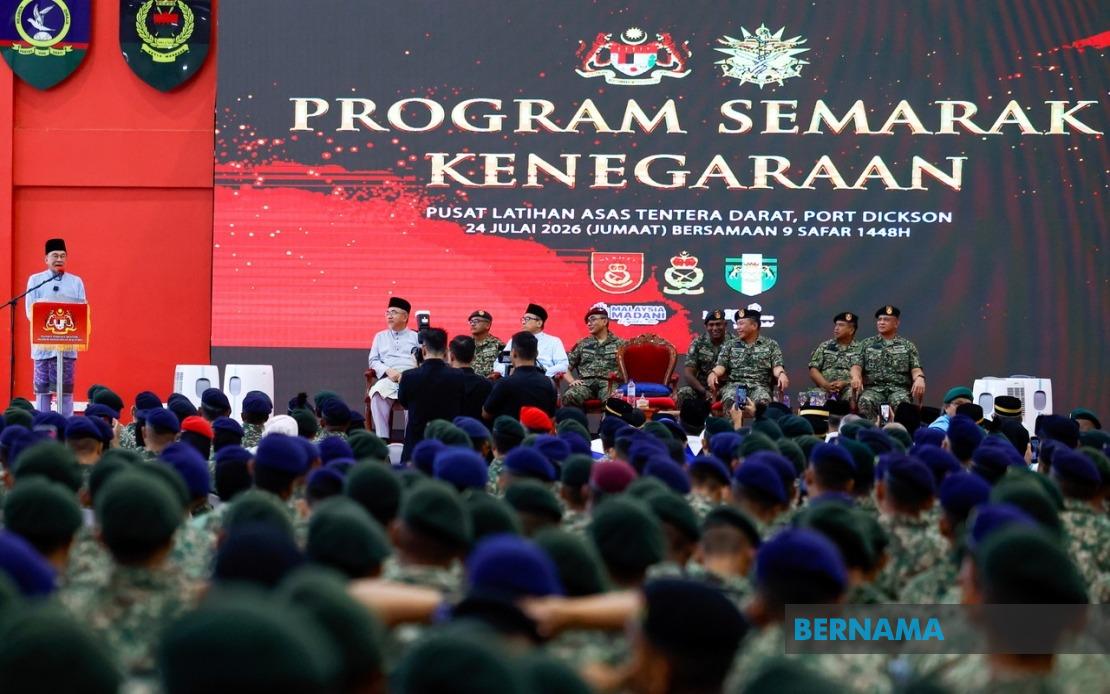
Prime Minister Datuk Seri Anwar Ibrahim has announced a significant boost to government spending on Warriors' Day, approving an additional RM2 million allocation to mark the annual commemoration of Malaysia's military and security personnel. Made during an event in Port Dickson on July 24, the announcement reflects what the government describes as recognition of the armed forces' role in safeguarding national sovereignty and territorial integrity. The decision comes as Malaysia continues to assess its defence posture amid regional geopolitical developments and domestic security considerations.
The supplementary funding represents a substantial increase compared to historical patterns. Anwar, who holds the dual portfolios of Prime Minister and Finance Minister, explained that the government typically allocates between RM1 million and RM1.5 million annually for Warriors' Day observances. This year's RM2 million commitment therefore nearly doubles the upper limit of previous years' budgets, a shift that Anwar attributed to the event organisers' demonstrated competence in managing resources effectively. The decision suggests the government's willingness to expand public recognition and resource allocation for military-related commemorative activities, potentially signalling broader policy intentions regarding defence and veterans' affairs.
Warriors' Day, observed annually on July 31 since 1968, serves as Malaysia's primary occasion for honouring the contributions of both the Malaysian Armed Forces and the Royal Malaysia Police to national security and development. The commemorative event rotates organisational responsibilities between the MAF and the PDRM on an annual basis, ensuring both institutions share prominence in the national narrative around security and sovereignty. By increasing the allocation, the government aims to enhance the scale and quality of celebrations, allowing for more comprehensive programming and greater public participation in acknowledging these institutions' sacrifices.
Beyond the immediate Warriors' Day funding, Anwar's statement revealed a more ambitious agenda regarding military personnel welfare. The government has approved RM844 million in existing budget allocations designated specifically for housing development and maintenance across the armed forces. This substantial commitment addresses long-standing infrastructure needs within military communities, with projects including the construction of 1,300 new residential units at the Syed Sirajuddin Camp in Gemas, Negeri Sembilan, alongside broader repairs and upgrades to military residential facilities nationwide. For Malaysian Defence Ministry observers and policy analysts, this signals that housing provision for military families has become a central concern within the current administration's defence portfolio.
The residential development component extends beyond military personnel themselves to their families' broader needs. Anwar specifically highlighted a RM3 million educational facilities allocation targeting schools in Negeri Sembilan that predominantly serve children of armed forces members, including Sekolah Kebangsaan Sungala and Sekolah Kebangsaan Si-Rusa in Port Dickson. Investment in educational infrastructure for military families addresses a persistent gap in public provision and demonstrates the government's recognition that military service imposes distinct lifestyle pressures on service members' dependents. Such comprehensive support systems influence recruitment and retention in professional military forces, a consideration increasingly relevant as Malaysia competes globally for skilled personnel.
Anwar's framing of these commitments explicitly linked military welfare to national stability and peace. He characterised armed forces personnel and veterans as foundational pillars upon which Malaysia's prosperity and security rest, thereby attempting to elevate the political and social status of military service within public discourse. This rhetorical positioning matters for civil-military relations in Malaysia, where civil authorities must maintain legitimacy with defence institutions whilst preserving civilian supremacy. By publicly acknowledging military contributions and backing such acknowledgement with substantial budgetary commitments, the government reinforces a particular narrative about military-state relations that emphasises mutual respect and shared national purpose.
The announcement also contextualised these spending initiatives within broader defence modernisation efforts. Anwar noted that government remains committed to enhancing Malaysia's defence capabilities through what he termed transparent acquisition of assets, combined with improvements to basic amenities and facilities for MAF personnel across the country. This language suggests awareness of previous controversies surrounding defence procurement and signals an intention to position current initiatives as part of a broader, more accountable approach to military spending. For regional observers monitoring Malaysian defence developments, such statements carry implications for how Malaysia manages relationships with external defence partners and suppliers.
Highly placed officials attended the Port Dickson event, including Chief Secretary to the Government Tan Sri Shamsul Azri Abu Bakar, Deputy Defence Minister Adly Zahari, and the Chief of Defence Forces General Tan Sri Malek Razak Sulaiman, alongside Army Chief General Tan Sri Azhan Md Othman. This official presence underscored the government's determination to signal institutional alignment around defence and veterans' priorities. The gathering reflected a coordinated whole-of-government approach to articulating defence sector commitments, with representatives from multiple ministries and the defence establishment appearing jointly to validate the announcements.
For Malaysian citizens and particularly military families, these allocations carry tangible implications regarding quality of life, educational opportunities, and housing security. The timing of such announcements during an election cycle warrants noting, as defence and security spending frequently features in electoral messaging aimed at constituencies with significant military populations. However, the substance of these commitments—particularly the multi-year housing projects and educational infrastructure improvements—suggests investments intended to persist beyond any single political cycle. Such enduring programmes can generate public support among defence communities whilst simultaneously addressing legitimate service member grievances around accommodation and family welfare that have periodically surfaced in public discourse.
Regionally, Malaysia's increased defence spending and explicit prioritisation of military welfare merit attention from neighbouring countries and regional analysts assessing threat perceptions and security posturing throughout Southeast Asia. While Warriors' Day commemoration represents a domestic matter, the government's willingness to substantially increase public spending on military-related activities reflects shifting political priorities within Malaysia's defence establishment. This development occurs against a backdrop of evolving regional security challenges, including maritime disputes, transnational terrorism concerns, and great power competition for strategic influence, factors that likely influenced the government's decision to boost defence-related allocations.

