Prime Minister Datuk Seri Anwar Ibrahim has unveiled a significant financing boost for Malaysia's MSME sector, with Syarikat Jaminan Pembiayaan Perniagaan (SJPP) approving RM4.9 billion in funding for more than 6,000 enterprises during the first half of 2026. The announcement underscores the government's commitment to addressing persistent financing barriers that have long constrained growth among smaller business operators, particularly in an increasingly complex global economic landscape.
SJPP, a wholly owned subsidiary of the Minister of Finance Incorporated, serves as a critical intermediary in Malaysia's financial ecosystem for small businesses seeking access to credit. As Finance Minister alongside his role as Prime Minister, Anwar described the approval as integral to the government's broader strategy of lowering entry barriers for entrepreneurs and sustaining operational viability across the MSME spectrum. The timing reflects heightened awareness of the sector's vulnerability to external economic shocks and the need for proactive policy intervention.
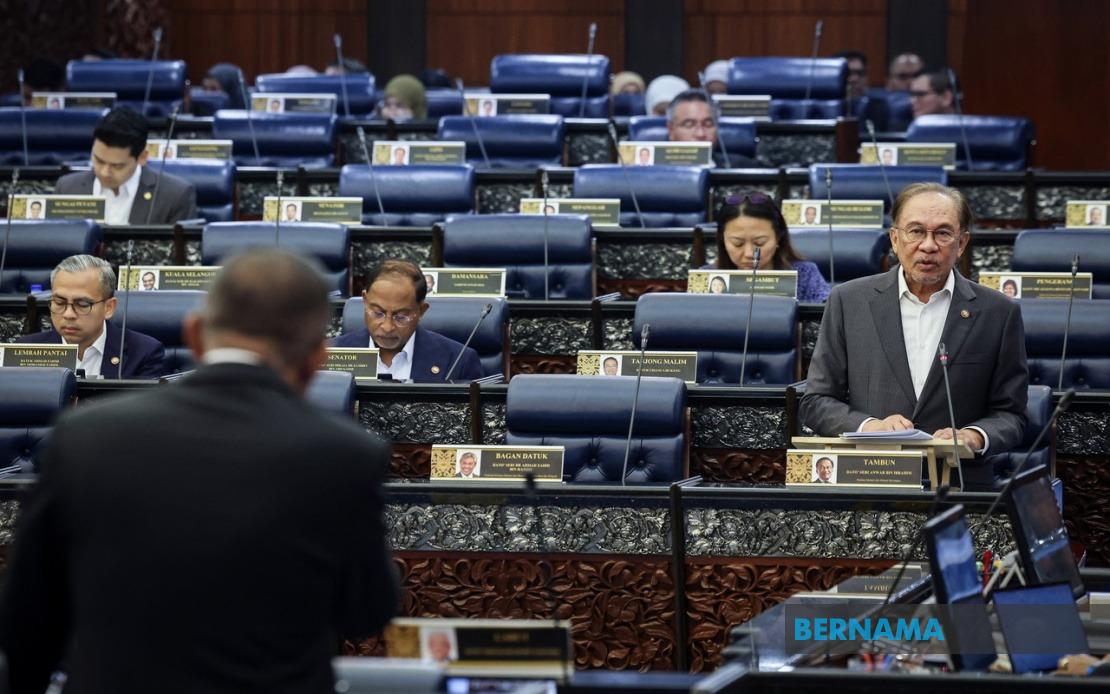
During parliamentary question time in the Dewan Rakyat, Anwar responded to concerns raised by Lee Chuan How, the Member of Parliament for Ipoh Timor under the Pakatan Harapan coalition. Lee's inquiry specifically highlighted the mounting pressures facing Malaysia's business community, particularly among MSME proprietors navigating turbulent international conditions. The exchange reflected broader parliamentary recognition that MSMEs—which collectively form the backbone of Malaysia's private sector employment and economic dynamism—require consistent government support to remain resilient.
The government has positioned this RM4.9 billion tranche as part of a comprehensive financial support architecture. Beyond the current approval, Anwar outlined that total lending and guarantee facilities extended to MSMEs have exceeded RM15 billion, demonstrating the scale of state involvement in credit markets for smaller enterprises. This intervention model aims to compensate for market failures in traditional banking channels, where MSMEs often encounter stringent collateral requirements and risk assessments that effectively exclude them from conventional lending.
Within this broader framework, the government has deliberately ring-fenced RM5 billion specifically for Bumiputera-owned businesses, reflecting affirmative action principles embedded in Malaysia's economic policy architecture. This allocation acknowledges the historically lower participation rates of Bumiputera entrepreneurs in formal credit markets and represents an attempt to level the competitive playing field. The designated allocation ensures that indigenous business owners have dedicated access to concessional financing terms and simplified approval procedures through SJPP's guarantee mechanisms.
The financing approval addresses multiple operational challenges confronting MSMEs. Beyond merely providing capital infusions, the SJPP guarantee structure lowers borrowing costs by reducing perceived risk to commercial lenders, effectively allowing MSMEs to access funds at more competitive rates than would otherwise be available. This mechanism proves particularly valuable for businesses lacking substantial tangible assets or established credit histories, enabling operators to fund working capital expansion, purchase inventory, or invest in productivity-enhancing technology.
Context matters considerably for Malaysian readers assessing this initiative. MSMEs contribute approximately one-third of Malaysia's gross domestic product and employ nearly three-quarters of the private sector workforce. Any disruption to MSME credit availability consequently ripples through employment, household income, and regional development patterns. The government's positioning of this financing package as a deliberate policy response to global economic uncertainty demonstrates recognition that the sector faces genuine vulnerability during periods of international volatility.
The parliamentary exchange and subsequent government announcement reveal shifting political attention toward small business sustainability. Previous years witnessed periodic emphasis on MSME support, but the scale and specificity of the current commitment—with concrete approval figures and ring-fenced allocations—indicates elevated priority status. This reflects both genuine policy commitment and responsive governance, as MSME constituencies possess significant electoral influence across both urban and rural constituencies.
Implementation effectiveness will ultimately determine whether these approvals translate into meaningful business expansion or merely represent accounting entries. Historical patterns show variable uptake rates for government-backed financing schemes, with some businesses remaining unaware of available programs or encountering bureaucratic friction during application processes. The government's continued emphasis on accessibility and streamlined procedures will prove essential for converting approved allocations into actual disbursements reaching target entrepreneurs.
Broader regional context adds relevance for Malaysian stakeholders. Across Southeast Asia, governments increasingly recognize MSME financing as a development priority, with comparable programs operating in Indonesia, Thailand, and Vietnam. Malaysia's SJPP mechanism ranks among the region's more established guarantee systems, though competitive dynamics and best-practice adoption from neighboring economies continue to drive policy evolution. The current approval demonstrates Malaysia's sustained commitment to competitive positioning within ASEAN's entrepreneurial landscape.
The financing announcement carries implications extending beyond immediate capital availability. It signals government confidence in domestic business fundamentals despite external economic headwinds, potentially influencing business sentiment and investment decisions. Entrepreneurs perceiving genuine policy support may exhibit greater willingness to undertake expansion or technological investments that require upfront capital commitment. This psychological dimension of policy often receives insufficient analytical attention but meaningfully influences economic behavior.
Moving forward, the success of this initiative will partly depend on complementary policy measures addressing other MSME constraints. While financing remains critical, business operators simultaneously confront challenges including talent acquisition, digital transformation pressures, supply chain disruptions, and regulatory complexity. Integrated policy approaches combining credit access with technical support, infrastructure investment, and regulatory rationalization would enhance overall program effectiveness and MSME sustainability prospects.

