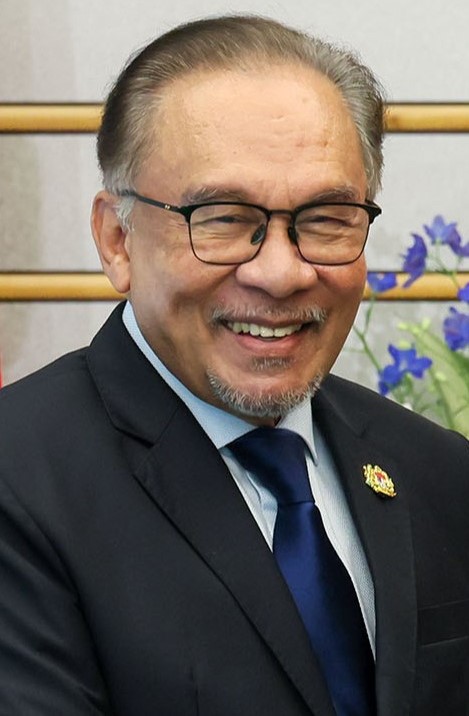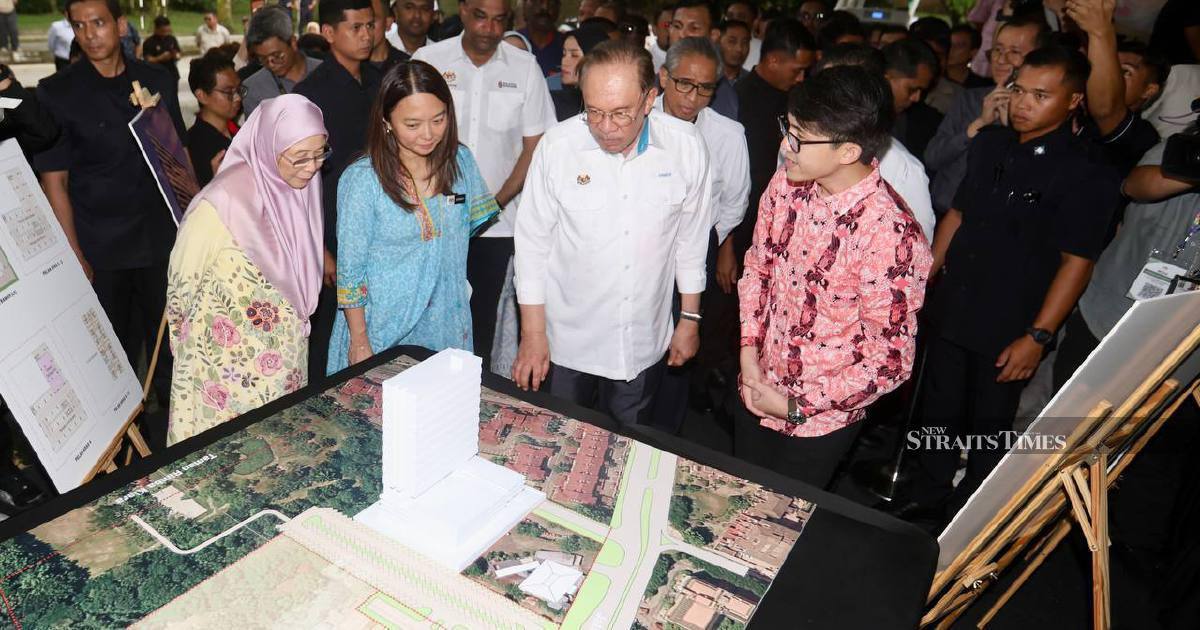
Prime Minister Datuk Seri Anwar Ibrahim has moved to counter criticism of his administration's handling of urban poverty, insisting that the government remains genuinely committed to advancing the welfare and defending the constitutional rights of the urban poor in Malaysia. His remarks underscore ongoing efforts to position the current administration as champion of vulnerable populations, even as development pressures mount across major cities.
The Prime Minister's statement comes at a time when Malaysia's urban centres face mounting tensions between rapid modernisation and the preservation of housing and livelihood opportunities for low-income residents. The Bukit Kiara project, which Anwar cited as evidence of the government's commitment, represents a tangible initiative designed to benefit economically disadvantaged urban populations. The scheme reflects a broader policy direction aimed at ensuring that development benefits do not accrue exclusively to wealthier segments of society.
For Malaysian policymakers and observers, the emphasis on protecting urban poor rights carries particular significance given the concentration of both economic opportunity and housing pressure in cities like Kuala Lumpur, Selangor, and Penang. As property values continue rising and gentrification pressures reshape urban landscapes, the government's explicit reaffirmation of its commitment to low-income communities signals an intention to balance growth with equity considerations. This balancing act remains politically fraught and economically complex.
The urban poor sector in Malaysia encompasses workers in informal economies, low-wage service sector employees, migrant workers, and families in informal settlements. Many struggle with inadequate housing, limited access to credit, and vulnerability to displacement from development schemes. Previous development projects in Malaysian cities have sometimes displaced communities without adequate alternative provisions, creating long-standing grievances and shaping public perception of government priorities.
Anwar's invocation of the Bukit Kiara project suggests the government views such initiatives as proof of its social commitment. The project apparently incorporates provisions intended to benefit economically disadvantaged urban residents, whether through affordable housing components, livelihood support, or community facilities. Such concrete programmes allow the administration to demonstrate tangible action rather than merely rhetorical commitment to vulnerable populations.
The timing of these remarks also reflects broader political considerations within Malaysia's competitive multiparty system. Urban areas represent critical electoral battlegrounds where different coalitions compete for support. Demonstrating responsiveness to urban poor concerns has both principled and strategic dimensions, as parties seek to consolidate working-class support while addressing legitimate grievances about inequality and opportunity.
Southeast Asian governments more broadly have grappled with similar challenges as rapid urbanisation creates both prosperity and precarity. Malaysia's experience navigating these tensions offers lessons for the region. The government's explicit framing of development as compatible with rights protection and social inclusion represents an attempt to reconcile growth imperatives with equity objectives—a tension that remains unresolved across much of Southeast Asia.
The Bukit Kiara initiative also reflects evolving thinking about urban development models. Rather than wholesale displacement and redevelopment, contemporary approaches increasingly incorporate community participation, heritage preservation, and direct benefits for existing residents. Whether such projects genuinely deliver on these promises, or whether they represent primarily symbolic gestures, remains subject to scrutiny from civil society organisations, researchers, and affected communities themselves.
For Malaysian readers concerned about housing affordability, livelihood security, and equitable development, Anwar's statements warrant careful examination against actual project outcomes. The distance between government rhetoric and ground-level reality often proves substantial, particularly in development contexts where financial pressures and competing interests create complications. Tracking the Bukit Kiara project's implementation will provide empirical evidence regarding whether such initiatives translate policy commitments into meaningful improvements in urban poor welfare.
The broader policy framework within which such projects operate also matters significantly. Individual initiatives, however well-intentioned, cannot substitute for systemic reforms in housing policy, labour standards, social safety nets, and urban planning regulations. Long-term protection of urban poor interests requires comprehensive approaches addressing structural inequalities rather than relying on project-by-project interventions.
Moving forward, the government faces pressure to demonstrate sustained commitment to urban equity alongside continued economic development. This requires transparent monitoring of project impacts, genuine community consultation in planning processes, and willingness to modify policies when evidence indicates that vulnerable populations remain inadequately protected. Public confidence in government equity commitments ultimately rests on demonstrated results rather than official statements.