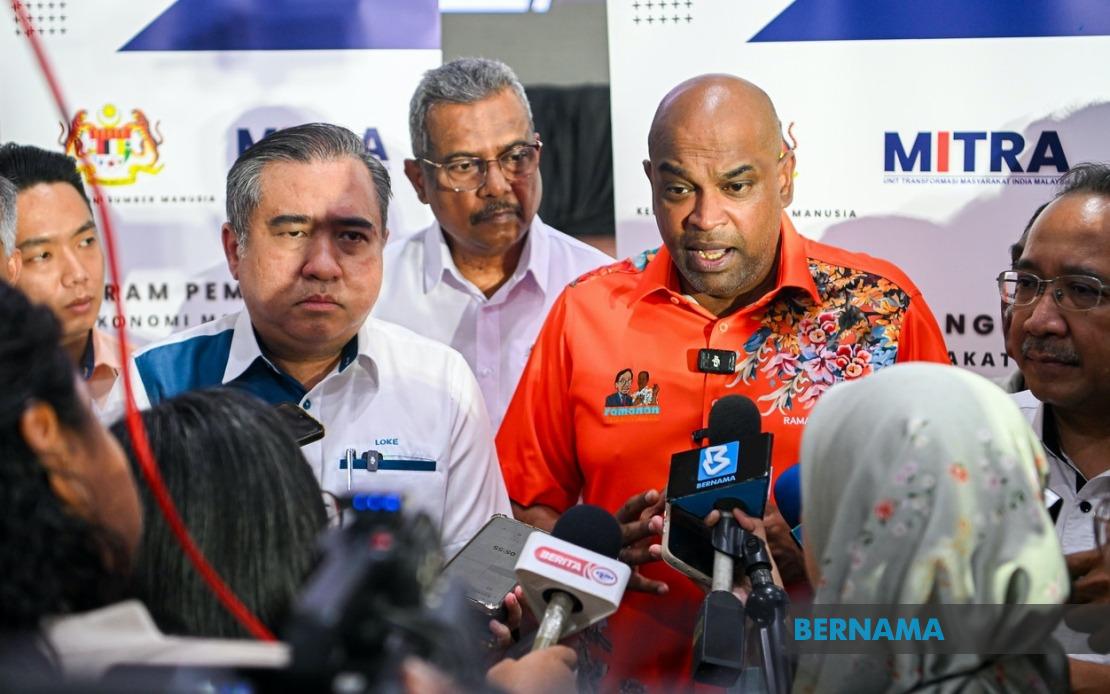
Transport Minister Anthony Loke has firmly rejected suggestions that the Democratic Action Party exercises undue influence over the government, characterising such claims as a worn-out political attack that fails to reflect how Malaysia's ruling coalition actually operates. Speaking in Seremban on July 7, the DAP secretary-general emphasised that policy formulation at both federal and state levels involves substantive consultation among all component parties within Pakatan Harapan, with final decisions resting with Prime Minister Datuk Seri Anwar Ibrahim rather than any single faction.
The remarks come amid ongoing criticism from opposition figures and political commentators who have repeatedly suggested that DAP, as the coalition's largest single party, wields disproportionate power over the government's direction. Loke's pushback signals growing frustration within the ruling alliance at what party leaders see as a delegitimising narrative designed to undermine PH's credibility and unity. The accusation has proven remarkably durable in Malaysian political discourse, resurfacing regularly despite the coalition's insistence on its internal democratic processes.
Loke outlined the mechanics of decision-making within the federal government, noting that UMNO, PKR, and DAP all contribute their perspectives during policy discussions. He stressed that this collaborative approach does not translate into any party remaining passive or withholding input, but rather that each component party actively represents its members' interests and values. The Transport Minister characterised this dynamic as entirely normal for a multi-party coalition, rejecting the suggestion that DAP's participation somehow constitutes illegitimate control.
The Prime Minister ultimately bears responsibility for finalising decisions, according to Loke, a point that underscores the hierarchical nature of cabinet government and Anwar Ibrahim's preeminent role in steering the executive. This framing is significant for Malaysian readers accustomed to scrutinising the balance of power within coalition arrangements, as it places ultimate accountability at the highest level rather than diffusing it among party secretariats or committees. Loke's assertion that Anwar makes the final call provides a clear answer to those questioning whether the government operates with genuine unified leadership or as a forum for inter-party horse-trading.
The DAP leader extended his defence to state-level governance, noting that Negeri Sembilan's administration under Menteri Besar Datuk Seri Aminuddin Harun follows identical principles. The state government similarly solicits input from all coalition component parties before settling on major policy directions, ensuring that no single faction unilaterally determines outcomes. This consistency across federal and state structures suggests that the coalition's internal decision-making model, whatever its strengths or weaknesses, operates according to established norms rather than ad-hoc arrangements.
Loke also addressed separate allegations that Malay interests face erosion under PH governance in Negeri Sembilan, dismissing such claims as recycled scaremongering that distorts the actual state of affairs. He pointed out that the Menteri Besar himself is Malay, a fact that directly contradicts any assertion that non-Malays have captured the state administration. This structural reality serves as tangible evidence against claims of demographic marginalisation, even if concerns about specific policies or resource allocation might persist among certain constituencies.
The Transport Minister highlighted that government programmes and initiatives in Negeri Sembilan continue to prioritise the wellbeing of all communities, including Malays, since PH assumed control in 2018. The emphasis on safeguarding communal interests reflects Malaysia's constitutional commitment to bumiputera rights and recognition of Islam's special position, commitments that successive PH-led administrations have maintained. Loke's point suggests that policy continuity on these foundational matters persists despite the coalition's multiethnic composition and diversity of ideological perspectives.
From a broader Southeast Asian context, Malaysia's experience with multi-party coalitions offers instructive lessons about power-sharing arrangements and the perpetual challenge of managing intra-coalition tensions. The persistence of accusations that one party dominates despite repeated denials points to deeper structural anxieties about representation and inclusion that transcend simple factual rebuttal. Similar dynamics have surfaced in other regional democracies grappling with coalition governance, where minority partners often struggle to convince their own constituents that their voice remains meaningful.
The rhetorical battle over who actually controls the government reflects real anxieties about agency and influence within complex political arrangements. For Malaysian readers evaluating coalition performance, Loke's response invites scrutiny of whether the stated collective decision-making model genuinely protects minority interests or merely provides a veneer of inclusivity. The Transport Minister's willingness to engage the question head-on, rather than dismissing it as beneath response, indicates that party leaders recognise its salience to public perceptions of governance legitimacy.
Moving forward, whether such systematic rebuttals will exhaust the "DAP dictates" narrative remains uncertain. Opposition parties and critical observers possess strong incentive to continue raising such concerns, as they resonate with voters anxious about demographic and cultural trends. However, Loke's framing of collective decision-making backed by final accountability to the Prime Minister provides the government with a coherent counter-narrative grounded in institutional structure rather than mere partisan assertion. The effectiveness of this argument ultimately depends on whether voters observe policy outcomes that appear genuinely reflective of coalition compromise rather than any single party's preferences.

