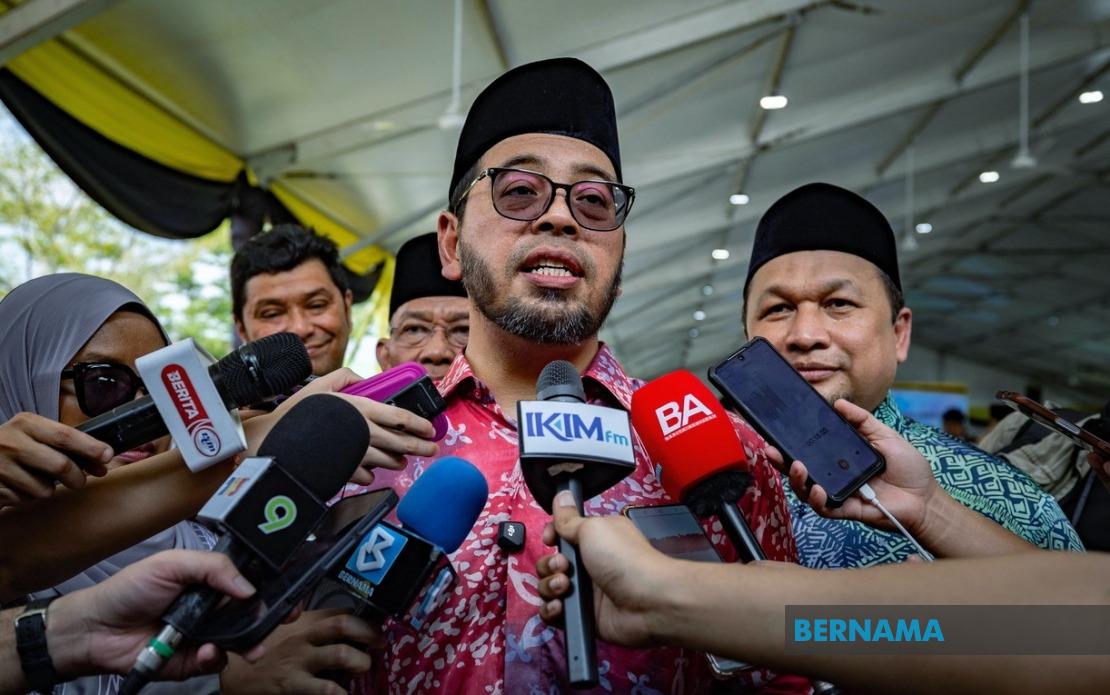
The federal government views Islamic educational institutions—including pondok schools, madrasahs and religious academies—as essential pillars in constructing a nation where material advancement is balanced with moral and spiritual development. This position was articulated by Minister Dr Zulkifli Hasan during the opening of the 2026 Perak Pondok and Religious Schools Gathering (HIPSA) in Chemor, an event that brought together thousands of educators, community leaders and families invested in Islamic education across the state. The gathering, officiated by Prime Minister Datuk Seri Anwar Ibrahim and attended by Perak Menteri Besar Datuk Seri Saarani Mohamad, reflected the administration's deliberate effort to demonstrate high-level political support for a sector that traditionally operates at the grassroots level but shapes the ethical foundations of Malaysian society.
Dr Zulkifli's remarks challenged a narrower conception of national progress that measures success purely through economic indicators or infrastructure development. Instead, he positioned human capital and moral values as equally vital metrics of advancement. This framing is significant in the Malaysian context, where rapid urbanisation and economic modernisation have sometimes created tensions between material progress and traditional religious education. By designating pondok institutions and religious schools as strategic partners rather than peripheral or supplementary institutions, the government signals that Islamic education is not merely complementary to the national education system but integral to its overarching mission.
The Prime Minister's Department (Religious Affairs) is spearheading this collaborative approach, working in tandem with state governments, State Islamic Religious Departments and State Islamic Religious Councils to ensure that religious education develops in a structured, high-quality and contextually relevant manner. This coordination mechanism addresses a longstanding challenge in Malaysia's plural education landscape: how to maintain standards and coherence across thousands of independent or semi-independent Islamic institutions scattered throughout the country. By formalising partnerships and establishing clear communication channels, the government aims to harmonise curriculum development, teacher training and resource allocation without compromising the autonomy or cultural distinctiveness that characterises many pondok schools.
The HIPSA 2026 gathering demonstrated this commitment through concrete action. Approximately three thousand participants—encompassing pondok students and teachers, KAFA (Koranic study circle) educators, non-governmental organisation representatives and local residents—convened to engage with substantive discussions on Islamic leadership's role in nation-building. The programme featured a Bicara Murobbi forum that brought together prominent religious scholars including Kelantan-based Sheikh Wazir Che Awang Al-Makki, former Perak Mufti Datuk Seri Wan Zahidi Wan Teh and preacher Ustaz Mohamad Saifuddin Abdul Latiff. These discussions provided intellectual grounding for the event's broader themes, allowing scholars to articulate how religious education and Islamic values contribute to contemporary governance and social cohesion.
Beyond symbolic gestures, the government deployed tangible support mechanisms. Minister Zulkifli distributed MADANI Aid Baskets to twelve recipients representing two hundred and fifty community beneficiaries, acknowledging the economic vulnerabilities that many families dependent on Islamic education face. The Yayasan Dakwah Islamiah Malaysia (YADIM), which organised HIPSA 2026, simultaneously distributed essential food items to needy families and presented mock cheques to pondok institutions and religious schools across Perak. This dual approach—targeting both individual household welfare and institutional sustainability—recognises that the health of Islamic educational institutions depends partly on their students' and teachers' basic security.
The sponsorship initiatives announced at the gathering address specific institutional needs within the Islamic education ecosystem. Student fee sponsorships remove financial barriers that might otherwise exclude talented but economically disadvantaged children from pursuing religious education. Meanwhile, the Fast Track Sijil Pelajaran Malaysia programme—offering an accelerated pathway to the national secondary examination—integrates pondok graduates into Malaysia's broader credential systems, enhancing their employment prospects and social mobility. These mechanisms signal that religious education need not exist in isolation from or tension with mainstream educational achievement and economic opportunity.
HIPSA 2026 explicitly aligned with the Malaysia MADANI framework, the government's overarching aspiration that prioritises human wellbeing and human capital development. This alignment suggests that religious education is not viewed as a separate domain but as integral to Malaysia MADANI's vision of prosperity rooted in human values rather than material accumulation alone. The initiative mobilised YADIM and broader government resources under the MADANI Membantu spirit, framing support for pondok communities and KAFA teachers as a government-wide endeavour rather than a narrow sectarian concern. This positioning potentially broadens political consensus for sustained funding and institutional backing across different demographic and religious communities.
The recognition of pondok institutions as strategic partners addresses practical challenges within Malaysia's Islamic education landscape. These schools educate hundreds of thousands of students who might otherwise lack access to religious instruction, operate with minimal government subvention compared to mainstream public schools, and often serve rural and economically marginalised communities. Teachers in these institutions typically earn modest stipends and work under demanding conditions, yet sustain a critical educational function. By formally designating them as strategic partners and channelling support through YADIM and state religious authorities, the government acknowledges a historical dependency: Malaysian Islamic education has long relied on private philanthropy, community contributions and individual scholars' dedication. Formalising partnership creates pathways for sustainable public resource allocation.
For Southeast Asian observers, this Malaysian approach offers a model for how Muslim-majority democracies can integrate traditional Islamic institutions into modern nation-building without subordinating them to state control or marginalising them as antiquated. The emphasis on quality, relevance and structured development—rather than merely preserving existing practices—suggests that religious education can evolve while maintaining its distinctive character. The involvement of prominent scholars in policy discussions, the integration with mainstream credentialling systems and the explicit alignment with national development frameworks demonstrate strategies for achieving this balance.
The government's commitment carries implications for future policy directions. Sustained funding for pondok institutions requires legislative backing and budget allocation across electoral cycles. Teacher training and curriculum development initiatives demand long-term institutional capacity-building. The coordination mechanisms involving state religious departments and councils must mature into durable collaborative structures rather than ad-hoc arrangements. HIPSA 2026, while significant in political visibility and immediate resource distribution, represents an opening rather than a conclusion. The gathering created momentum and articulated principles, but translating these into systematic, adequately resourced programmes requires ongoing political will and institutional capacity that extends well beyond single events.
The government's recognition of Islamic educational institutions as strategic partners also reflects demographic and social realities. Malaysia's growing population includes millions of families for whom pondok education represents a valued cultural and spiritual inheritance. KAFA classes attract tens of thousands of weekly participants seeking Quranic literacy and religious knowledge. These constituencies wield political influence and represent genuine social demand. By formalising partnerships and visibly demonstrating commitment, the government legitimates religious education as a public good worthy of collective investment. This framing potentially strengthens social cohesion in plural Malaysia by affirming that diverse educational traditions—secular, religious, vernacular—constitute complementary elements of a comprehensive national education ecosystem rather than competing claims on limited resources.
Looking forward, the success of this partnership approach will depend on consistency, adequacy of resource allocation, and genuine collaboration rather than hierarchical control. The presence of Prime Minister Anwar Ibrahim at HIPSA 2026 signals executive-level commitment. But translating such high-level support into structural changes in funding formulas, teacher compensation, curriculum development and quality assurance mechanisms will determine whether this initiative represents substantive recalibration of how Malaysia's government engages with Islamic education, or remains primarily symbolic. The frameworks established through HIPSA 2026 and subsequent gatherings will reveal whether the strategic partnership rhetoric translates into institutional commitments that sustain pondok schools and religious institutions through political transitions and competing budgetary demands.

