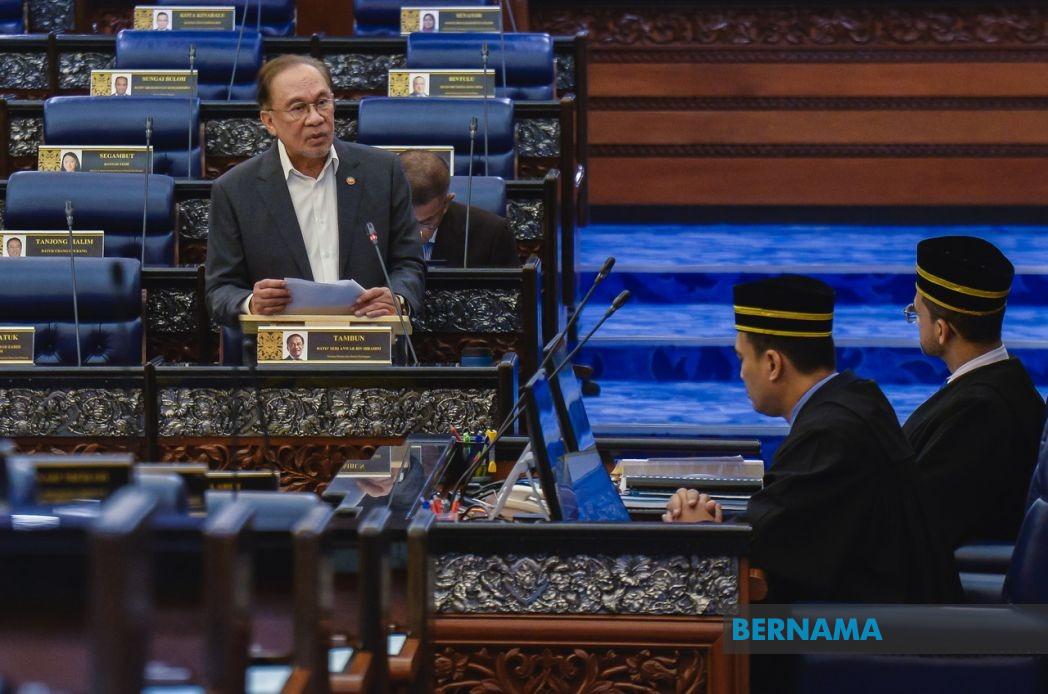
Prime Minister Datuk Seri Anwar Ibrahim has moved to dispel suggestions that his administration has barred activities from taking place within Federal Land Development Authority settlements across the country. Speaking during Minister's Question Time in parliament on June 30, Anwar stressed that the government maintains an open posture toward programmes conducted in FELDA areas, whether these are initiated by state authorities or other organisations, so long as they comply with Malaysia's electoral framework.
The clarification came in response to a question from Datuk Seri Hamzah Zainudin of PN-Larut, who had raised concerns about restrictions being imposed on FELDA communities. Anwar used the opportunity to provide detailed insight into the government's approach to balancing administrative oversight with the legitimate activities of state-level administrations. He emphasised that the prohibition relates specifically to the deployment of government infrastructure and FELDA institutional resources for partisan election activities, not to the holding of public events within these settlements.
In articulating the government's position, Anwar pointed out that there remains nothing to prevent a menteri besar from entering a FELDA settlement and organising programmes according to state priorities. He underscored that state governments retain their prerogative to execute initiatives such as the issuance of land titles within these areas. However, he cautioned that regardless of the nature of such state-led activities, they must still operate within the parameters established by Malaysia's electoral legislation, which sets clear boundaries around the use of government machinery for campaigning purposes.
The Prime Minister also took the opportunity to address a specific incident that had generated discussion within FELDA circles. He denied having issued any directive to cancel the FELDA Settlers' Day programme, which had been scheduled to take place in Kluang, Johor, during June 20 and 21. This denial is significant because it suggests that any cancellation or postponement of the event was not a result of federal pressure but may have stemmed from other administrative or logistical considerations.
Beyond the procedural clarifications, Anwar used the parliamentary platform to reaffirm the MADANI Government's broader commitment to transforming the welfare circumstances of FELDA communities. He framed this commitment as a deliberate shift away from what he characterised as the historical neglect of these settlements, suggesting that earlier administrations had failed to deliver adequate support to FELDA populations. This framing positions the current government as intent on reversing patterns of underinvestment and marginalisation that FELDA settlers have experienced.
The government has introduced several concrete measures designed to enhance living standards and access to essential services within FELDA settlements. Among these initiatives is the establishment of dialysis centres, a healthcare infrastructure improvement that addresses a significant gap in medical facilities available to rural communities. The administration has also committed to expanding development facilities through federal government agencies, signalling a more systematic approach to rural infrastructure rather than piecemeal interventions.
Anwar specifically referenced the collaboration between himself and Deputy Prime Minister Datuk Seri Dr Ahmad Zahid Hamidi in driving this agenda. The mention of the Deputy Prime Minister's involvement underscores the priority status that FELDA welfare improvements have been accorded at the highest levels of government. The two leaders have apparently made a deliberate decision to allocate substantially better facilities and services to FELDA areas compared to what was available during previous government administrations.
The Prime Minister's comments reveal a government narrative that positions FELDA settlements as having been historically sidelined in rural development initiatives. This framing carries implications for how the government justifies increased expenditure on these areas and how it positions itself relative to its predecessors. By emphasising past neglect, Anwar establishes a contrast that legitimises current interventions and suggests a more attentive administration is now in place.
For FELDA settlers and state-level political actors, Anwar's parliamentary intervention provides explicit reassurance that the federal government will not obstruct their legitimate political and administrative activities. The distinction between permissible state government action and prohibited campaign machinery use is legally established but operationally complex, and the Prime Minister's public clarification helps reduce ambiguity about where federal authorities will draw lines in practice. This clarity matters because many FELDA residents maintain political affiliations with various parties, and political uncertainty about federal interference could dampen legitimate state government engagement with these communities.
The broader context of Anwar's statement reflects ongoing tensions within Malaysia's political system regarding the balance of power between federal and state authorities, particularly in resource-rich and electorally significant areas like FELDA settlements. These settlements have historically been important sites of electoral competition, and clarifications about the rules governing political activity within them carry real significance for all political parties operating in these constituencies. State governments, whether controlled by ruling coalition parties or opposition parties, benefit from knowing that they can operate within their constitutional domains without federal obstruction, provided they respect the specific constraint against using government resources for electoral purposes.

