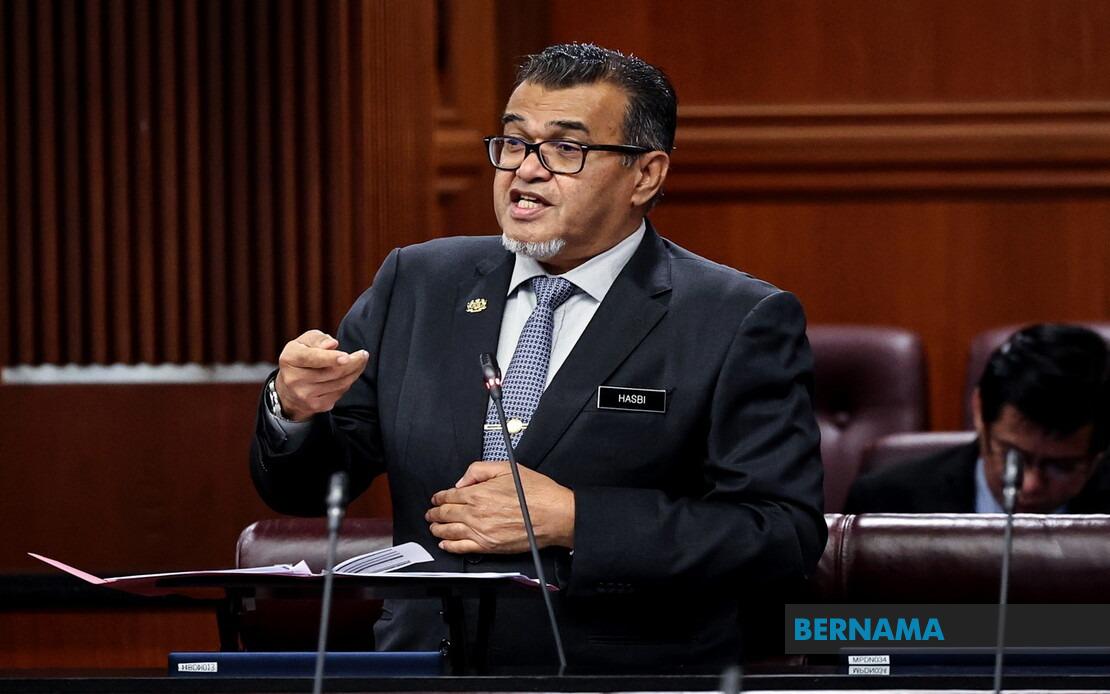
The Malaysian government is moving ahead with legislative reforms designed to protect railway infrastructure from criminal activity, with Deputy Transport Minister Datuk Hasbi Habibollah confirming that amendments to relevant laws are nearing completion and will be presented to Parliament before the year concludes. The proposed changes represent a significant shift in enforcement strategy, recognising that existing legislation has become inadequate in addressing the mounting challenges of theft, vandalism and unauthorised access affecting the nation's rail network.
Currently, the legal framework protecting railway assets suffers from notably weak penalties that fail to deter potential offenders. Trespassing on railway property carries a maximum fine of only RM500 to RM1,000, a sum that does little to discourage determined criminals. The legislative overhaul will substantially increase penalties across multiple categories of railway-related crimes, with particular emphasis on punishing cable theft more severely, especially in cases where stolen materials pose security risks to rail operations and public safety. This recalibration reflects official recognition that existing punishments have lost their deterrent value.
The scope of the problem facing Malaysia's railway system is considerable. Over the past three years alone, 393 separate cable theft incidents have been documented, involving the removal of approximately 19,756 metres of cable and resulting in quantifiable losses exceeding RM16.3 million. Beyond the immediate financial impact, these thefts create operational disruptions and safety hazards that extend across the entire network. Cable theft represents particularly serious vulnerability because critical railway infrastructure depends on uninterrupted electrical and communication systems; disruption can compromise signalling systems, train control mechanisms and emergency communications.
The government's response encompasses far more than legislative action alone. Recognising that supply-chain economics significantly incentivise cable theft, authorities are intensifying collaborative efforts with the Royal Malaysian Police to engage scrap metal dealers and operators across the country. This collaborative approach targets the demand side of the equation by working to ensure that dealers refuse to purchase stolen materials, thereby disrupting the financial chain that makes cable theft profitable for criminal networks. By making it difficult for thieves to convert stolen copper and other valuable metals into cash, the strategy aims to reduce the motivation for committing these crimes in the first place.
Technological investment has emerged as another central pillar of the security enhancement strategy. The Railway Assets Corporation has deployed 1,146 smart closed-circuit television systems equipped with artificial intelligence capabilities across identified high-risk zones throughout the network at a capital cost of RM14 million. These installations represent a substantial technological upgrade from conventional surveillance systems, as AI-powered cameras can automatically detect and alert security personnel to suspicious activity rather than relying solely on passive recording and post-incident review. The strategic placement of these systems focuses on areas where cable theft and other crimes have been most prevalent.
Complementing ground-based surveillance infrastructure, the government has introduced aerial monitoring capabilities using drone technology to cover terrain that proves difficult or dangerous for conventional patrol teams to access. This approach allows security personnel to monitor expansive rail corridors, maintenance facilities and storage areas with greater efficiency and responsiveness. Drones can rapidly reposition to address emerging threats or investigate suspicious activity in remote locations where theft and vandalism frequently occur undetected.
Operational capacity for rapid response and enforcement has been enhanced through acquisition of additional specialised equipment. Keretapi Tanah Melayu Berhad has obtained approval to procure 20 scrambler motorcycles for its Auxiliary Police contingent, enabling faster deployment to incident locations and increased enforcement visibility throughout high-risk rail corridors. These vehicles provide superior manoeuvrability compared to conventional patrol vehicles, allowing security personnel to reach remote access points and troublesome locations more quickly and to establish visible deterrent presence across the network more effectively.
For Malaysian readers and broader Southeast Asian observers, this multifaceted security enhancement represents a broader trend of governments increasingly recognising that infrastructure protection requires integrated approaches combining legal frameworks, technological deployment, interagency coordination and community engagement. The cable theft problem is not unique to Malaysia; similar challenges plague rail networks across the region, making the legislative and operational responses outlined here potentially instructive for neighbouring countries facing comparable security pressures. Success in implementing these measures will require sustained commitment to enforcement and sustained investment in both technology and personnel.
The timing and scope of these initiatives reflect growing official concern about security risks to critical national infrastructure. As Malaysia continues to develop and expand its rail capacity—including major projects like the Klang Valley Double Tracking Project and proposed high-speed rail connections—protecting existing infrastructure becomes increasingly vital to system reliability and public confidence. The convergence of legislative reform, police cooperation, technological investment and operational enhancement suggests that policymakers recognise the need for comprehensive solutions rather than relying on any single approach to address determined criminal activity targeting railway assets.

