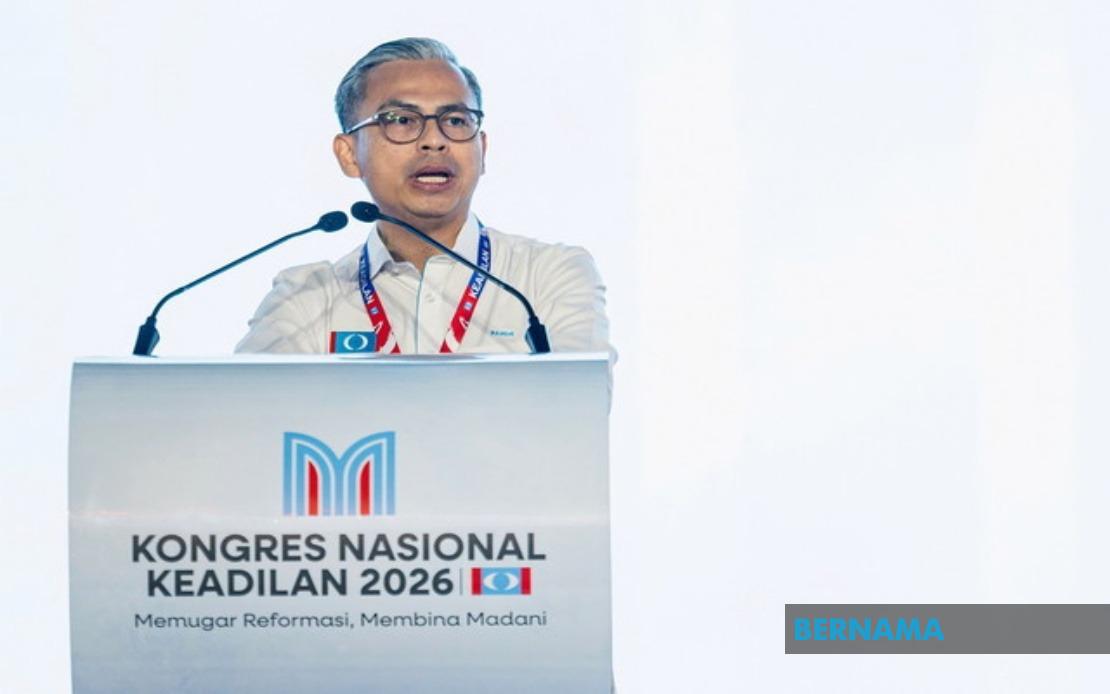
The Malaysian government recognises a significant communication challenge: its economic and policy successes are failing to resonate with ordinary citizens. Speaking at the PKR National Congress in Melaka on August 16, Information Chief Datuk Seri Fahmi Fadzil admitted that despite solid macroeconomic performance under Prime Minister Datuk Seri Anwar Ibrahim's administration, the party's messaging is not reaching or convincing the broader population. This gap between government achievement and public perception has become a priority concern for the ruling coalition, which seeks to ensure that its efforts are not merely known but felt as tangible improvements in daily life.
Fahmi identified a strategic weakness in how government communication operates. He explained that the broader economic narrative—what he termed the "pot economy"—needs to be translated into concrete, relatable benefits that connect directly to household concerns. This recognition reflects a growing understanding within the administration that macroeconomic indicators, while impressive to economists and policymakers, often feel abstract to voters navigating inflation, employment concerns, and cost-of-living pressures. The challenge, therefore, is not the quality of government policies themselves but rather the effectiveness of the storytelling and connection between statistical achievement and personal experience.
As Communications Minister, Fahmi outlined a multifaceted approach to address this communication shortfall. The government plans to expand small-scale dialogue sessions with communities, moving beyond formal announcements to create informal settings where policy explanations can unfold naturally. These grassroots conversations would allow direct interaction between government representatives and citizens, fostering a more authentic understanding of policy rationale and expected outcomes. By decentralising communication beyond major media channels, the government hopes to reach populations who may not closely follow national news but engage regularly with local leaders and community forums.
Strengthening the role of party grassroots leaders, particularly division chiefs, represents another pillar of the strategy. Fahmi acknowledged that PKR's information machinery requires reinforcement through these intermediaries, who often possess greater credibility and trust within their communities than distant federal officials. By enhancing cooperation with these ground-level operatives, the party aims to create multiple pathways for accurate information to circulate, building understanding from the bottom up rather than relying solely on top-down media broadcasts. This approach recognises that trust and acceptance of government narratives often depend on local messenger credibility.
Parallel to improving positive communication, the government is intensifying efforts against deliberate misinformation and manipulative content. Fahmi disclosed that the Malaysian Communications and Multimedia Commission (MCMC) has identified over 8,410 fake accounts exploiting sensitive 3R issues—religion, race, and the royal institution—since the recent Johor state election. The proliferation of such accounts, often timed to coincide with important political moments, demonstrates how organised disinformation campaigns can undermine public confidence in government messaging. By removing these fake accounts and fake accounts in coordination with social media platforms, the authorities aim to create a cleaner information environment where genuine government communication can gain traction without competing against deliberately polarising false narratives.
Fahmi's framing of misinformation tactics reveals a particular vulnerability in Malaysia's political communication landscape. Emotionally charged issues around religion, race, and constitutional matters are exceptionally susceptible to manipulation because they tap into deep-seated concerns and identities. When such issues are weaponised through artificial networks of fake accounts and coordinated inauthentic behaviour, they can rapidly overwhelm factual communication about government achievements. The strategy to combat this recognises that factual accuracy alone is insufficient; the government must also address the emotional dimensions of public discourse to prevent misinformation from poisoning perceptions of legitimate policy achievements.
The administration's approach to media relations reflects a careful balance between accountability and press freedom. Fahmi clarified that the government does not seek to control the media but rather to maintain courteous, professional channels for correcting factual errors. This distinction matters significantly in Malaysia's media environment, where concerns about press freedom and government pressure on journalism remain sensitive. By committing to handle media criticism through "proper and respectful channels," Fahmi seeks to position the government as respectful of editorial independence while maintaining the right to contest inaccurate reporting. This framing aims to prevent accusations of authoritarianism while still allowing correction of false information.
The involvement of PKR's women's wing in the communication strategy adds another dimension to grassroots outreach. Women leaders often possess extensive networks within communities and households, making them valuable conduits for information about policies affecting families, education, healthcare, and social welfare. By intentionally integrating the Wanita wing into communication planning, the party recognises that effective policy messaging requires diverse messengers who reflect the communities they serve. This gender-inclusive approach also signals to women voters that the government takes their concerns and perspectives seriously, beyond token representation.
Fahmi's remarks at the 2026 PKR National Congress reflect broader anxieties within Malaysia's ruling coalition about translating policy success into political durability. In democratic systems, perception often matters as much as reality; governments that achieve genuine improvements but fail to communicate them effectively face erosion of public support and electoral vulnerability. For a coalition that has repositioned itself around anti-corruption, competent administration, and economic recovery, the communication gap represents a significant strategic threat. If citizens believe the government is not delivering benefits or improving their circumstances, electoral support can collapse regardless of underlying economic data.
The Malaysian context adds particular complexity to government communication challenges. The country's diverse religious, ethnic, and linguistic communities require tailored messaging approaches that respect sensitivities while maintaining clear policy communication. Misinformation that exploits identity divisions can rapidly override substantive economic messaging in polarised environments. Additionally, the rise of alternative information sources and social media has fragmented the traditional media landscape where government could rely on newspaper and television control. Reaching citizens now requires navigating fragmented digital spaces while building trust through local intermediaries.
Looking forward, the success of these communication strategies will depend on sustained implementation and genuine two-way dialogue rather than one-directional messaging. Citizens increasingly demand authentic engagement rather than propaganda, and grassroots leaders who sense insincerity in government outreach will struggle to effectively transmit messages. The government's willingness to acknowledge communication shortcomings represents a positive starting point, but converting acknowledgement into demonstrable improvement in public perception will require patience, consistency, and genuine responsiveness to community concerns. The 2026 PKR Congress marks a recognition that electoral success demands not just good governance but effective communication of that governance to an increasingly demanding and media-savvy electorate.

