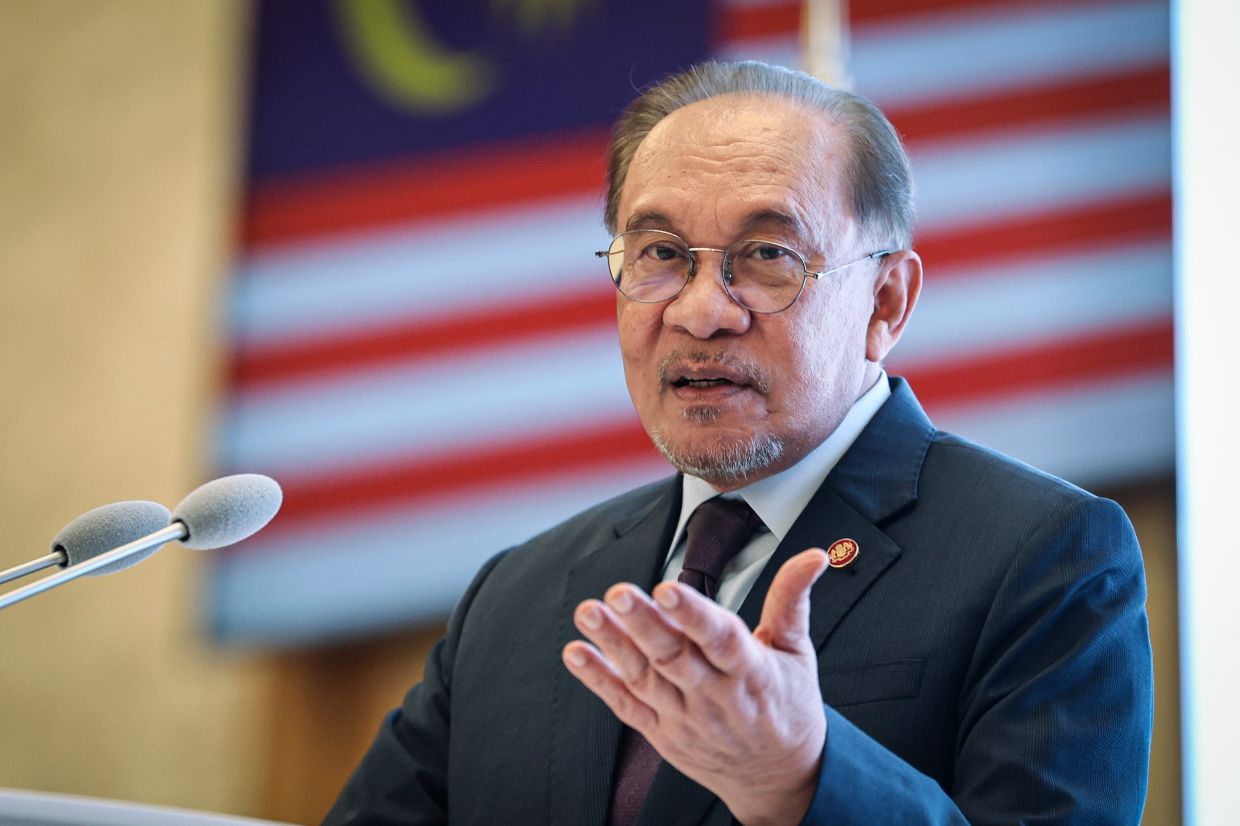
Prime Minister Datuk Seri Anwar Ibrahim has signalled the government's readiness to investigate a proposal that would integrate certain elements of the Goods and Services Tax with the existing Sales and Service Tax framework, provided such a combination strengthens Malaysia's overall tax progressivity. Speaking at the Budget 2027 engagement session in Putrajaya, Anwar—who simultaneously holds the Finance Ministry portfolio—clarified that Malaysia would maintain SST as its foundational taxation structure while selectively incorporating beneficial GST design principles that align with the government's equity objectives.
The Prime Minister's remarks represent a nuanced position on a longstanding debate within Malaysia's fiscal policy landscape. Rather than rejecting the GST entirely, Anwar indicated openness to borrowing specific technical mechanisms that the tax system employed, provided they do not reintroduce the comprehensive coverage that characterised the previous administration's tax reform. This distinction is significant for Malaysia's business and financial sectors, which have long discussed whether certain GST administrative features—such as input tax credit mechanisms or compliance frameworks—could be retained within an SST environment to improve efficiency.
Critically, Anwar reaffirmed his government's fundamental opposition to any taxation arrangement that would impose levies across the entire population without differentiation. His repeated emphasis on this constraint reflects the political and social calculations that have shaped Malaysian tax policy since the previous government's GST implementation proved electorally damaging. The Prime Minister articulated that broad-based consumption taxes, regardless of their economic efficiency rationale, conflict with the current socioeconomic pressures facing ordinary Malaysians.
The backdrop to this discussion involves the persistent cost-of-living challenges that have dominated public discourse across Southeast Asia. Anwar highlighted that introducing a tax burden on segments of society previously exempt from taxation would prove counterproductive politically and socially, particularly when households continue grappling with inflation and rising expenses. His argument echoes broader regional concerns about regressive taxation's impact on lower-income groups, a theme that has gained traction in post-pandemic fiscal debates across the region.
The GST, which the Barisan Nasional government had implemented as a central component of its tax modernisation agenda, became emblematic of perceived inequity in the previous administration's policy framework. When Pakatan Harapan won the 2018 election partly on promises to remove the GST, the tax's unpopularity among voters demonstrated the political salience of consumption tax policy in Malaysia. The subsequent replacement with SST—a system with narrower application and multiple rate tiers—embodied a philosophical shift toward what proponents characterised as more socially sensitive taxation.
Anwar's latest comments suggest that rather than remaining purely ideological, the government's approach to Malaysia's tax architecture is evolving toward pragmatic technocratic refinement. By signalling willingness to examine hybrid structures, Anwar positioned the administration as intellectually flexible while maintaining red lines on equity and affordability. This stance may appeal to economists and financial commentators who have argued that SST's sectoral design creates inefficiencies and compliance complications compared to GST's broader-based model.
The timing of these remarks, delivered during Budget 2027 consultation sessions scheduled ahead of the October 9 parliamentary tabling, indicates these considerations are receiving serious governmental attention. The presence of senior financial technocrats at the engagement session—including Bank Negara Malaysia Governor Datuk Seri Abdul Rasheed Ghaffour, Treasury secretary-general Tan Sri Johan Mahmood Merican, and Finance Minister II Datuk Seri Amir Hamzah Azizan—underscored the technical depth of ongoing fiscal discussions. Such high-level involvement suggests any eventual tax framework modifications would emerge from rigorous policy analysis rather than political improvisation.
For Malaysia's business community, particularly multinational enterprises and sectors sensitive to tax compliance burdens, the prospect of selective GST mechanism integration carries implications. Should the government pursue such a synthesis, it could streamline certain administrative processes while preserving the political commitment to progressive taxation. This outcome would potentially satisfy constituencies concerned about fiscal efficiency without alienating voters protective of affordability protections.
Regional observers monitoring Malaysia's tax policy developments would note that this discussion reflects broader Southeast Asian engagement with balancing revenue generation against social progressivity. Several neighbouring economies have similarly wrestled with consumption tax design, making Malaysia's refinements potentially instructive for regional peers. The willingness to contemplate structural modifications, while maintaining foundational commitments to affordability, represents a maturing approach to fiscal architecture that acknowledges both economic realities and public sentiment.
Anwar's framing also implicitly acknowledged that perfect taxation systems remain elusive; rather than pursuing abstract ideals, governments must navigate practical tradeoffs between efficiency, equity, and political viability. Malaysia's tax system, like those across Southeast Asia, must generate sufficient revenue for public services and infrastructure while maintaining public confidence and protecting vulnerable populations. The government's current thinking appears to occupy this difficult middle ground, seeking technical optimisations within an equity-focused framework.
As Budget 2027 enters its parliamentary phase, the precise mechanisms and timelines for any tax system evolution remain unclear. However, Anwar's explicit openness to studying combined approaches signals that Malaysia's tax architecture may experience gradual refinement rather than dramatic overhaul. Whether such consultations ultimately yield legislative changes or remain exploratory exercises in fiscal design will become apparent in coming months, but the government's intellectual engagement with these questions demonstrates serious consideration of how taxation can better serve Malaysian society's evolving needs.

