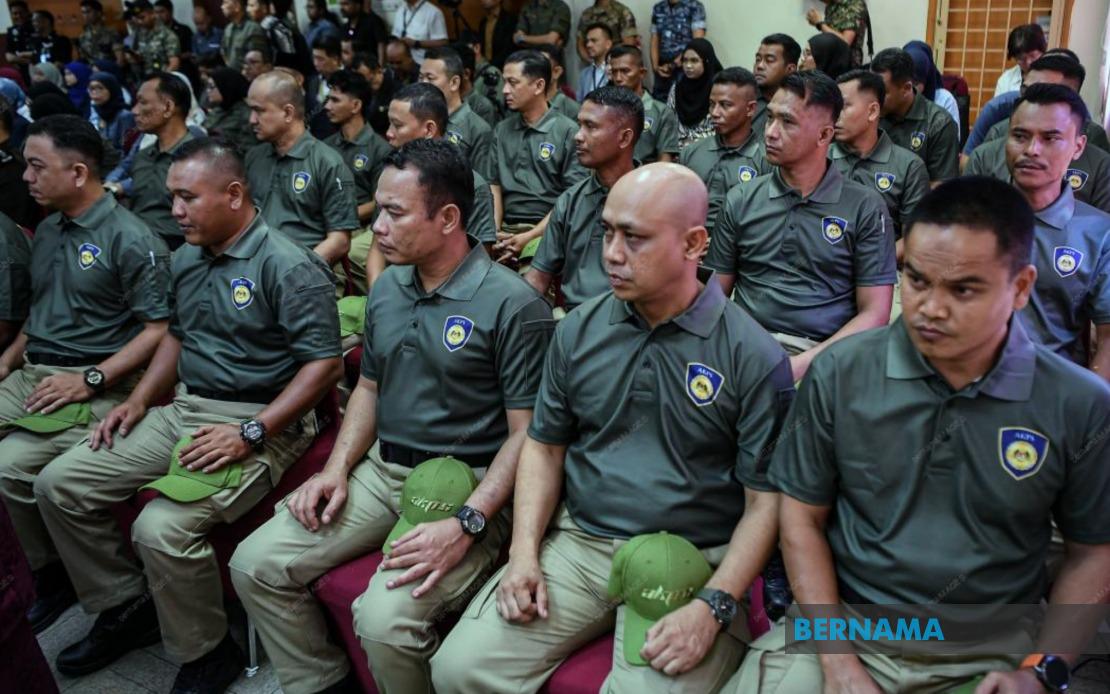
The government has moved to reassure staff of the Border Control and Protection Agency (AKPS) that their employment protections and career prospects will remain intact as the organisation transitions to a fresh service arrangement under the Public Service Department from July 1. Deputy Home Minister Datuk Seri Dr Shamsul Anuar Nasarah delivered the assurance during parliamentary proceedings, responding to concerns about institutional stability and the job security of several thousand civil servants affected by the structural shift.
The AKPS represents a consolidation of several previously separate enforcement bodies, tasked with managing the flow of people and merchandise across Malaysia's 122 international entry points. This coordination responsibility has become increasingly critical for Malaysia's border security infrastructure, particularly as the agency manages both land and maritime crossing points serving millions of annual travellers and tonnes of goods. The merger was intended to streamline operations and create a more unified command structure for border management, though the transition to a new employment framework has raised questions about how existing staff would be treated.
Shamsul Anuar provided explicit clarity on employment continuity, stating that officers retaining their original service status within their respective parent agencies would experience no disadvantage regarding career advancement, length of service calculations, pension entitlements, or other welfare provisions. This arrangement addresses a key concern for officers who might hesitate to transfer to the new scheme—the fear that moving would somehow reset their seniority or compromise retirement benefits built up over years of service. By guaranteeing parity for those who decline the transfer, the government has attempted to remove a significant barrier to voluntary acceptance of the new arrangement.
Prior to the implementation of the new service scheme, AKPS positions were filled through temporary secondment arrangements from the original enforcement agencies. This interim staffing model meant officers were technically on loan to the border agency while maintaining their formal ties to their home departments. Under the new framework, the government is offering these officers the opportunity to transfer permanently to AKPS, though those who opt not to accept the transfer are not penalised. Instead, they remain with AKPS on a temporary basis pending placement decisions made by the Public Service Department, or they may be reassigned to their original parent departments based on available positions and operational requirements determined by their service heads.
The recruitment challenge remains substantial. As of mid-June, AKPS had successfully filled 6,824 of its 8,403 allocated positions, leaving 1,579 vacancies that need to be addressed. These gaps represent roughly 19 percent of the agency's authorised workforce, a significant shortfall for an organisation responsible for managing border security across all entry points. The government has acknowledged these vacancies are being addressed through coordinated effort between AKPS, the Home Ministry, the Public Service Department, and the original parent agencies from which officers were seconded, suggesting a recognition that filling these posts will require sustained inter-agency cooperation and possibly accelerated recruitment timelines.
To incentivise transfers to the new AKPS service scheme and ensure border operations remain adequately staffed, the government has introduced financial inducements for appointees. These include an additional annual salary increment (KGT) and a RM200 service incentive, measures designed to offset any perceived disadvantage of moving to a newly established agency. The additional remuneration also reflects the government's assessment that border security positions carry heightened responsibility and risk, warranting compensation beyond standard civil service pay scales.
For Malaysian observers, this transition carries broader implications for how the government manages structural reform within enforcement institutions. The careful approach taken here—with explicit guarantees about rights protection and phased staffing adjustments—may serve as a template for other institutional reorganisations the government undertakes. Southeast Asian neighbours often face similar coordination challenges at borders, making Malaysia's approach to retaining experienced staff during organisational change of regional interest.
The parliamentary response from Rushdan Rusmi (PN-Padang Besar) had specifically targeted concerns about institutional stability and civil servant welfare, suggesting that anxiety about job security following AKPS's establishment had reached elected representatives. This political attention underscores how enforcement personnel issues can become matters of constituency interest, particularly in border constituencies where many residents work in security-related roles. Shamsul Anuar's detailed response indicates the government took these concerns seriously enough to provide comprehensive assurances rather than dismissive replies.
The coordination between multiple government bodies—AKPS itself, the Home Ministry, the Public Service Department, and individual parent agencies—suggests the transition will likely proceed gradually rather than through sudden, disruptive changeover. This phased approach reduces the risk of operational gaps at border crossings that handle substantial daily traffic volumes. However, the continued presence of 1,579 vacant positions indicates that fully staffing the agency remains an ongoing challenge that may require sustained recruitment efforts beyond July 1.
Looking forward, the success of this transition will ultimately depend on actual implementation matching the government's stated commitments. Officers will be observing whether promotion prospects genuinely remain unaffected for those retaining original service status, whether retirement benefit calculations proceed as assured, and whether vacant positions are filled promptly to prevent workload burdens from falling on existing staff. For the broader civil service, this transition represents a significant institutional change with potentially far-reaching precedent value for how Malaysia manages future reorganisations of security and enforcement bodies.

