Malaysia's government is doubling down on efforts to ensure that small and medium-sized businesses can participate meaningfully in the country's expanding retail and wholesale sector, with the Ministry of Entrepreneur and Cooperatives Development (KUSKOP) rolling out a series of targeted programmes across the nation. Speaking at a grassroots event in Nibong Tebal, Minister Steven Sim Chee Keong emphasised that the ministry's commitment to working directly with local entrepreneurs and cooperative structures remains a cornerstone of economic policy, particularly as the government seeks to broaden the benefits of Malaysia's economic expansion beyond larger corporations.
The timing of this push reflects encouraging momentum in Malaysian trade. Data from the Department of Statistics Malaysia shows the wholesale and retail sector generated sales worth nearly RM175 billion in April 2026, marking a robust 15.3 per cent increase on the year-ago figure. This sustained expansion underscores the sector's resilience and the depth of consumer demand across the country. For Malaysian entrepreneurs, the statistics represent genuine opportunity, though accessing that growth remains challenging without proper support systems and market access strategies that KUSKOP hopes to facilitate.
Sim, who represents Bukit Mertajam in parliament, attributed the sector's strength to a combination of government policy and private sector collaboration aimed at reducing living costs, stabilising prices and lifting worker incomes. He framed the government's push as a natural response to these positive conditions, noting that when wholesale and retail sectors flourish, the ripple effects can strengthen the broader economy if small entrepreneurs are equipped to participate. The minister's remarks suggest the government views MSMEs not as secondary economic actors but as integral to sustaining growth that directly improves household finances.
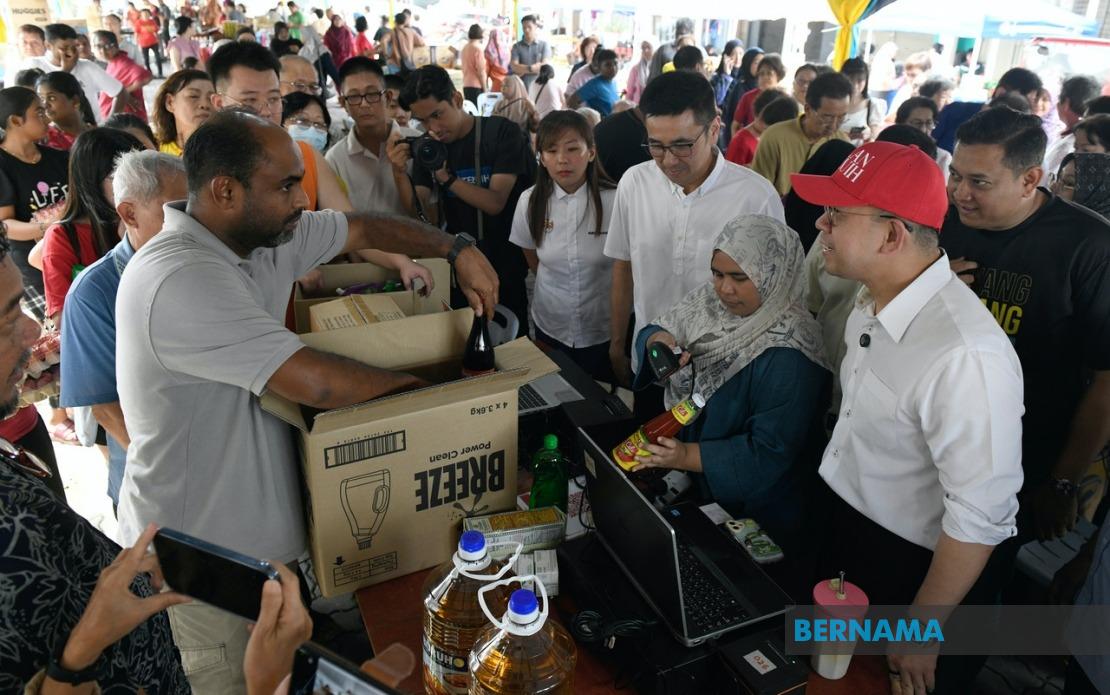
The Jualan MADANI KUSKOP programme, unveiled during Sim's visit to the Jawi constituency, exemplifies the hands-on approach KUSKOP is adopting. Rather than relying solely on top-down policy implementation, the ministry is conducting ground-level engagement with business operators and cooperative members to understand their constraints and tailor support accordingly. This grassroots methodology reflects recognition that many small entrepreneurs lack access to networks, credit facilities and market intelligence that larger players take for granted.
Globally, Malaysia faces headwinds from trade tensions, tariff disputes and geopolitical instability that threaten supply chains and investor confidence across the region. Yet Sim stressed that Malaysia's open economy status has so far cushioned the domestic market from the worst of international turbulence. The minister attributed this resilience to coordinated action by government agencies, private sector partners and community stakeholders working to maintain trading momentum even as external conditions deteriorate. For Malaysian entrepreneurs, this relative stability creates a window of opportunity to expand operations before any potential economic slowdown.
The government's messaging emphasises that the retail and wholesale expansion creates concrete opportunities for local MSMEs to broaden their customer bases, enter new markets and deepen their involvement in domestic supply chains. Rather than simply hoping small businesses benefit from sectoral growth, KUSKOP is positioning itself as an intermediary that can connect entrepreneurs with resources, training and market opportunities they would struggle to access independently. This approach acknowledges that growth alone does not automatically translate into inclusive prosperity without deliberate institutional support.
Sim reiterated that ensuring widespread distribution of economic gains remains a policy priority, particularly given the centrality of local entrepreneurs to Malaysia's long-term economic health. By supporting MSMEs and cooperatives, the government aims to strengthen grassroots economic activity and build resilience against future shocks. The minister's framing suggests that inclusive growth is not merely a social objective but an economic imperative, as a broad-based entrepreneurial base generates employment, innovation and consumer spending that benefits the entire economy.
Cooperatives occupy a special place in this strategy. These member-owned structures traditionally serve communities underserved by conventional banking and retail systems, and KUSKOP's emphasis on cooperative development reflects their potential to democratise access to market opportunities. By strengthening cooperative networks, the ministry can reach entrepreneurs in smaller towns and rural areas who might otherwise struggle to compete in an increasingly digitalised retail environment. The cooperative model also aligns with broader social objectives around community resilience and shared prosperity.
For Malaysian entrepreneurs watching from the ground, the question now centres on translating KUSKOP's rhetoric into tangible support. Previous government initiatives targeting small businesses have sometimes struggled with implementation delays, bureaucratic obstacles and inadequate resource allocation. The ministry's success will ultimately depend on whether it can move beyond programme announcements to deliver accessible financing, meaningful business training, reliable market linkages and streamlined regulatory processes that genuinely reduce friction for small operators. The RM175 billion opportunity in wholesale and retail will only materialise for MSMEs if the institutional machinery behind KUSKOP's initiatives functions effectively.
Looking ahead, the government's emphasis on supporting MSMEs and cooperatives in retail and wholesale positions these segments as engines of inclusive growth. Whether through improved access to credit, digital transformation support or supply chain integration, the coming months will test whether KUSKOP can deliver on its promise to democratise participation in Malaysia's retail boom. For a nation seeking to distribute economic benefits broadly while maintaining growth momentum, the success of these grassroots initiatives carries implications extending well beyond the retail sector itself.

