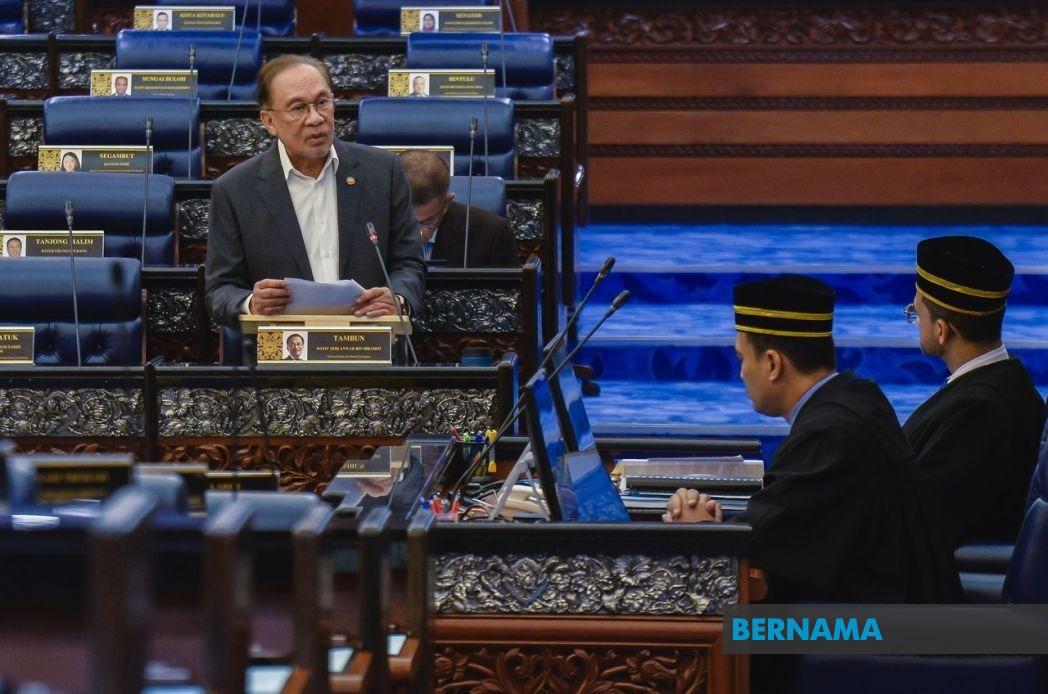
Prime Minister Datuk Seri Anwar Ibrahim has pledged that the government will pursue detailed investigations and engage in substantive discussions with oil companies regarding grievances from petrol station operators who claim to have absorbed losses during the country's transition to an enhanced fuel subsidy framework. The undertaking came during parliamentary question time at the Dewan Rakyat, signalling the administration's willingness to revisit potential financial impacts on industry stakeholders who facilitated the rollout of the targeted subsidy model.
Anwar acknowledged the pivotal role played by both petroleum companies and independent petrol station operators in successfully establishing the targeted RON95 petrol and diesel subsidy system, which represents a significant policy shift toward more means-tested fuel support. The Prime Minister characterised their participation as crucial cooperation that enabled the government to translate its subsidy reform agenda into operational reality, underlining the interconnected nature of public policy implementation and private sector participation in Malaysia's energy pricing architecture.
The undertaking was triggered by a supplementary parliamentary question from Howard Lee Chuan How, a Pakatan Harapan representative from Ipoh Timur, who articulated claims that petrol station operators experienced financial losses ranging between RM40,000 and RM50,000 per outlet during the subsidy transition period. These figures, while specific, likely reflect the disruption costs incurred when businesses adjusted their operational models, inventory management, and pricing structures to align with the new subsidy disbursement methodology, which differs fundamentally from previous universal fuel support arrangements.
Anwar indicated that Second Finance Minister Datuk Seri Amir Hamzah Azizan would be tasked with gathering comprehensive information directly from petroleum corporations regarding the transition challenges. This delegated approach suggests the government views the matter with sufficient seriousness to warrant engagement at ministerial level, though the framing stops short of committing to compensation mechanisms without further investigation. The distinction between information-gathering and remedial action remains deliberately vague, reflecting standard governmental caution when confronted with industry-specific claims lacking comprehensive documentation.
The targeted RON95 subsidy programme marks a departure from Malaysia's historical approach to fuel subsidies, which traditionally provided universal price support across the population regardless of income levels. The new model aims to direct subsidies toward lower-income households while requiring higher-income consumers to pay closer to market rates, a reform that necessitated restructuring relationships between government agencies, oil companies, and retail petrol station networks. This systemic recalibration created friction points where operators adapting to new payment systems, pricing protocols, and customer service requirements incurred unforeseen costs.
For petrol station operators, the transition period represented genuine operational vulnerability. Independent retailers typically operate on thin profit margins, making them susceptible to disruption costs that larger corporations might absorb more easily. The alleged losses of RM40,000 to RM50,000 per station during transition, multiplied across hundreds of retail outlets nationwide, could aggregate into a substantial aggregate burden on the sector, particularly affecting businesses in less densely populated areas where individual site turnover may be lower.
Anwar's characterisation of oil company cooperation as forthcoming suggests that petroleum majors have largely supported the subsidy restructuring, despite the administrative complexities involved. This cooperation reflects broader industry recognition that targeted subsidies represent a sustainable long-term policy compared to universal fuel support, which had become fiscally unsustainable for the Malaysian government. However, the cooperation does not necessarily extend to voluntary absorption of transition costs borne by downstream retail partners.
The Malaysian context makes this issue particularly significant for regional policymakers. As other Southeast Asian nations consider transitioning from universal to targeted subsidies for energy products, the experience of petrol station operators during Malaysia's implementation phase provides concrete lessons about stakeholder impacts and the necessity of transition financing mechanisms. Countries including Indonesia and Thailand have observed Malaysia's subsidy reforms closely as they contemplate similar restructuring to improve fiscal sustainability.
The government's commitment to further discussion rather than immediate compensation reflects both budgetary constraints and the need to verify claims through documented evidence. Petrol station operators would need to substantiate alleged losses through financial records, inventory discrepancies, and operational disruption documentation—a demanding evidentiary threshold that may explain why comprehensive compensation frameworks have not materialised despite months since the transition occurred. The Second Finance Minister's engagement signals that the government recognises legitimacy in the operators' concerns while maintaining appropriate fiscal discipline.
Moving forward, the resolution of this matter could establish precedent for how the government handles stakeholder impacts from major subsidy architecture changes. If compensation mechanisms are ultimately implemented, they may include targeted relief for specific operator categories or temporary margin adjustments during the stabilisation period. Alternatively, the investigation may conclude that claimed losses reflect normal business volatility rather than quantifiable transition costs, a determination that would influence whether future subsidy reforms include dedicated operator support budgets.
For Malaysian businesses and investors monitoring government policy responsiveness, Anwar's parliamentary commitment carries symbolic weight beyond the immediate petrol station issue. It demonstrates parliamentary accountability mechanisms functioning where industry representatives raise concerns about policy implementation impacts. The Second Finance Minister's investigative mandate suggests the government intends to approach the matter methodically rather than dismissively, though ultimate resolution remains dependent on factual findings and budgetary capacity.

