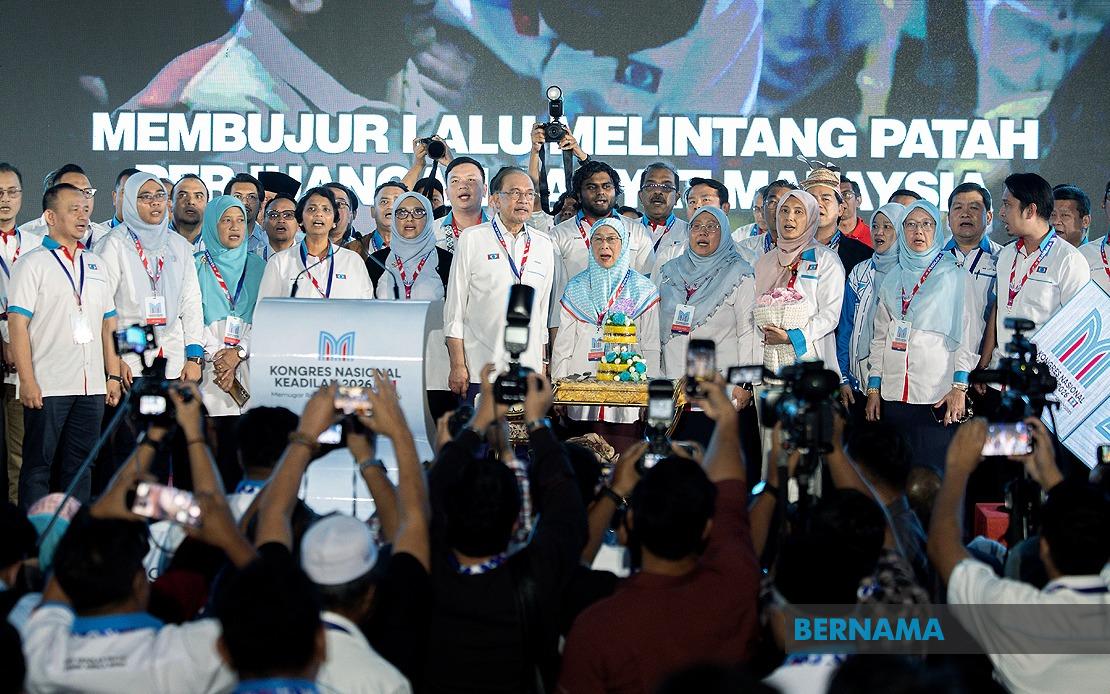
The Malaysian government has signalled its intention to amend the Tabung Haji Act 1995, marking a significant step in its institutional reform agenda under the MADANI administration. Prime Minister Datuk Seri Anwar Ibrahim, who also holds the Finance portfolio, framed the proposed legislative change as essential to preserving the confidence that Malaysia's Muslim population has placed in the institution over decades. The announcement reflects mounting pressure to address longstanding concerns about governance standards within major government bodies managing public funds and community assets.
Tabung Haji, the hajj pilgrimage savings scheme, represents far more than a financial mechanism for Malaysian Muslims seeking to undertake one of Islam's five pillars. As the country's primary dedicated savings institution for pilgrims, it embodies trust and spiritual purpose for millions of Malaysians. Recent years have seen reputational challenges and governance questions that have prompted calls for structural overhaul. By committing to legislative amendment rather than piecemeal reforms, Anwar's government is indicating that superficial changes will not suffice to restore institutional credibility.
The broader context of this announcement reveals a government determined to tackle institutional weaknesses across multiple sectors simultaneously. Anwar emphasised that governance strengthening and institutional cleanup represent core pillars of his administration's policy direction. This multi-pronged approach suggests recognition that public confidence extends across numerous institutions and that reform must be comprehensive to be credible. The decision to amend the Tabung Haji Act sits within this larger framework of demonstrating commitment to systemic improvement.
Simultaneously, the Prime Minister announced plans to completely repeal the Universities and University Colleges Act 1971 without replacement by a successor law that would similarly restrict student expression. This dual commitment—safeguarding religious community interests through Tabung Haji reform whilst expanding civic freedoms through university law repeal—presents a coherent philosophical stance around trust and institutional legitimacy. The government appears to be arguing that trust is rebuilt through both protecting specific community interests and broadening participatory freedoms.
For Malaysian Muslims, the Tabung Haji amendment carries particular significance. The scheme has long been woven into Muslim family life and religious practice, with multiple generations participating in its savings mechanisms. Any erosion of confidence threatens not only individual savings but also the cultural and spiritual dimensions of hajj participation itself. By positioning the amendment as a trust-protection measure rather than a restructuring exercise, Anwar is attempting to frame reform as restoration rather than radical change.
Anwar's concurrent message about inclusive economic growth speaks to broader governance philosophy underpinning these institutional reforms. He stressed that the MADANI Government's economic policies must benefit all Malaysians regardless of political affiliation or state of residence, including those in opposition-controlled territories. This framing suggests that institutional trust cannot be rebuilt if governance appears partisan or selective in its benefits. The connection between institutional reform and equitable resource distribution reveals sophisticated understanding of how trust operates across diverse populations.
The Parti Keadilan Rakyat National Congress provided the platform for these announcements, allowing Anwar to address party members and the broader public simultaneously. As PKR president, Anwar emphasised that the party has chosen principle over expediency, refusing to compromise reform ideals merely to consolidate political power. This rhetorical positioning attempts to distinguish the MADANI administration from previous governments and to anchor institutional reform within a broader reform narrative.
Anwar's emphasis on building a "clean team" with "strong leadership" while explicitly rejecting enrichment of family members or cronies directly addresses corruption perceptions that have damaged institutional trust historically. The statement that strength represents "a trust to champion the people" rather than a tool for personal gain signals intention to operate government institutions through different principles. Whether such aspirations translate into sustained practice remains to be seen, but the public commitment establishes clear accountability benchmarks.
The technical process of amending the Tabung Haji Act will require parliamentary passage and consultation with relevant stakeholders, including Muslim organisations, fund participants, and religious authorities. The specific provisions being considered remain undisclosed, but the amendment process itself will offer opportunity for public scrutiny and input. How comprehensively the government pursues genuine reform versus cosmetic legislative adjustments will test whether institutional confidence can genuinely be rebuilt.
For regional observers and ASEAN neighbours watching Malaysian governance developments, these institutional reform announcements carry implications beyond domestic politics. Trust in government institutions affects not only domestic stability but also foreign investment confidence and regional reliability. Malaysia's commitment to systematic institutional improvement, particularly regarding management of community-specific funds and civic freedoms, signals positioning as a governance-conscious nation within Southeast Asia's institutional landscape.
The amendments represent part of a larger narrative that Anwar's government is constructing around legitimacy and trust. By addressing institutional weaknesses directly, expanding civic freedoms, and committing to equitable governance across the nation's diverse constituencies, the administration is attempting to distinguish itself through demonstrable commitment to systematic improvement. The success of these reforms will ultimately depend on implementation rigour and sustained political will across multiple government cycles.

