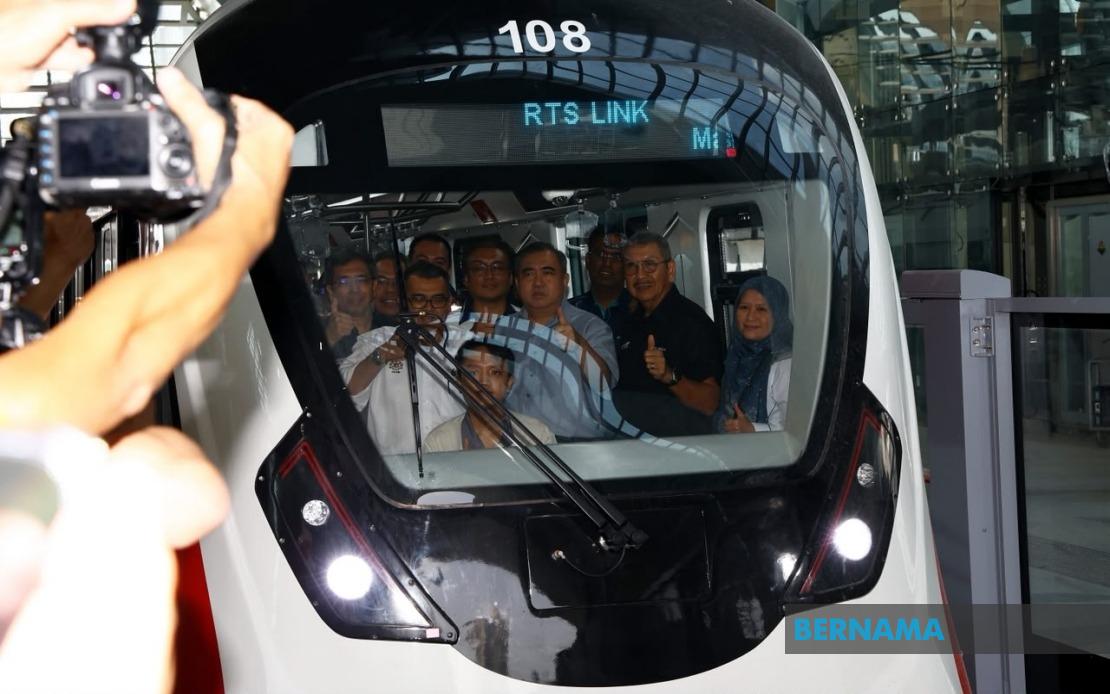
Malaysia's transport infrastructure development enters a new phase with the government's commitment to build a RM60 million bridge seamlessly integrating the upcoming Bukit Chagar RTS Link Station with the existing KTMB Komuter network. Transport Minister Anthony Loke announced the infrastructure addition during a site visit to the Bukit Chagar project in Johor Bahru, emphasising the administration's push towards creating cohesive, multi-modal public transport systems that reduce friction for commuters travelling between Singapore and the southern Malaysian state.
The bridge project, which has already secured approval from the Ministry of Economy, represents a significant investment in transport convenience and accessibility. Rather than forcing passengers to navigate the lengthy route through JB Sentral—the current interchange hub—commuters using KTMB Komuter services will be able to walk directly into the Bukit Chagar RTS Link Station, fundamentally reshaping the passenger experience for the estimated 10,000 hourly travellers expected in each direction when operations commence. This direct connection acknowledges the practical frustrations of existing transport users and reflects a deliberate policy shift towards passenger-centric infrastructure design.
The timeline for project completion spans approximately twelve months, positioning the bridge to be operational well before the RTS Link's scheduled January 1, 2025 opening. The accelerated construction schedule underscores the government's determination to synchronise all components of the Bukit Chagar transport ecosystem, avoiding the delays and integration failures that have plagued previous Malaysian transport infrastructure projects. By compressing the implementation window, authorities aim to present a fully functional, interconnected system from day one rather than deploying infrastructure piecemeal over subsequent years.
Beyond the physical bridge, the transport ecosystem under development represents a comprehensive rethinking of how passengers move through the Malaysia-Singapore border corridor. The Bukit Chagar station itself is being designed as a true multi-modal hub, integrating not only KTMB Komuter and RTS Link services but also JB Sentral connections, e-hailing platforms, and conventional bus networks. This layered approach provides passengers with multiple transport options depending on their origin, destination, and time constraints, creating genuine flexibility rather than forcing users into predetermined routes.
Complementing the bridge initiative, the government is simultaneously advancing the Stage Bus Service Transformation 2.0 programme, which will introduce at least 200 additional buses serving residential areas throughout Johor Bahru and feeding directly into the Bukit Chagar station. The expansion addresses a critical gap in first-mile and last-mile connectivity—the transport segment that frequently determines whether commuters choose public transit or private vehicles. By ensuring reliable bus services from residential neighbourhoods to the main transport hub, planners seek to maximise RTS Link utilisation and reduce automobile dependency in the greater Johor Bahru metropolitan area.
The bus service expansion illustrates the interconnected thinking behind the broader transport modernisation strategy. Rather than viewing the RTS Link as an isolated corridor project, the government recognises that the system's success depends entirely on how effectively passengers can access the main stations. Without convenient, frequent, and reliable feeder services, even world-class rail infrastructure struggles to achieve its potential. The timing of bus service expansion to coincide with RTS Link opening acknowledges this reality and demonstrates coordination across different transport agencies and private operators.
Current construction status across the Bukit Chagar complex has advanced substantially, with the physical building, Customs, Immigration and Quarantine complex, and RTS Link station all structurally complete. The project has transitioned into the critical testing and commissioning phase, a stage that historically determines whether transport infrastructure meets performance standards or requires costly remediation. System integration testing, fault-free operations protocols, and trial runs are underway to validate that all operational components—from ticketing systems to passenger information displays to security infrastructure—function seamlessly in concert.
The RTS Link itself represents a transformative corridor connection, directly linking Bukit Chagar in Johor Bahru with Woodlands North in Singapore. The anticipated capacity of 10,000 passengers per hour in each direction positions the service to significantly reduce congestion on road crossings between the two jurisdictions, particularly for commuters making regular cross-border journeys for employment, education, or commerce. This cross-border dimension makes the project particularly significant for the wider Southeast Asian region, as improved Malaysia-Singapore connectivity has ripple effects throughout the entire region's economic integration and labour mobility.
From a Malaysian policy perspective, the RM60 million bridge investment represents a strategic commitment to public transport as a cornerstone of urban development strategy. Rather than defaulting to road expansion and private vehicle infrastructure, the government is channelling significant capital towards systems that maximise passenger throughput, reduce environmental impact, and support equitable access to transport regardless of individual wealth. This philosophical orientation represents a departure from previous transport planning frameworks and signals genuine policy evolution within the transport ministry.
The project's success will establish important precedents for future transport integration efforts across Malaysia. The lessons learned from synchronising RTS Link operations with KTMB Komuter, implementing bus service transformation, and designing multi-modal hubs will inform subsequent infrastructure projects in other Malaysian metropolitan regions. Kuala Lumpur, Penang, and other growing urban centres are watching the Johor Bahru implementation closely, as it demonstrates whether the government can execute genuinely integrated transport systems at scale.
From a commuter perspective, the bridge and associated integration initiatives translate into practical improvements in daily mobility. Reduced walking distances, fewer intermediate transfers, and clearer journey options make public transport more competitive against private vehicles. For cost-conscious commuters and those without automobile access, these improvements expand genuine mobility options. For peak-hour commuters facing congestion on major corridors, integrated public transport offers reliable alternatives.
The financing and approval mechanisms also warrant scrutiny. The fact that the Ministry of Economy approved the RM60 million expenditure suggests this project aligns with broader national economic development objectives, rather than being treated as a mere transport logistics matter. This positioning likely reflects recognition that improved Malaysia-Singapore connectivity supports regional economic integration, trade flows, and labour market efficiency—benefits extending well beyond transport sector metrics alone.
Looking forward, the success of Bukit Chagar RTS Link integration will be measured not merely by on-time opening or technical functionality, but by ridership patterns, passenger satisfaction, and whether the system genuinely reduces cross-border commuting friction. These outcomes will determine whether the RM60 million bridge investment and associated transport transformation initiatives achieve their core objective: creating a seamless, user-friendly, economically beneficial transport corridor serving Malaysian and Singaporean commuters while establishing a model for regional transport integration efforts.

