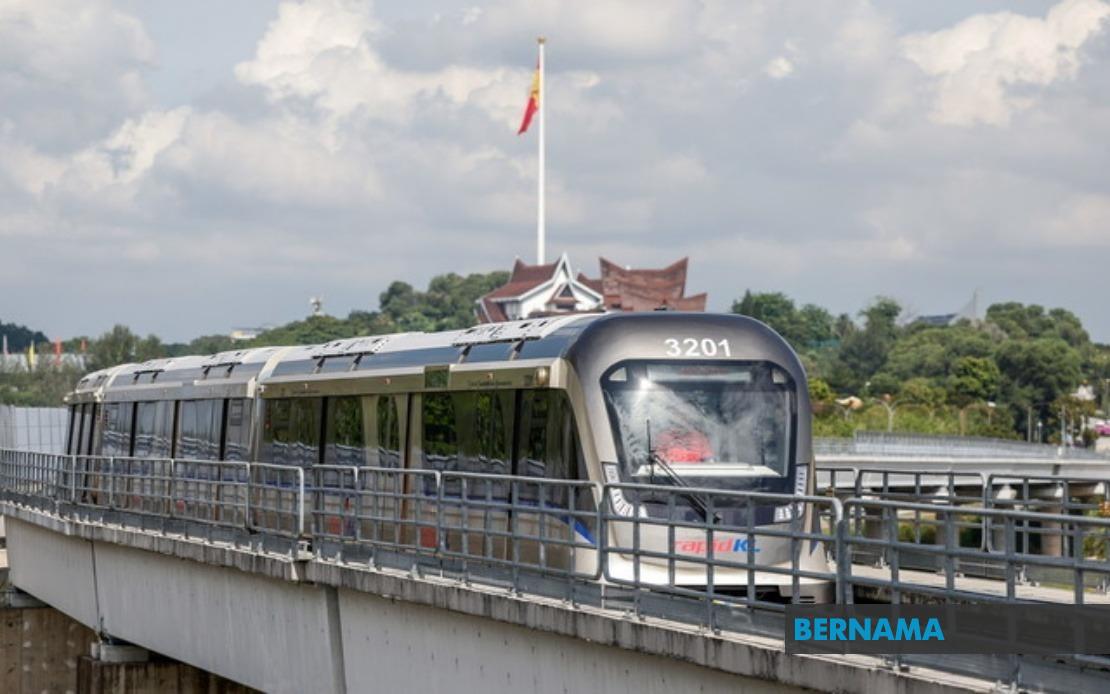
Transport Minister Anthony Loke has announced that the MADANI government intends to seek an audience with Sultan Sharafuddin Idris Shah, the Sultan of Selangor, to address lingering concerns about the LRT3 Shah Alam Line project. The initiative follows pointed remarks made by the Ruler regarding escalating costs and repeated delays affecting this major public transportation infrastructure development. Loke stated that the government takes the monarch's observations seriously and views the proposed meeting as an opportunity to furnish comprehensive additional details about the project's current status and trajectory.
Sultan Sharafuddin's comments, delivered publicly the previous day, outlined a troubling timeline for the LRT3 initiative. The Ruler noted that after the change in federal administration in 2018, the project experienced a suspension spanning more than eighteen months. Further complications arose subsequently when the initiative encountered an additional nineteen-month postponement attributable to the COVID-19 pandemic, extending delays well into 2021. These extended interruptions prompted significant design modifications that reduced the ambition of the original plan, illustrating the compounding challenges facing major infrastructure projects in Malaysia's evolving political and health landscape.
The consequences of these delays have been material and visible. According to the Sultan's characterisation, project designers reduced the proposed dimensions of individual stations, trimmed the quantity of train carriages allocated for the system, and eliminated five stations that had been included in earlier alignments. These reductions represent not merely cosmetic adjustments but substantial modifications to the project's scope and anticipated service capacity. The Ruler emphasised that the LRT3 initiative warrants recognition as a practical utility serving the population's genuine transportation requirements rather than a prestigious undertaking pursued for governmental prestige or political gain.
Loke's acknowledgment of the need for clarification reflects the delicate relationship between Malaysian federal authorities and the sultans, whose constitutional role encompasses oversight of state affairs. For residents of Selangor and users of public transport in the Klang Valley region, the mounting costs and repeated deferrals represent tangible frustrations that undermine confidence in government project execution. The frequency of revisions and rescoping suggests systemic challenges in planning, budgeting, and coordination across government agencies responsible for major capital infrastructure. Such difficulties extend beyond this single project; they reflect broader questions about Malaysia's capacity to deliver modern transportation infrastructure on schedule and within budgeted parameters.
Beyond the LRT3 matter, Loke outlined additional transport ministry initiatives aimed at practical governance. The ministry has coordinated with public transport operators to enhance service frequency in anticipation of the 16th Johor State Election scheduled for July 11. Recognising that citizens travelling from other states to vote often depend on reliable public transportation, the government worked with Keretapi Tanah Melayu Berhad (KTMB) to expand the Electric Train Service (ETS) operating between Kuala Lumpur and Johor Bahru. This expansion demonstrates recognition that logistical support for voter participation strengthens democratic engagement, particularly for citizens working or studying outside their home constituencies.
The enhanced ETS frequency benefits not only voters but also cross-border commuters utilising routes through Segamat, Labis, and intermediate stations. Passengers returning from Singapore gain improved connectivity options, reflecting the transport ministry's understanding of regional mobility patterns within the Malaysia-Singapore corridor. By increasing service capacity ahead of the election, the government attempts to eliminate transportation barriers that might discourage participation from outstation voters, a practical measure that acknowledges the diverse geographical distribution of Malaysia's working population.
The 16th Johor State Election itself represents a significant democratic exercise involving 172 candidates competing for 56 state assembly seats. Early voting is scheduled for July 7, with the main polling day on July 11. The election encompasses the full state apparatus and will determine the composition of Johor's legislative body for the following electoral term. Transport logistics form one component of the broader infrastructure supporting democratic participation, yet one often overlooked by policymakers focused primarily on campaign messaging and political positioning.
The juxtaposition of these two narratives—government accountability regarding delayed infrastructure projects and government facilitation of voter participation—reveals contrasting dimensions of contemporary Malaysian governance. While the LRT3 situation illustrates institutional challenges in project delivery and stakeholder communication, the election transport initiative demonstrates pragmatic responsiveness to immediate public needs. Together, they underscore the multiple simultaneous pressures facing Malaysia's federal administration as it balances long-term infrastructure development with short-term political imperatives and constitutional relationships with hereditary rulers.
The scheduled meeting between government representatives and Sultan Sharafuddin represents an important mechanism within Malaysia's constitutional framework for addressing state-level concerns directly with the federal authority. Such audiences, conducted through formal protocols, offer opportunities for transparent dialogue about implementation realities and constraints that may not be fully appreciated by the public. For the transport ministry specifically, the meeting provides a platform to contextualise budgetary pressures, technical challenges, and procurement complexities that contributed to the LRT3 project's evolution since 2018.

