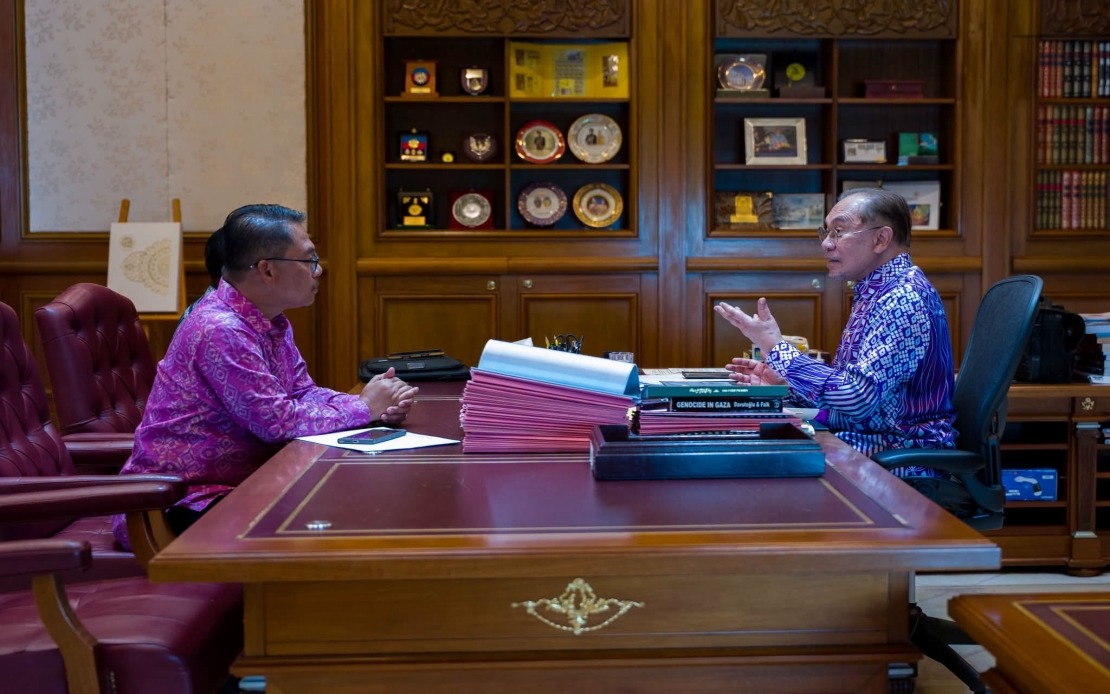
Malaysia's government has committed to enhancing its targeted diesel subsidy programme across Sabah and Sarawak, with officials indicating that adjustments will be made in response to public consultation and community input gathered during the initiative's early implementation phase. Datuk Mustapha Sakmud, the Minister in the Prime Minister's Department overseeing the two East Malaysian states, emphasised that ongoing dialogue with grassroots communities, state authorities, and federal agencies will remain central to ensuring the scheme operates without disruption to residents' standard of living, particularly in more isolated areas where fuel access presents distinct challenges.
The refinement process reflects recognition that the BUDI Diesel initiative, launched nationwide on July 1, has encountered implementation complexities that warrant adjustment. Prime Minister Datuk Seri Anwar Ibrahim has personally engaged with communities to understand the difficulties arising from the scheme's rollout in Sabah, a move that Mustapha characterised as demonstrating the administration's commitment to hearing voices from all segments of society. This direct engagement between federal leadership and the public underscores the government's acknowledgement that centralised policy design, however well-intentioned, must accommodate the distinct geographic and economic realities of different regions.
The BUDI Diesel scheme establishes a baseline allocation of 200 litres monthly at RM2.10 per litre for qualifying private diesel vehicle owners nationwide. Vehicle operators running sports utility vehicles and pickup trucks face additional application requirements but may access an extra 100 litres monthly if they satisfy specified eligibility criteria. The structure represents a departure from universal fuel subsidies, instead channelling support to specific vehicle categories and usage patterns deemed to warrant state assistance, a targeted approach increasingly common in Southeast Asian energy policy as governments balance fiscal constraints with equity considerations.
For Sabah and Sarawak specifically, the subsidy initiative carries particular significance given these states' geographic sprawl, dependence on road transport across vast distances, and the critical role fuel costs play in rural economic viability. Communities in interior regions, where alternative transport infrastructure remains limited, face substantive pressure when fuel prices rise. The government's willingness to revisit implementation details based on feedback suggests that initial deployment identified unexpected friction points—whether administrative bottlenecks in application processing, supply chain complications, or unintended consequences for specific occupational groups reliant on diesel consumption.
The commitment to consultation-driven refinement also reflects broader governance trends within Malaysia's MADANI administration, which has positioned stakeholder engagement and transparency as defining principles. By explicitly inviting grassroots input and signalling openness to programme modification, the government aims to build legitimacy for what remains an economically significant intervention. Public perception of subsidy schemes varies considerably based on perceived fairness and effectiveness; communities feeling genuinely consulted tend to exhibit greater compliance and support, factors that influence policy success beyond its technical design.
Rural populations in East Malaysia have historically expressed concerns regarding their distance from major decision-making centres and the adequacy of policies tailored to their circumstances. The diesel subsidy scheme, while nationally implemented, generates distinct impacts across regions—urban drivers may face fewer complications accessing fuel or completing administrative requirements, while rural operators might navigate supply shortages or administrative delays. The government's acknowledgement of these differential experiences suggests officials recognise that uniform national policies sometimes require regional calibration to function equitably.
The ongoing discussions involving multiple stakeholders represent an attempt to harmonise competing interests. Transport operators, agricultural producers, small business owners, and rural residents all have stakes in fuel subsidy design, yet their priorities may diverge. Stakeholder engagement processes attempt to surface these tensions early, allowing policymakers to adjust implementation before problems become entrenched. For a programme affecting millions of vehicle owners and billions in government expenditure, such refinement represents prudent resource management.
Sabah and Sarawak's political significance within Malaysia's federal structure amplifies the importance of perceived responsiveness to regional concerns. Both states retain constitutional authority over certain domains and have historically valued demonstration that federal initiatives account for their particular circumstances. The government's explicit focus on these two states, rather than treating them as passive policy recipients, carries political messaging value alongside its practical dimensions. Ministers' public statements about listening and adjusting policy signal respect for state-level agency.
The timing of refinement efforts, occurring within the initiative's first months, indicates the government anticipated potential implementation challenges and structured the programme with flexibility for adjustment. This approach contrasts with policies launched as final and fixed, leaving dissatisfied constituencies with few recourse channels. The availability of feedback mechanisms and willingness to modify suggests a learning-oriented approach to subsidy administration—recognising that large-scale economic programmes rarely function perfectly upon deployment and that early adaptation generally proves less disruptive than later overhauls.
Looking forward, the outcomes of these refinement discussions will likely influence how Malaysia approaches future targeted subsidy schemes. If Sabah and Sarawak residents perceive that their input meaningfully shaped programme improvements, broader confidence in government responsiveness may strengthen. Conversely, if consultations occur but policies remain unchanged, communities may interpret engagement as performative rather than substantive. The credibility of the MADANI government's stated commitment to grassroots participation thus depends substantially on whether observed policy adjustments demonstrate genuine responsiveness to documented community concerns and identified implementation difficulties.

