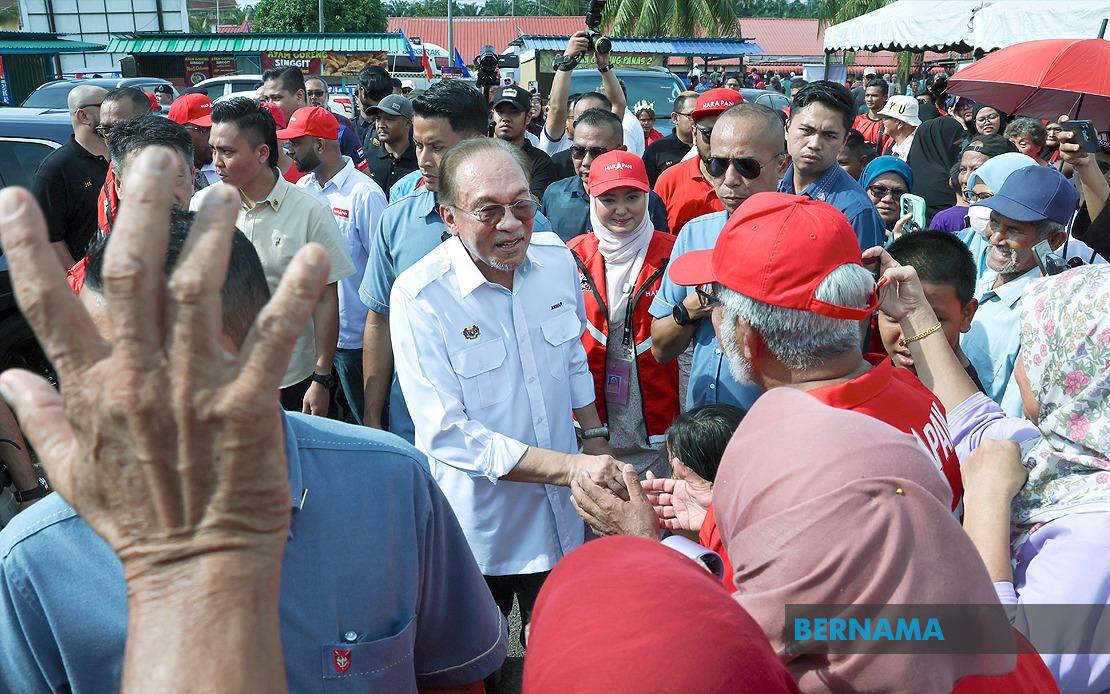
When nine-year-old Muhammad Afif Ikhwan expressed his desire to meet Prime Minister Datuk Seri Anwar Ibrahim, his grandmother Rosimah Mohammad did not hesitate. The 58-year-old grandmother and her grandson embarked on a motorcycle ride through the oil palm estate surrounding Kampung Pudu in Segamat, Johor, to reach a gathering where the Prime Minister was scheduled to appear. What began as a family expedition to fulfil a child's aspiration would ultimately transform into a cherished memory that continues to move those who learn of it.
Rosimah's determination underscored the significance of her grandson's admiration for the nation's leader. Muhammad Afif had long harboured the ambition of meeting Anwar, and his grandmother recognised the importance of supporting this wish. The pair's journey was not merely a physical one—it represented a grandmother's commitment to honouring her grandson's dreams, regardless of the distance or obstacles involved. As they navigated their way to Felda Palong Timur, anticipation built within the household, with the boy barely managing sleep due to his excitement about the prospect of encountering his idol.
When they arrived at the event venue on Sunday, Rosimah positioned herself and Muhammad Afif strategically near the pathway to the stage, hoping to secure a vantage point where the boy could observe the Prime Minister closely. The grandmother's patience and planning proved worthwhile. As Anwar made his way towards the stage, greeting attendees along the route, Muhammad Afif seized the moment. The nine-year-old squeezed through the crowd and extended his hand towards the Prime Minister, an act of courage that required both determination and timing.
What transpired next exceeded all expectations. Rather than merely shaking the boy's hand in passing, Anwar made the decision to invite Muhammad Afif onto the stage to accompany him during his speech. For Rosimah, witnessing her grandson's reaction at that moment validated every effort she had undertaken. The surprise and joy that flooded the boy's face as he stood alongside the nation's leader represented the culmination of his heartfelt wish. The grandmother later reflected on the experience, acknowledging her initial disbelief that such an extraordinary opportunity would materialise.
The encounter at Felda Palong Timur, however, marked only the beginning of this remarkable story. Word of Muhammad Afif's dream and the serendipitous meeting reached Anwar himself, moving the Prime Minister and Pakatan Harapan chairman to take further action. Rather than allowing the moment to fade into memory, Anwar determined that a more personal gesture of appreciation and recognition was warranted. This decision led to an official follow-up visit to the boy's residence in Kampung Pudu, demonstrating that the encounter had resonated with the country's top leadership.
On the day following the event, PKR deputy information chief Siti Aishah Shaik Ismail visited Muhammad Afif's home, representing the Prime Minister at his express request. The visit carried a symbolic weight beyond its surface gesture—it reinforced the message that public leaders recognise and value the aspirations of ordinary citizens, particularly the younger generation. Siti Aishah explained that the Prime Minister had specifically requested the home visit as a special token of his appreciation for the boy's admiration and respect. This personal touch elevated the encounter from a spontaneous public interaction to a more meaningful engagement between leadership and constituency.
The gifts presented during the official visit—a bicycle, school bag, and a pair of shoes—carried practical value but were ultimately secondary to the gesture's emotional significance. These items symbolised Anwar's support for the boy's education and development. The selection of these particular gifts suggested thoughtfulness about a child's actual needs rather than symbolic tokenism. For a family from a rural Johor community, such contributions represented tangible investment in the child's future.
What perhaps most vividly captures the profound impact of this encounter is a detail Rosimah shared during the visit: Muhammad Afif still embraces the shirt he wore during his meeting with the Prime Minister each evening. This small but poignant gesture reveals how deeply the experience had embedded itself in the boy's consciousness. Rather than fading as children's enthusiasms often do, the memory had crystallised into a cherished keepsake. The worn shirt had become a physical anchor to an extraordinary moment, a tangible reminder of the day his dream materialised.
This story carries broader implications for Malaysia's political culture and the relationship between leaders and citizens. In an era when public trust in institutions is frequently tested, instances of genuine human connection between leaders and the public serve an important function. Anwar's willingness to not only acknowledge the boy's admiration but to actively enhance the experience through a subsequent home visit demonstrates an approach to leadership that values direct engagement with constituents. For residents of rural communities like Kampung Pudu, such recognition from national leadership reinforces their sense of belonging to the broader Malaysian narrative.
The grandmother's motorcycle journey through the oil palm estate, initially undertaken with modest hopes of proximity to the Prime Minister, ultimately resulted in a transformative experience for her grandson. It exemplified how parental and grandparental investment in children's aspirations, combined with unexpected moments of grace from public figures, can create the kinds of foundational memories that shape young lives. Muhammad Afif's dream, once expressed as an abstract wish, had been elevated by both familial determination and political magnanimity into something far more permanent—a lived experience that would likely influence his relationship with civic engagement and national leadership for years to come.

