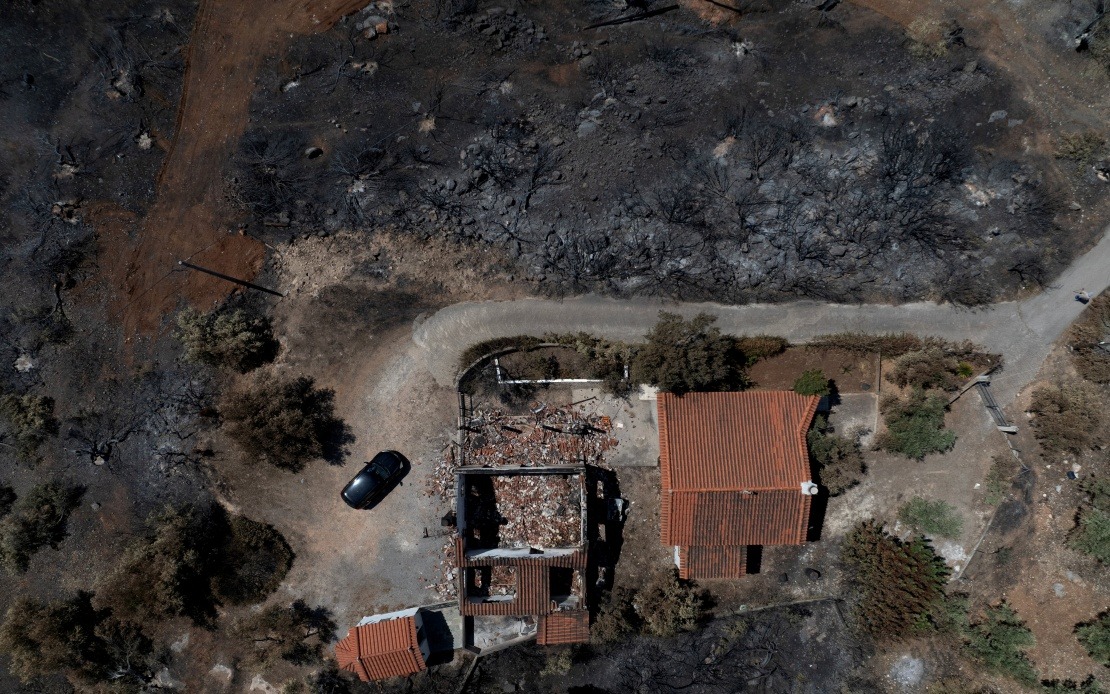
Greek authorities have escalated wildfire preparedness to the highest alert level, issuing a red warning for Attica, Viotia and Evia on Thursday in response to meteorological conditions creating acute fire danger. The General Secretariat for Civil Protection, which operates under the Climate Crisis and Civil Protection Ministry, raised the risk classification to Category 4 for August 6, signalling that emergency management structures must operate at maximum operational capability. This classification represents the most severe level in Greece's wildfire alert system and triggers comprehensive protective measures across the vulnerable regions, which include the capital Athens and surrounding densely populated areas.
The red alert activation means the National Civil Protection Mechanism will function at full capacity, requiring coordinated deployment of multiple agencies and services. Fire service personnel will work alongside police and military units to conduct systematic ground and aerial surveillance across the three regions. This multi-agency approach reflects the scale of potential danger, as wildfires in Greece's Mediterranean climate can spread with remarkable speed when atmospheric conditions favour rapid propagation. The combination of elevated temperatures, low humidity levels, and wind patterns creates conditions where even small ignition points can escalate into major incidents threatening populated areas and critical infrastructure.
Restrictions have been imposed to reduce human activity in high-risk zones. Vehicle traffic into forests and other vulnerable areas will be limited, and visitor access to natural spaces will be controlled. These preventive measures aim to minimise the likelihood of fires being inadvertently or deliberately ignited through human activity. Authorities have simultaneously appealed to residents to exercise caution and avoid any activities that could potentially spark flames, from discarding smoking materials carelessly to conducting uncontrolled burning of vegetation. Public compliance with these warnings becomes critical when conditions reach Category 4 severity, as emergency services would be stretched managing multiple concurrent incidents.
The timing of this alert comes as firefighting crews were still managing active blazes in the region. On Wednesday, firefighters successfully brought under control a fire that had broken out in low vegetation near Koropi, located southeast of Athens. The incident, which ignited around 1:45 pm local time in the Driggia area, required substantial resources including 52 firefighters deployed with three specialised forest commando units and 14 ground vehicles. The aerial dimension of the response involved four helicopters and two water-dropping aircraft, with one helicopter dedicated to coordinating the aerial operations strategy. Local authorities supplemented these efforts with water tankers positioned strategically to support suppression operations, while thermal and optical drone cameras provided real-time monitoring of fire behaviour and spread patterns.
Beyond the Koropi incident, firefighting operations continued against a significantly larger wildfire that originated in Viotia the previous week before spreading westward into Attica. According to monitoring data from the European Union's Copernicus satellite system, this major blaze has consumed approximately 14,424 hectares of landscape. The scale of destruction underscores the intensity of conditions that Greece experiences during peak fire season, particularly as Mediterranean regions face increasingly severe weather patterns associated with climate change. Large wildfires of this magnitude require sustained resource commitment over extended periods, complicating efforts to address new fire incidents that may emerge simultaneously across the region.
The operational challenges became tragically apparent on Sunday when two firefighting helicopters collided in mid-air during operations against the major Viotia wildfire. The collision resulted in the deaths of a Danish pilot and a Greek aerial coordinator, highlighting the hazardous nature of helicopter-based firefighting operations. These aircraft operate in complex three-dimensional airspace while responding to rapidly changing fire conditions and smoke patterns that can reduce visibility. The incident raises important questions about coordination protocols, communication systems, and operational procedures governing multiple aircraft engaged in simultaneous firefighting missions. Such tragedies, though rare, underscore the genuine risks that personnel undertake when combating large-scale wildfires.
Investigative procedures have been initiated to determine causation across recent incidents. An arson investigation team was dispatched to examine the Koropi fire, following standard protocol for investigating fire origins when deliberate involvement cannot be immediately ruled out. Determining whether fires result from accidents, negligence, or intentional acts bears significance for both criminal justice and public safety policy. In regions where wildfire risk reaches critical levels, any indication of deliberate fire-setting represents particularly serious criminal conduct that undermines emergency response efforts and endangers communities.
The situation in Greece carries implications for Southeast Asia's own fire management challenges. The region experiences comparable Mediterranean and tropical wildfire conditions, particularly across Indonesia, Malaysia, and other areas where seasonal dry periods create severe fire danger. Observing how Greece's emergency systems respond to extreme conditions—including the use of advanced technologies like satellite monitoring and drone surveillance, coordinated multi-agency deployment, and public alert systems—offers relevant lessons for Southeast Asian nations refining their own wildfire preparedness frameworks. The resource intensity required to manage Category 4 wildfires also demonstrates why preventive measures and public participation in fire prevention become so critically important.
Climate change emerges as an underlying factor in the intensification of Greek wildfire seasons. Authorities across the Mediterranean region have documented increasingly severe fire conditions driven by higher temperatures, extended drought periods, and altered precipitation patterns. These trends mirror broader climate impacts affecting Southeast Asia, where changing monsoon patterns and temperature increases have affected both rainfall distribution and dry-season intensity. Understanding the relationship between climate change and wildfire frequency helps policymakers in Southeast Asian nations anticipate future challenges and invest accordingly in early warning systems, firefighting capacity, and landscape management strategies.
The practical reality of managing extreme wildfire events also illuminates infrastructure and resource requirements. The Koropi incident alone demanded deployment of dozens of firefighters, multiple ground vehicles, and several aircraft. A region simultaneously managing multiple large-scale fires would rapidly exhaust available resources, requiring mutual aid agreements with neighbouring regions or international assistance. Greece, as part of the European Union, benefits from cross-border firefighting support mechanisms. Southeast Asian nations similarly maintain regional cooperation frameworks, though capacity constraints remain significant. The events unfolding in Greece provide contemporary evidence of how rapidly wildfire emergencies can overwhelm even well-resourced emergency systems.
Government communication with the public during extreme fire conditions requires particular attention and clarity. The red alert issued by Greek authorities serves to inform residents of genuine danger while providing concrete guidance about restrictions and recommended behaviours. Clear, timely communication from official channels helps prevent panic while encouraging the public cooperation essential to reducing new fire ignitions. As Mediterranean regions, Southeast Asian countries can learn from examining how different jurisdictions frame and communicate fire alerts to ensure maximum public understanding and compliance.

