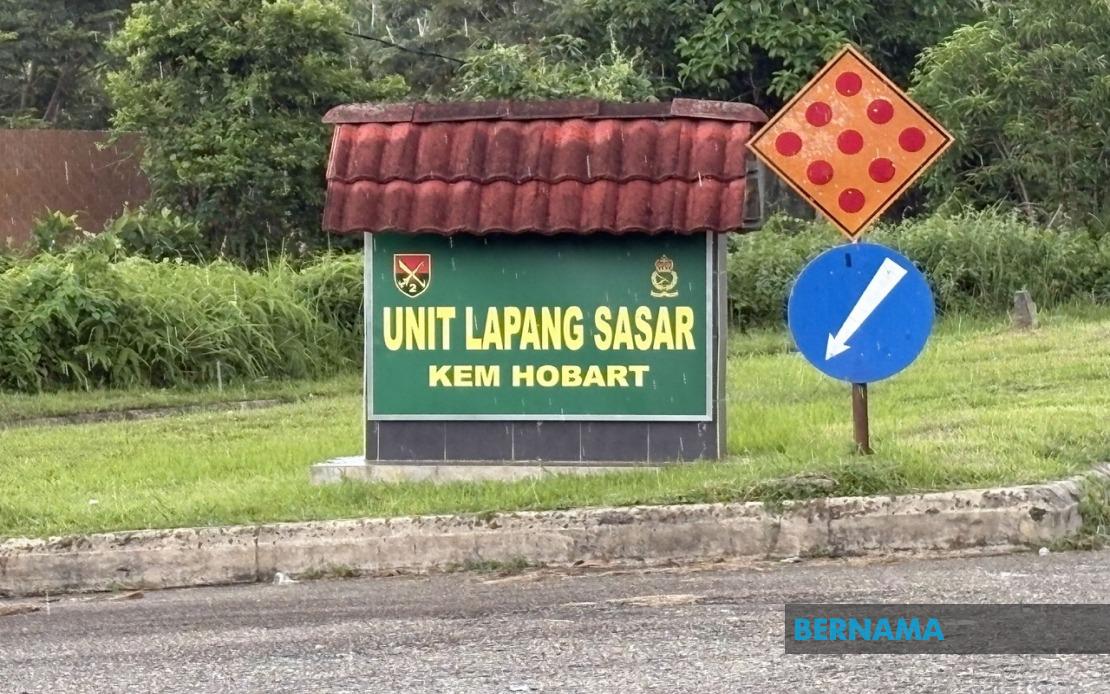
The Defence Ministry's Board of Inquiry has concluded that an accidental release of a grenade's safety lever was the primary cause of an explosion that killed two Malaysian Armed Forces personnel at Kem Hobart in Gurun, Kedah on June 16. Defence Minister Datuk Seri Mohamed Khaled Nordin announced the investigation's findings, revealing that the grenade became activated before the soldier throwing it could complete the action, detonating while still positioned near the upper bodies of both personnel involved in the training exercise.
The investigation methodology employed by the ministry examined multiple dimensions of the incident, incorporating blast site analysis, physical evidence recovered from the scene, and detailed assessment of the traumatic injuries sustained by the two victims. The thrower suffered severe injuries to the head and right hand, while the second personnel experienced critical damage to the head, torso and left limbs, a pattern consistent with the grenade detonating at close proximity while still in the throwing phase.
Despite the comprehensive nature of the inquiry process, which involved examination across several tiers of Army command structure and included technical analysis, procedural review, and witness statements, the investigation could not establish the precise moment when the safety lever disengaged. The absence of eyewitnesses to the exact moment of activation created a critical gap in the evidence chain, preventing investigators from determining whether the lever released during the grip adjustment, the wind-up, or some other phase of the throwing motion.
The Board of Inquiry was established immediately on June 17, the day following the fatal incident, underscoring the gravity with which the Defence Ministry treated the tragedy. The investigation encompassed scrutiny of technical specifications, adherence to established training protocols, supervision adequacy, and the reliability of witness accounts. This multi-layered approach reflects standard military investigative practice when personnel fatalities occur during routine training activities.
Malaysian military grenades, like those used worldwide, incorporate multiple redundant safety mechanisms designed to prevent accidental activation. These include retaining clips, safety pins, and the critical safety lever—mechanisms that collectively ensure the explosive charge only detonates when all layers are intentionally disengaged by a trained operator. According to standard protocols outlined by Mohamed Khaled, once the safety lever releases, the fuse initiates a detonation sequence lasting approximately five seconds, providing a narrow window for the grenade to clear the throwing area before ignition occurs.
The timing of safety lever release during training exercises represents a persistent operational challenge for military forces globally. Whether the lever released due to grip pressure variations, equipment malfunction, inadequate hand strength, fatigue, or procedural deviation could significantly influence how the Defence Ministry addresses prevention measures going forward. The lack of visual confirmation from observers nearby suggests either insufficient supervision protocols during the exercise or positioning protocols that may require revision.
In response to the Board of Inquiry's conclusions, the Defence Ministry and Malaysian Armed Forces have committed to implementing strengthened safety architecture across multiple operational dimensions. These measures encompass refinement of grenade-handling procedures, elevation of supervision intensity during live-throw exercises, and comprehensive revision of training execution protocols to identify and eliminate potential failure points in the current system.
Mohamed Khaled emphasized that personnel safety constitutes a non-negotiable operational priority within the armed forces, with no tolerance for procedural shortcuts or compromised compliance standards during training. This statement carries particular weight given that training deaths within military establishments often provoke broader public concern about institutional safety cultures and command accountability. The Defence Ministry's explicit commitment suggests recognition that military families and the broader Malaysian public expect robust safeguards around activities that are inherently dangerous.
The incident occurs within a context of ongoing military modernization and professionalization across Southeast Asia, where standards for training safety have increasingly aligned with international best practices. Malaysia's response to this tragedy will likely influence how other regional armed forces evaluate their own grenade training protocols and safety supervision mechanisms. The investigation's technical findings—particularly the determination about premature lever release—provide valuable data for military establishments across the region reviewing their own procedures.
The implications extend beyond immediate procedural reform. Military analysts note that training-related fatalities can affect recruitment confidence and institutional morale, particularly within volunteer or conscript forces. How comprehensively and transparently the Defence Ministry implements safety improvements, and whether those improvements demonstrably reduce incident rates in subsequent training cycles, will significantly influence public perception of institutional competence and personnel prioritization.
Moving forward, the Defence Ministry faces the delicate challenge of maintaining training effectiveness while implementing enhanced safety measures that may reduce the intensity or realism of live-fire exercises. The investigation's findings provide a specific technical foundation for targeted interventions rather than blanket training restrictions, allowing the armed forces to address the particular vulnerability of premature safety lever release without unnecessarily compromising overall training objectives or soldier readiness levels.

