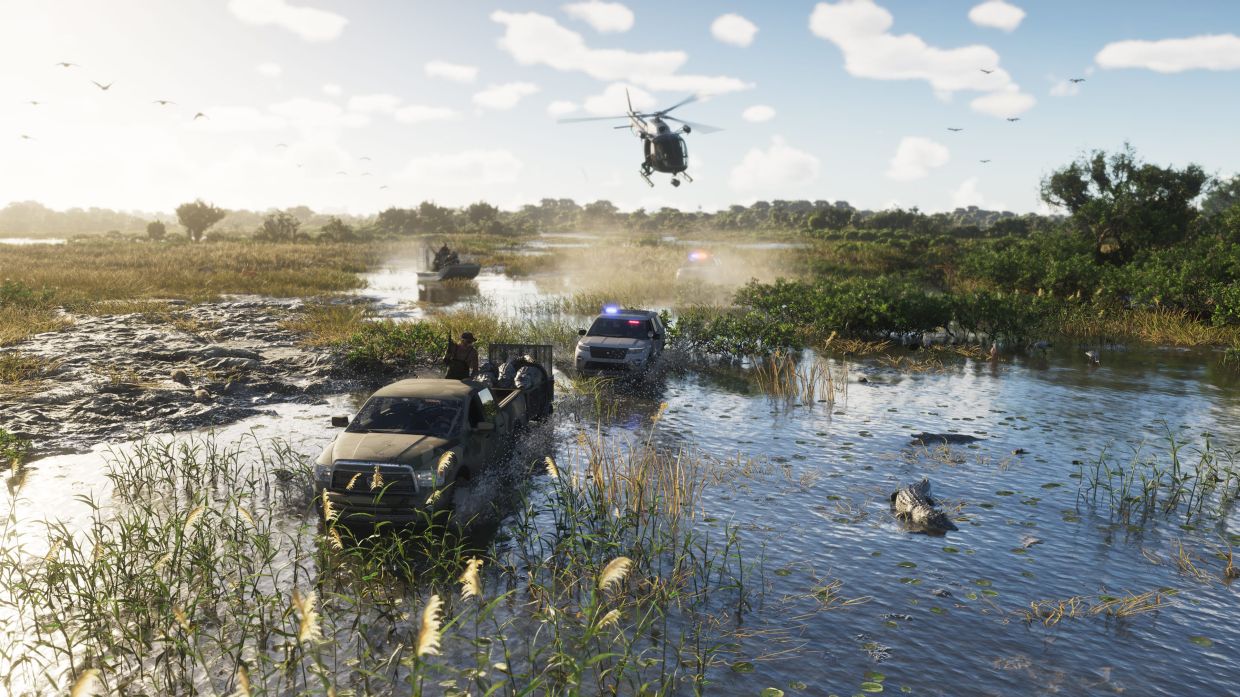
Rockstar Games brought forward its official reveal of Grand Theft Auto VI on Netflix following weeks of unauthorized gameplay footage circulating online, accelerating the studio's carefully planned marketing timeline. The preview introduced players to the game's dual protagonists, Jason and Lucia, depicted as modern-day outlaws making their escape from a failed drug operation, with the male lead carrying a red duffel bag as the sequence opens. The pair's narrative positioning as a contemporary take on the legendary Bonnie and Clyde archetype—the 1930s American criminals whose bank-robbing spree ended in a police ambush—signals that Rockstar intends to build an emotionally complex criminal partnership at the heart of this instalment.
The promotional content showcased the franchise's signature gameplay elements that have defined its commercial dominance over two decades. Car chases weaving through urban environments, intense gunfights across rooftops and back alleys, and scenes set in adult entertainment venues painted the familiar portrait of a game centred on criminal enterprise and violence. Notably, the preview included on-screen indicators showing players the ability to have Jason and Lucia hold hands, suggesting that relationship mechanics and character connection will play a more central role than in previous titles. This detail hints at Rockstar's intention to deepen narrative intimacy alongside the explosive action sequences fans expect.
The Netflix release triggered technical disruptions across the platform on August 27 when the preview dropped simultaneously to hundreds of millions of potential viewers globally, with reports of service outages emerging during midday hours in multiple regions. The timing created a moment of unprecedented visibility for the gaming industry, positioning a major entertainment property at the intersection of traditional streaming media and interactive entertainment. The same content would appear on YouTube later that day, ensuring broad distribution across platforms and maximising audience reach for what Rockstar had envisioned as a controlled, orchestrated unveiling.
The forced acceleration of the official reveal came after weeks of significant security breaches that fundamentally disrupted Rockstar's marketing strategy. Beginning August 18, gameplay clips began surfacing across online communities, with the leaker operating under the pseudonym Cyberleek and claiming motivations rooted in exposing industry business practices. Rockstar responded with an official statement characterising the situation as "heartbreaking," explicitly noting that the leaked footage represented the opposite of how the studio had intended to present the game after the extended development cycle. The emotional language underscored how much the company's leadership valued controlled messaging and the theatrical nature of major game reveals.
In response to the breach, Rockstar's parent company Take-Two Interactive pursued aggressive legal remedies, filing subpoena requests that two federal judges in New York approved by August 21. The court orders compelled both Microsoft and Discord to provide data that could help identify the source of the leaks, demonstrating how seriously major publishers now treat intellectual property protection in the digital age. The involvement of Discord, the communication platform favoured by gaming communities, highlighted how modern leaks propagate through decentralised networks that transcend traditional media channels. This legal offensive signalled that Take-Two would invest significant resources in tracking down and potentially prosecuting those responsible.
The leaks arrived during a period of heightened scrutiny regarding Rockstar's commercial decisions around the game's release strategy. Take-Two had announced earlier in 2024 that Grand Theft Auto VI would not receive a physical media release, a decision that angered segments of the gaming community who value ownership of tangible copies and objected to forced digital distribution. Additionally, the company offered a premium edition containing extra content at a substantially higher price point, a tiered pricing approach that critics argued exploited the franchise's massive fanbase. These decisions had already created friction with consumers before the leaks occurred, suggesting that Rockstar faced reputational challenges beyond the security breach.
The game's cultural penetration extended even to military recruitment, as a unit of the United States Army circulated a memo offering soldiers four days of leave in exchange for committing to additional years of service. The offer, reported by military publication Task & Purpose, represented an unconventional use of entertainment as a retention tool, though uptake proved modest—only 20 of 130 eligible soldiers reportedly accepted the arrangement requiring a minimum two-year commitment extension. This incident underscored how GTA's brand transcends gaming demographics to reach mainstream consciousness, even in institutional settings far removed from typical consumer markets.
For Malaysian and Southeast Asian audiences, the GTA VI release carries particular relevance given the region's position as a major gaming market with rapidly growing purchasing power among younger demographics. Previous Grand Theft Auto titles have consistently sparked local controversies regarding violence, criminality, and moral content, prompting regulatory discussions in Malaysia and neighbouring countries. The shift toward emphasising character relationships and narrative depth through the Jason-Lucia partnership may represent Rockstar's acknowledgment of evolving player expectations, though the franchise's core depiction of crime and violence remains fundamentally unchanged. Southeast Asian regulators will likely scrutinise the game's content carefully, particularly given the region's stricter standards regarding interactive entertainment.
The Netflix distribution strategy itself represents a significant shift in how major gaming publishers approach marketing and visibility. By securing a partnership with Netflix to deliver the official preview, Rockstar bypassed traditional gaming media channels and reached audiences who might never visit gaming-focused websites or YouTube channels dedicated to the industry. This approach acknowledges that the boundary between gaming and mainstream entertainment has become increasingly porous, with streaming platforms now serving as primary discovery mechanisms for entertainment properties. The technical outages that accompanied the simultaneous Netflix and YouTube release demonstrated both the massive demand for information about the title and the infrastructure challenges posed by concentrating viewership across centralised platforms.
Looking forward, the combination of security breaches, legal action, and unconventional marketing adaptations suggests that Rockstar faces a more complex landscape for managing major releases than in previous generations. The leaked footage, while uncontrolled, actually served Rockstar's ultimate interest by building anticipation and extending the preview's reach beyond what traditional marketing might achieve. The Netflix partnership provided a controlled environment to shape narrative around the game while leveraging the platform's global subscriber base. For competitors and other publishers watching how Rockstar navigates these challenges, the GTA VI rollout offers lessons in crisis management, platform strategy, and the reality that perfect information control no longer remains possible in an era of distributed networks and determined threat actors.

