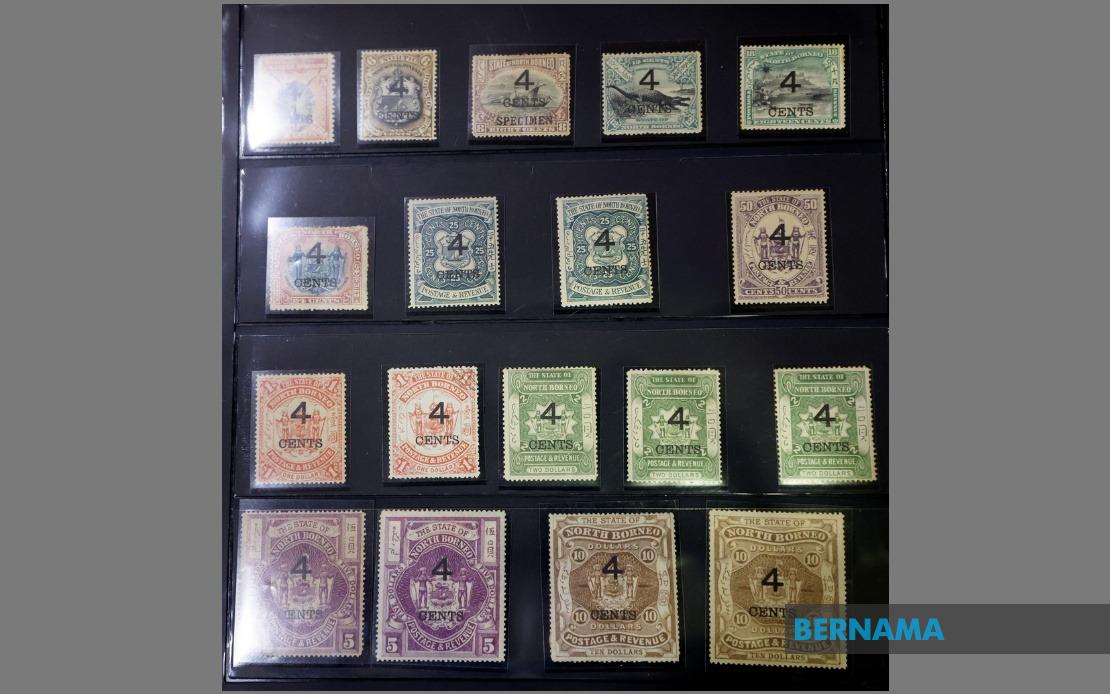
In Kota Kinabalu, a quiet but determined effort is underway to safeguard the philatelic heritage of North Borneo—a collection of postage stamps spanning more than a century that offers a unique window into Sabah's past. These stamps, issued over an eighty-year period from 1883 to 1963, represent far more than mere postal artifacts; they constitute what historians describe as a "living archive" of the region's transformation during the colonial and early independence eras. Yet as younger Malaysians show diminishing interest in stamp collecting, conservationists warn that without deliberate preservation and education efforts, these invaluable historical documents risk disappearing into obscurity.
Dr Shari Jeffri, the 56-year-old founder and president of the Borneo History Association, stands at the forefront of this preservation movement. His personal journey into philately began at age seven, though he became an active collector during secondary school, initially alongside friends who shared the passion. What began as youthful curiosity evolved into a nearly four-decade commitment to understanding the intricate stories embedded within each stamp's design and postal markings. Much of Shari's collection derives from his late grandfather, who worked at the Recreation Club Jesselton during the 1920s and developed his own collecting habit while observing British officers who pursued the hobby with enthusiasm. This family legacy has instilled in Shari a mission to pass these treasures forward and ignite similar interest among future generations.
The challenges facing collectors today are multifaceted and urgent. Recent surveys of antique dealers throughout Kota Kinabalu reveal that original North Borneo stamps have become increasingly scarce, commanding premium prices determined by age, condition, and rarity. Ironically, the very factors that make these stamps valuable to historians—their fragility and limited supply—also make them difficult for new collectors to access. Some dealers have managed to locate specimens from the mid-twentieth century, including a six-cent stamp featuring Queen Elizabeth II alongside a Dusun woman, and a ten-cent denomination depicting logging activities from between 1954 and 1961. However, such discoveries are becoming rarer, and the market for these items remains narrow.
Understanding the evolution of North Borneo stamp design provides crucial insight into how colonial administrators sought to represent the territory's identity and resources. When the British North Borneo Chartered Company introduced stamps in 1883, the designs initially reflected imperial symbols—lions, boats, and tigers dominated the imagery until around 1892. Beginning in 1894, a significant shift occurred as designers began incorporating Borneo's distinctive natural environment, with flora, fauna, and wildlife becoming the primary visual motifs. This transition in artistic direction mirrored broader changes in colonial policy and self-perception within the territory. In 1935, the stamp designs underwent another meaningful transformation, incorporating elements that more explicitly reflected Sabah's emerging identity. Stamps were issued across a range of denominations, from two sen to one dollar, accommodating various postal needs and creating an extensive catalogue of collectible variations.
The technical and aesthetic qualities of these stamps tell additional stories. Collectors value specimens bearing complete postal cancellations—the date stamps, postmark impressions, and location markings applied by postal offices—as these provide comprehensive historical documentation of when, where, and how correspondence was processed. Such cancelled stamps are inherently rarer than unused examples because they have survived not only the passage of time but also the rigors of the postal system. The paper composition and adhesive properties of stamps also serve as authentication markers; genuine North Borneo stamps possess specific characteristics in their glue layer that modern reproductions struggle to replicate. Distinguishing authentic pieces from forgeries requires specialized knowledge that only develops through careful study and mentorship.
Shari's own collection represents a pinnacle of rarity within Sabah's philatelic community. His two two-cent stamps from the inaugural 1883 issue, each featuring a brown sailing boat design and bearing original postmarks, exemplify the kind of specimen that completes serious collections. For dedicated stamp enthusiasts across the Commonwealth nations, acquiring an 1883 North Borneo stamp represents a significant milestone—one that Shari describes as essential to any comprehensive collection. These stamps transcend their utilitarian origins as postal payment instruments; they function instead as tangible records of specific moments in history, capturing the economic activities, cultural imagery, and administrative structures of their era.
The practical challenges of preservation have become increasingly apparent as collections age. Proper storage in acid-free albums proves essential to prevent deterioration, fading, and chemical degradation of the delicate paper and pigments. Environmental factors such as humidity, temperature fluctuation, and exposure to light pose constant threats to long-term viability. Beyond physical storage, the knowledge required to authenticate, date, and assess specimens demands expertise that is becoming concentrated among fewer practitioners. Shari has invested considerable effort in deepening his own expertise by consulting with recognized authorities such as Voon Kyam Foh and Tan Chun Lim in Singapore, and by studying specialized catalogues including Commonwealth & British Empire Stamps. This transnational collaboration highlights how philatelic scholarship depends on networks of experts dispersed across the region.
The broader cultural context makes preservation efforts all the more critical. In an era dominated by digital communication, the postal systems that necessitated stamps have contracted dramatically. Younger Malaysians have limited exposure to the tradition of stamp collecting and fewer opportunities to understand how postal artifacts document social and economic history. The declining cohort of active collectors means that knowledge transmission and institutional memory are at risk. Museums and heritage organizations in Sabah lack comprehensive, publicly accessible North Borneo stamp collections, limiting educational opportunities for students and interested citizens. This institutional gap underscores the importance of private collectors like Shari serving as informal custodians of regional history.
The value proposition of North Borneo stamps extends well beyond monetary worth or hobbyist satisfaction. Each specimen represents a primary historical source—a window into how colonial administrators portrayed the territory to the broader British Empire, how local flora and fauna were understood and commodified, and how postal infrastructure connected Sabah to global networks. The progression from symbolic imperial imagery to indigenous natural representations reflects changing attitudes toward colonialism and regional identity. For Malaysian historians, researchers, and educators, these stamps offer accessible entry points into conversations about Sabah's past and its transition from colonial administration to statehood within Malaysia. Understanding these materials enriches national historical consciousness.
Moving forward, the sustainability of North Borneo stamp preservation depends on multiple factors working in concert. Current collectors must find ways to engage younger Malaysians through education, accessible exhibitions, and digital documentation. Heritage institutions should consider acquiring representative collections to ensure public access and professional conservation. Auction houses and dealers bear responsibility for accurately cataloguing and authenticating pieces, preventing the circulation of counterfeits that undermine collector confidence. Digital archives could democratize access to photographic documentation of significant specimens, allowing researchers and enthusiasts to study examples they might never physically encounter. Shari's work through the Borneo History Association represents exactly this kind of multifaceted approach—combining personal stewardship with public education and scholarly rigor.
Ultimately, the preservation of North Borneo stamps reflects a broader imperative to safeguard the documentary evidence of regional history. As the first generation of collectors trained in the colonial era passes away, and as global postal practices continue their digital transformation, the urgency of systematic preservation intensifies. These diminutive artifacts possess outsized historical significance, encoding information about trade networks, administrative boundaries, artistic representation, and cultural identity during a pivotal period in Sabah's development. For Malaysia as a nation consolidating its historical narrative and for Sabah specifically, ensuring that these philatelic records survive and remain accessible represents both a practical and symbolic commitment to honoring the region's complex past.

