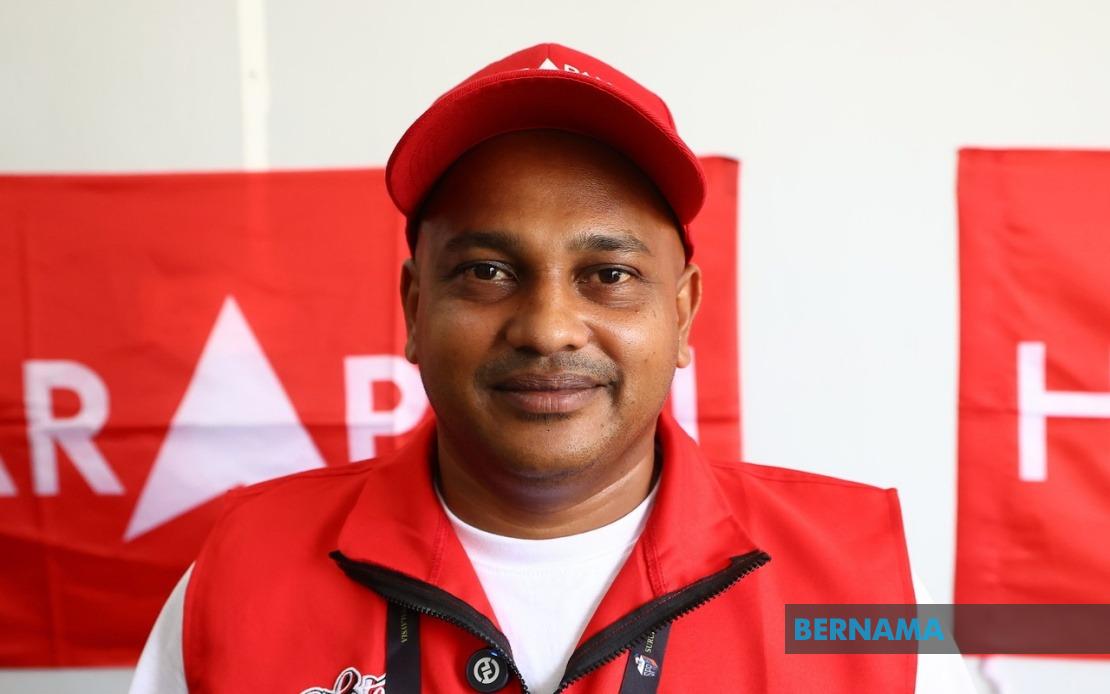
Guna Balakrishnan, the Pakatan Harapan candidate contesting the Layang-Layang state seat in the upcoming Johor elections, has unveiled an ambitious early-action blueprint focused on four critical areas identified as pressing concerns within his constituency. Speaking at the PH command centre in Kluang on July 6, the candidate committed to delivering tangible results within the first 100 days of his tenure, setting realistic targets that reflect both the urgency of community needs and the practical constraints of government implementation.
The infrastructure challenge facing Layang-Layang mirrors many rural constituencies across Johor and peninsular Malaysia more broadly. Street lighting deficiencies remain a perennial grievance in semi-urban and rural areas, affecting both public safety and economic activity. Guna's pledge to resolve between 50 and 60 per cent of existing complaints within the opening quarter of his potential term demonstrates a measured approach to this systematic problem. Rather than promising comprehensive coverage overnight, his acknowledgment of realistic timescales suggests awareness of the administrative machinery required to survey damage, source materials, and coordinate repairs across a 25,181-voter constituency.
The telecommunications gap represents a particularly acute concern for rural Johor communities. Digital connectivity has emerged as essential infrastructure akin to roads and electricity, yet disparities between urban and rural access persist stubbornly. Guna's analysis that significant transmission improvements can be completed within 100 days rests on the foundation that technical infrastructure including feeders already exists in many areas, requiring only strategic placement of additional transmitters. This suggests the bottleneck is not fundamental infrastructure investment but rather targeted completion of the final network node installations that would bring coverage to underserved pockets.
The agricultural dimension of Guna's platform reflects the realities of Johor's rural economy. Oil palm cultivation remains dominant across the state's peripheral constituencies, and systematic theft of harvested fruit represents a significant financial drain on smallholder farmers who cannot afford private security. By elevating this issue from grassroots campaign conversations to formal government priority, Guna signals acknowledgment that rural economic vulnerability extends beyond market commodity prices to include criminal vulnerability. This resonates with growing farmer frustration across Malaysian plantation regions.
Wildlife encroachment has intensified across Johor and neighbouring states, particularly as human settlements expand into forested edges and elephant populations migrate seasonally. The issue bridges environmental management, public safety, and agricultural protection, making it a complex challenge requiring coordination among multiple agencies. Guna's commitment to provide immediate attention suggests proposals for improved fencing, early-warning systems, or modified agricultural practices that reduce attractiveness to wildlife—interventions requiring both capital and technical expertise.
Beyond these immediate 100-day commitments, Guna's broader manifesto encompasses longer-term development priorities including flood mitigation, road upgrades, women's entrepreneurship support, and expansion of TVET opportunities for youth. The inclusion of a senior citizen activity centre (PAWE) reflects recognition of Johor's aging demographic in rural areas, where extended family support networks have eroded through urban migration. These secondary pledges establish a multi-phase governance agenda extending well beyond the initial action window.
The Layang-Layang contest itself represents a three-way battle reflective of contemporary Malaysian electoral fragmentation. Guna confronts Barisan Nasional's Chua Jian Boon and Perikatan Nasional's incumbent Abd Mutalip Abd Rahim, meaning neither opposition nor government enjoys a clear partisan advantage in this particular constituency. The distribution of votes across three candidates could prove decisive, particularly given relatively modest voter turnout typical in state-level elections compared to federal contests.
Johor's state elections on July 11 carry significance beyond the peninsula's richest state. As a Barisan Nasional stronghold historically, recent electoral volatility has demonstrated voter willingness to punish incumbents perceived as unresponsive. The detailed, specific nature of Guna's commitments—50 to 60 per cent lighting resolution, telecommunications completion within defined timeframes—represents a strategic differentiation from more generic development promises. This specificity makes these pledges easier to monitor and more vulnerable to accountability if unfulfilled.
For Malaysian voters observing state-level politics, the Layang-Layang contest illustrates how opposition parties increasingly compete on implementation capacity and responsiveness rather than ideological positioning alone. Guna's manifesto prioritizes tangible service delivery, rural economic welfare, and demographic inclusion—concerns transcending partisan boundaries. This reflects the maturation of Malaysian electoral competition toward performance-based evaluation, where voters increasingly demand concrete evidence of potential and specificity regarding timeframes.
The early voting scheduled for July 7 precedes the main polling date, accommodating voters unable to participate on election day. This administrative measure has become standard across Malaysian electoral cycles, broadening access but also potentially advantaging better-organized campaigns capable of mobilizing supporters during the extended voting window. The mobilization intensity in coming days will substantially influence outcomes across all three Layang-Layang candidates.
Guna's platform ultimately reflects the contemporary demands facing Johor's rural communities: basic infrastructure parity with urban areas, economic security for farming populations, demographic inclusion, and responsive governance. Whether these specific commitments translate into electoral support remains contingent on voter confidence in Pakatan Harapan's capacity for delivery and the broader political calculus surrounding Johor's development trajectory under potential alternative administrations.

