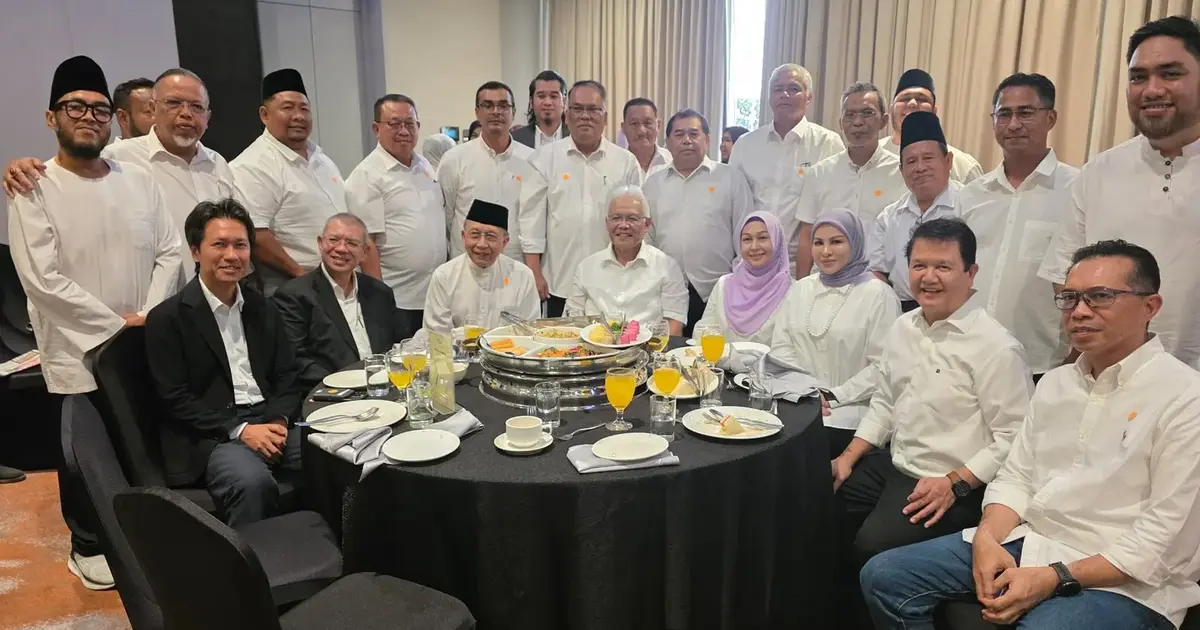
The political landscape witnessed a notable transition as Hamzah was appointed to the presidency of Wawasan, marking a significant restructuring of the organisation's top-level leadership. This development reflects ongoing shifts within Malaysia's political establishment and signals potential changes in strategic direction for the prominent political entity.
Rais Yatim, a figure with an extensive career spanning multiple ministerial portfolios, has assumed the role of chairman in the new arrangement. His appointment underscores the continued reliance on seasoned political veterans to provide governance and strategic oversight. Rais Yatim's background in various government positions brings considerable institutional experience to the newly configured leadership structure, lending credibility to the organisation's direction during a period of transition.
The position of secretary-general has been filled by Saifuddin Abdullah, the member of parliament representing Indera Mahkota. His entry into this key administrative role represents the integration of serving lawmakers into Wawasan's governance framework. The appointment reflects efforts to bridge parliamentary representation with organisational leadership, potentially strengthening the entity's connection to elected representatives and grassroots political networks.
These appointments represent a deliberate restructuring that appears designed to consolidate influence and clarify the organisational hierarchy within Wawasan. By bringing together Hamzah, Rais Yatim, and Saifuddin Abdullah, the leadership has assembled a team with complementary political credentials and experience across different spheres of Malaysian politics. Each individual brings distinct advantages: Hamzah's executive capacity, Rais Yatim's institutional memory and ministerial experience, and Saifuddin Abdullah's active parliamentary status.
For Malaysian political observers, these developments warrant attention as they often signal broader shifts in coalition dynamics and factional positioning within the nation's complex political environment. Leadership appointments at this level rarely occur in isolation; they typically reflect negotiations, consensus-building, and strategic calculations among various stakeholder groups within the political sphere.
Wawasan's restructured leadership may prove consequential for the organisation's policy priorities and public positioning in the months ahead. With a new president at the helm, supported by an experienced chairman and an active parliamentarian in administrative capacity, the organisation appears positioned to articulate a distinct political agenda and engage more directly with both party members and the general electorate.
The appointment of seasoned figures like Rais Yatim alongside younger, active parliamentarians like Saifuddin Abdullah suggests a deliberate attempt to balance institutional gravitas with contemporary political relevance. This generational mixing in leadership structures has become increasingly common in Malaysian political organisations seeking to maintain legitimacy with both traditional party bases and younger, digitally-engaged voter demographics.
For regional observers tracking Malaysian political development, these leadership changes provide insight into how established political structures adapt and reorganise in response to electoral outcomes, coalition pressures, and internal faction dynamics. The appointment process itself—announcing leadership in this manner—reflects professional organisational standards and transparent governance practices that have become expected benchmarks for major political entities.
The implications of these appointments will likely unfold gradually as the new leadership team begins implementing their vision for Wawasan. Parliamentary observers and political analysts will monitor how Saifuddin Abdullah balances his legislative responsibilities with his new administrative duties, and whether the increased prominence of Hamzah signals tactical shifts in political alliance-building or policy formulation within the broader Malaysian political ecosystem.

