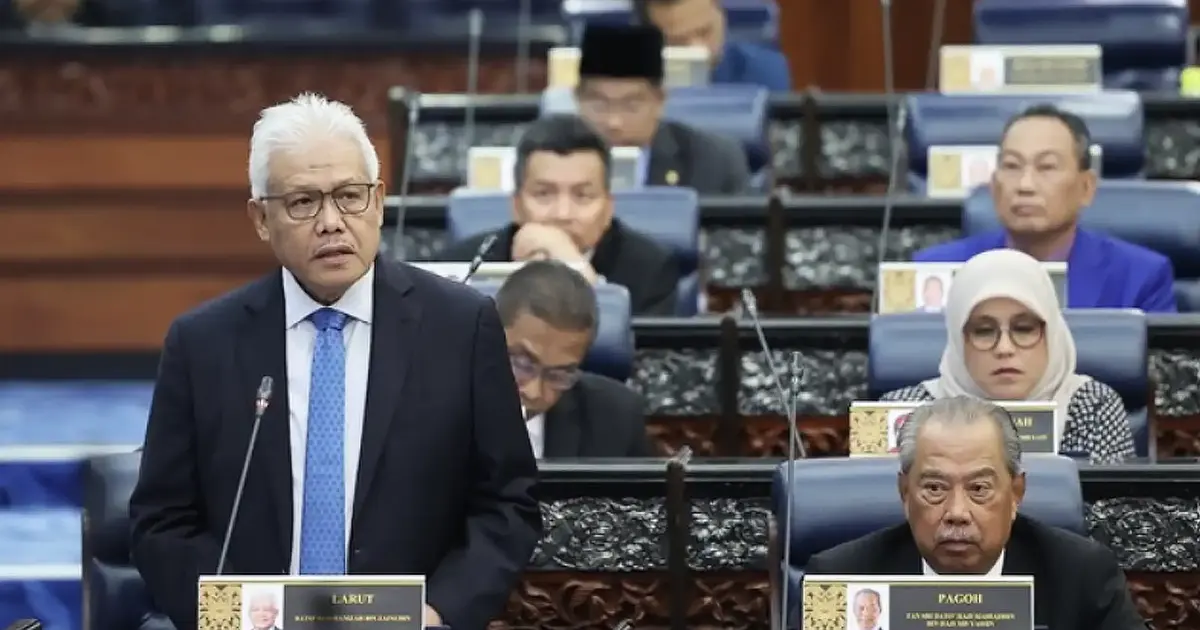
Hamzah Zainudin has reclaimed the prominent front-row position reserved for the opposition leader in the Dewan Rakyat, signalling a significant realignment in parliamentary seating arrangements that reflects shifting power dynamics within Malaysia's opposition coalition. The repositioning sees Bersatu president Muhyiddin Yassin moved substantially back from his customary seat adjacent to the opposition leader, dropping eight spots along the front bench—a visible demotion that carries symbolic weight in the ceremonial hierarchy of Parliament.
The seating reassignment underscores the fluid nature of opposition politics in Malaysia, where the allocation of front-bench positions traditionally signals institutional recognition and factional influence. Hamzah's restoration to the opposition leader's seat represents a consolidation of his authority within the parliamentary opposition bloc, a position that carries both ceremonial significance and practical advantages in parliamentary proceedings, including priority speaking time and greater visibility during legislative debates.
Muhyiddin's demotion from immediate proximity to the opposition leader reflects the changing fortunes of Bersatu within the broader opposition framework. The party, which once wielded considerable leverage through Muhyiddin's high-profile leadership and connections to the Perikatan Nasional coalition, has experienced shifting influence as opposition alliances continue to recalibrate following successive electoral cycles and political realignments in Malaysia's complex multi-party system.
Parliamentary seating arrangements in the Dewan Rakyat operate according to established conventions that prioritize seniority, party strength, and recognized opposition leadership status. These protocols, while seemingly procedural, carry substantial implications for parliamentary dynamics and public perception of factional strength. The repositioning of such senior figures therefore serves as a barometer of internal coalition negotiations and the relative standing of major opposition players during the current parliamentary term.
For Malaysian observers of parliamentary politics, these subtle but meaningful shifts in seating hierarchy illuminate the ongoing negotiations between opposition parties regarding coalition structure and leadership recognition. Hamzah's reassertion in the opposition leader's designated seat may indicate either his strengthened position within a particular opposition alliance or the stabilization of his faction's parliamentary standing following periods of uncertainty or negotiation.
The implications for Muhyiddin and Bersatu are multifaceted. Being moved further from the symbolic centre of opposition activity could impact party morale and public perception of Bersatu's influence within the opposition constellation. However, such arrangements remain fluid and subject to change as parliamentary coalitions evolve and party dynamics shift in response to political developments, internal reorganizations, or fresh electoral mandates.
In the context of Southeast Asian parliamentary traditions, Malaysian seating protocols reflect broader regional practices where physical positioning carries political meaning. Unlike parliamentary systems where opposition parties sit on designated benches regardless of individual stature, the Dewan Rakyat's practice of allocating specific premium seats to recognized opposition leaders creates a hierarchy visible to the public, media, and international observers monitoring Malaysian parliamentary proceedings.
The shuffle also reflects the ongoing consolidation of opposition forces following periods of political fragmentation. As Malaysian opposition parties continue negotiating frameworks for cooperation—both formal through pre-electoral pacts and informal through parliamentary coordination—the recognition of Hamzah's position and Muhyiddin's adjusted status represents a temporary settling of internal leadership questions, though Malaysian political history suggests such arrangements often prove temporary as circumstances shift.
For Southeast Asian regional observers, Malaysian parliamentary seating dynamics provide insight into the health and coherence of opposition institutions. A clearly recognized opposition leader commanding prominent parliamentary positioning suggests organizational capacity and coalition discipline, whereas fragmentation and unclear hierarchies can signal internal tensions or transitional uncertainty within opposition blocs.
The practical consequences of these seating changes extend beyond symbolism. The opposition leader's designated seat provides superior acoustics, camera angles, and physical proximity to government benches—advantages that facilitate more effective questioning during parliamentary debates and public messaging through media coverage. Hamzah's return to this position therefore grants him enhanced platform visibility compared to backbench positioning.
Muhyiddin's response to his repositioning and the broader implications for Bersatu's parliamentary strategy remain to be seen. Whether the party views this as a temporary adjustment or a more fundamental shift in internal opposition standing will shape how Bersatu navigates the remainder of the parliamentary term and positions itself for future political negotiations or electoral contests.
These seating arrangements also merit attention from scholars of Malaysian institutional development, as they demonstrate how even formal parliamentary procedures remain subject to political negotiation and factional repositioning. The Dewan Rakyat's approach to managing multiple opposition voices while maintaining procedural order reflects the unique challenges facing Westminster-derived parliaments in plural political systems with fragmented opposition structures.
Looking forward, observers should monitor whether this repositioning proves durable or signals the beginning of further realignments within opposition ranks. Malaysian parliamentary history suggests that seating arrangements, while seemingly minor administrative matters, often presage broader shifts in coalition politics and factional influence that may not fully manifest until subsequent voting patterns, policy positions, or election cycles clarify the deeper transformations underway.

