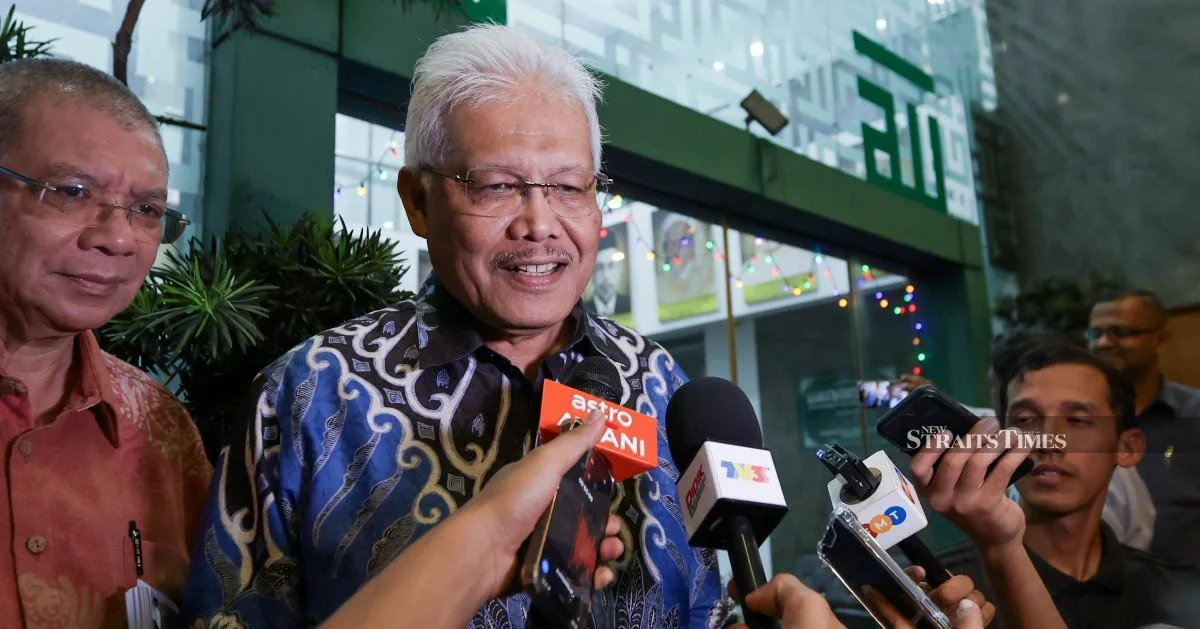
Datuk Seri Hamzah Zainudin is set to reclaim the opposition leader's seat in the Dewan Rakyat this coming Monday, according to newly released parliamentary seating arrangements that chart the shifting dynamics within Malaysia's opposition bloc. The repositioning reflects significant changes in opposition leadership following internal developments within the broader anti-government coalition, and will see Bersatu president Tan Sri Muhyiddin Yassin relocated to a seat further along the opposition benches.
The formal confirmation through the seating chart represents a tangible acknowledgment of altered power structures within the opposition following a period of considerable political flux. Parliamentary seating assignments carry symbolic weight in Malaysian politics, signalling not merely administrative arrangements but the relative standing and influence of party leaders within the legislative chamber. Hamzah's movement back to the prominent opposition leader's position underscores his reassertion within the opposition framework after a period during which alternative arrangements had been in place.
Muhyiddin's shift down the row, while maintaining his position within the opposition benches, indicates a recalibration of leadership hierarchies that have become increasingly fluid in recent parliamentary sessions. The Bersatu president, who has wielded considerable influence over opposition positioning and strategy, now finds himself in a secondary placement that may carry implications for the party's visibility and voice within legislative proceedings. This repositioning does not necessarily diminish Bersatu's role in opposition politics, but rather adjusts the visual and procedural hierarchy of the chamber's layout.
For Malaysian observers of parliamentary affairs, such seating changes often precede or follow substantive political developments within coalition structures. Opposition leadership in the Dewan Rakyat serves as the primary spokesperson and coordinator for the legislative agenda of non-government parties, wielding considerable procedural authority over question time, legislative debate, and the presentation of shadow policies. Hamzah's return to this role therefore carries implications extending well beyond ceremonial concerns of parliamentary arrangement.
The timing of this transition, occurring early in the parliamentary week, suggests deliberate orchestration rather than incidental scheduling. The coordination required to announce such changes through official seating charts indicates prior consultation and agreement among the relevant opposition factions, suggesting a degree of consensus behind the leadership reordering. Whether this consensus extends across all opposition member parties remains to be seen through their respective responses and statements in the coming days.
Bersatu's position within the opposition coalition has undergone considerable evolution since the party's political realignment in recent years. The party commands significant parliamentary representation and has proven capable of influencing broader opposition strategy and positioning. Muhyiddin's transition to a less prominent seating position may require careful management to maintain party cohesion and member morale, particularly among Bersatu legislators who have grown accustomed to their president occupying the leadership frontbench location.
For the government benches, such opposition restructuring often signals either vulnerability or strategic repositioning that warrants monitoring. A strong, clearly defined opposition leadership structure can facilitate more effective scrutiny of government policies and parliamentary procedures. Conversely, prolonged jostling for opposition positions sometimes indicates fractures that may be exploited by the ruling coalition. The clarity of the new arrangements may therefore work to the opposition's advantage in presenting a unified front during legislative sessions.
Hamzah, returning to the opposition leader's seat, will inherit various procedural responsibilities and opportunities tied to that position. The opposition leader traditionally leads parliamentary questioning of government policies, coordinates opposition amendments to legislation, and serves as the primary articulator of non-government perspectives during major debates. His repositioning thus represents not merely a symbolic elevation but a functional reassumption of significant parliamentary authority and responsibility.
The practical implications of Monday's seating transition will become apparent during the week's parliamentary activities. Question time sessions will likely reflect any shifts in opposition questioning strategy or emphasis, potentially indicating whether Hamzah's leadership brings revised priorities to opposition scrutiny. Legislative debates on pending bills and motions will provide immediate opportunities to observe any shifts in opposition coordination or messaging stemming from the new leadership positioning.
Regionally, Malaysian opposition dynamics attract attention from neighbouring democracies and regional analysts as indicators of parliamentary health and institutional resilience. Leadership transitions and coalition restructuring within opposition blocs signal the vitality of competitive politics and the contestation central to Westminster-derived systems. The regularity with which such transitions occur in Malaysian politics, whether controversial or orderly, underscores both the competitive nature of the nation's legislature and the ongoing negotiation of power within multi-party parliamentary frameworks.
The confirmation through official seating charts rather than through a major political announcement suggests an attempt to manage the transition matter-of-factly, potentially minimising accompanying drama or questions about the circumstances prompting the change. Nevertheless, such procedural moves rarely occur without underlying political significance, and astute observers of parliamentary affairs will look to subsequent developments to understand the full context and implications of Hamzah's return and Muhyiddin's repositioning within the opposition structure.

