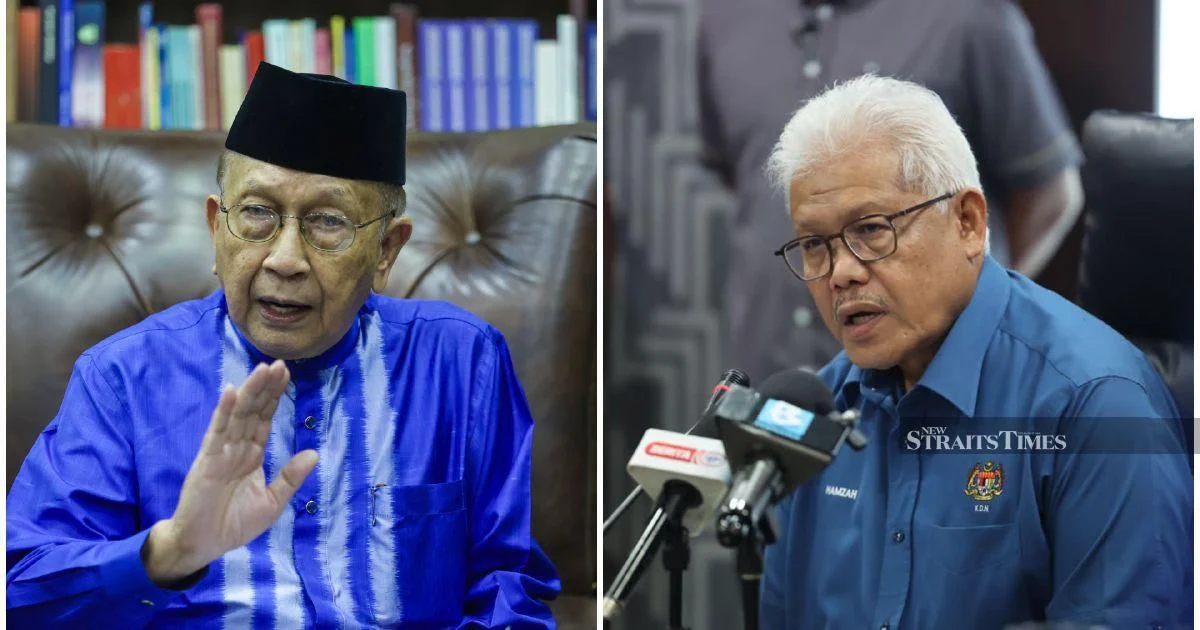
Parti Wawasan Negara has formally revealed the composition of its central leadership council, positioning itself as a fresh political force through the appointment of experienced administrators alongside parliamentary members and technical specialists. The announcement marks a deliberate strategy by the fledgling political entity to consolidate its organisational structure as it charts its trajectory in Malaysia's increasingly fragmented political landscape.
Hamzah Zainudin and Rais Yatim assume principal roles within the party hierarchy, lending considerable gravitas through their extensive track records in federal governance. Both figures bring decades of institutional experience from their previous tenure in ministerial portfolios, providing credibility as the party attempts to establish itself beyond its founding cohort. Their appointment signals the party's intent to operate with technical rigour and administrative competence rather than presenting itself purely as a maverick political alternative.
The broader composition of the leadership team reflects a calculated mixing of demographics and professional backgrounds. The inclusion of multiple sitting members of parliament demonstrates the party's claim to possess parliamentary representation and legislative capacity, while the inclusion of professionals from various sectors indicates aspirations to appeal beyond traditional political bases. This diversification strategy is particularly notable in a Malaysian context, where voters increasingly scrutinise the technical credentials and sector-specific expertise of political representatives beyond mere party affiliation.
Wawasan Negara's leadership architecture appears designed to address perceptions of weakness that frequently plague newer political entrants in Malaysia. By assembling individuals who have previously helmed major government departments and navigated complex policy implementation, the party positions itself as administratively capable. This positioning becomes especially significant given the competitive environment where established political parties leverage decades of institutional memory and organisational depth.
The party's reliance on former ministers creates an interesting dynamic within Malaysia's contemporary politics. These individuals represent a generation of politicians whose careers span multiple electoral cycles and different governmental configurations. Their involvement suggests Wawasan Negara aspires to become a repository for experienced political practitioners seeking alternative institutional homes, whether through conviction regarding the party's ideological platform or through strategic career recalibration.
The appointment structure also carries implications for how Wawasan Negara might function operationally. Veteran administrators typically bring established networks within the federal bureaucracy and state governments, potentially facilitating the party's ability to coordinate across multiple governance levels. In Malaysian politics, such networking capacity often determines a new party's effectiveness in translating electoral support into substantive policy influence and resource allocation.
For Malaysian voters evaluating Wawasan Negara's viability as a political alternative, the leadership announcement serves as a critical messaging moment. The visibility of former ministerial figures can either enhance credibility through demonstrated governance experience or trigger scepticism regarding whether the party represents genuine innovation or merely recycled political personnel seeking renewed relevance. Regional analysts will likely monitor the degree to which this leadership team remains cohesive and whether internal dynamics reflect consensus-building or factional interests.
The party's timing in revealing its full leadership structure also warrants consideration within Malaysia's electoral calendar. Clarity regarding organisational leadership often precedes intensified political activity, whether through candidate recruitment, policy announcement, or coalition-building efforts. The move suggests Wawasan Negara is transitioning from foundational establishment toward operational maturity, positioning itself for greater political engagement in coming periods.
Within Southeast Asia's broader political context, the emergence of new political formations with experienced leadership reflects ongoing realignments in regional politics. Malaysia's political trajectory increasingly features protagonists operating outside traditional two-coalition frameworks, with newer parties seeking to carve distinctive positions. Wawasan Negara's leadership choices will influence how it differentiates itself and whether it successfully attracts constituencies dissatisfied with established alternatives.
The central leadership line-up ultimately functions as Wawasan Negara's initial response to fundamental questions about institutional credibility and operational capacity. Whether this structural arrangement translates into electoral support and sustained political relevance depends substantially on how effectively the party translates administrative experience into compelling policy platforms and campaign effectiveness. The appointment of Hamzah Zainudin, Rais Yatim, and supporting leadership represents the party's opening salvo in demonstrating it possesses both the personnel and capacity to merit consideration as a serious political participant in Malaysia's intensifying political competition.

