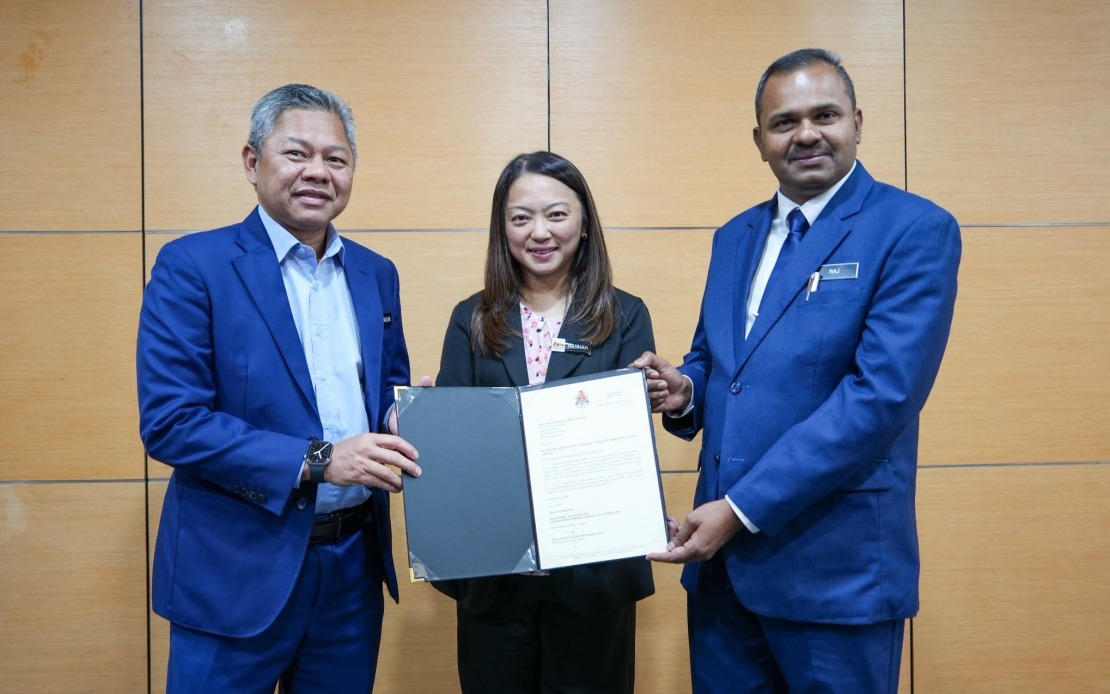
Federal Territories Minister Hannah Yeoh has voiced her support for S. Thiyagaraj's recent appointment to the Kuala Lumpur City Advisory Board, praising the former prison official's selection as a meaningful addition to the municipal governance structure. The announcement came during a formal ceremony in which Mayor Datuk Seri Fadlun Mak Ujud presented Thiyagaraj with his official appointment letter, with Hannah witnessing the milestone moment.
In her congratulatory remarks, Hannah stressed the importance of individuals bringing integrity and dedication to advisory roles that directly influence the nation's capital. She highlighted that her confidence stems from Thiyagaraj's track record and his demonstrated commitment to serving the public interest. The minister's emphasis on professionalism underscores the government's broader push to populate municipal boards with candidates whose careers reflect reliable institutional experience and a strong ethical foundation.
Thiyagaraj's career trajectory reflects substantial public service, having spent nearly two decades in the Prisons Department from 2005 through 2023. During his tenure, he rose to the rank of Assistant Superintendent of Prisons and specialised in technical intelligence and investigative work, roles that demand analytical rigour, discretion, and the ability to navigate complex institutional challenges. This background positions him with a deep understanding of systems thinking and operational oversight, qualities particularly valuable in advisory contexts where institutional perspective matters.
The Kuala Lumpur City Advisory Board functions as a critical consultative mechanism within the municipal governance framework. Board members serve the Mayor by offering considered perspectives on administrative matters and urban development strategies, essentially acting as a sounding board for policy implementation and citywide initiatives. Hannah noted that this advisory function carries substantial responsibility, as recommendations and insights provided to the Mayor directly shape how efficiently and transparently the city manages its operations and responds to resident concerns.
In her statement, Hannah articulated a vision for board members as custodians of enhanced governance standards. She emphasised that strengthening city administration requires more than routine participation—it demands active engagement, transparency in decision-making processes, and responsiveness to the everyday needs of Kuala Lumpur's diverse population. This framing positions the advisory board not merely as a ceremonial body but as a substantive mechanism through which municipal decision-making becomes more grounded in practical realities and community priorities.
The appointment reflects broader efforts within Malaysia's governance architecture to recruit experienced professionals into advisory positions where their expertise can inform better urban management. Given Kuala Lumpur's significance as the nation's capital and primary economic hub, the calibre of individuals shaping municipal policy recommendations carries implications beyond the city limits, influencing how federal institutions coordinate with municipal authorities on matters ranging from infrastructure to public safety.
Thiyagaraj's transition from law enforcement and corrections work to municipal advisory roles illustrates an emerging trend within Malaysian governance structures—the deployment of security and institutional professionals into civilian advisory positions. This crossover approach potentially brings discipline and systematic thinking from security operations into the broader canvas of city development and administrative efficiency. However, it also reflects confidence that expertise cultivated within one institutional domain can translate effectively into different governance contexts.
The formal nature of the appointment ceremony, with ministerial oversight and official documentation, signals that positions on the advisory board carry genuine significance within the municipal bureaucracy. Hannah's presence and statements underscore that these appointments receive attention from senior government figures, suggesting that advisory board recommendations do influence mayoral decision-making and are taken seriously within municipal hierarchies.
For Kuala Lumpur residents and stakeholders invested in the city's development trajectory, Thiyagaraj's appointment represents an opportunity to observe how fresh perspectives, particularly those grounded in institutional and investigative experience, reshape conversations about urban governance. The board's advice on matters spanning city administration and development will, over time, reveal whether experiences from the corrections sector offer particular insights applicable to municipal challenges like public safety, resource management, and systematic problem-solving.
Hannah's confidence in Thiyagaraj's ability to execute the role with full integrity and professionalism ultimately rests on the assumption that rigorous institutional experience, ethical commitment, and a public service orientation transfer seamlessly into advisory contexts. The coming months will demonstrate whether this assessment proves accurate and whether his tenure contributes meaningfully to the more efficient, transparent, and responsive governance Hannah has advocated for in the city.

