A strategic educational collaboration between the Johor State Government and Harvard University is set to transform learning outcomes for a cohort of secondary school students, with the rollout of the Program for Scientifically-Inspired Leadership expected to commence in January 2027. The initiative, which brings international academic expertise to two Johor schools, represents a significant investment in developing the next generation of leaders equipped with critical thinking and scientific reasoning capabilities. State Education and Information Committee chairman Aznan Tamin confirmed that Sekolah Menengah Kebangsaan Tasek Utara and SMK Seri Kota Puteri 2 will serve as pilot institutions under the Sekolah Rintis Bangsa Johor framework, with a combined 100 students enrolled as the initial cohort.
The Harvard-designed programme, which originated in 2019, departs from conventional pedagogical approaches by anchoring instruction around active engagement, analytical problem-solving, persuasive articulation of ideas, and the cultivation of leadership competencies. Rather than passive knowledge absorption, students will participate in inquiry-based learning experiences that mirror how scientific thinking actually operates in practice. This methodology aligns with global shifts in education policy that recognise the inadequacy of rote memorisation for preparing young people to navigate complex professional and civic challenges. The programme's emphasis on these interconnected competencies reflects growing international consensus that technical knowledge alone is insufficient without the interpersonal and cognitive skills required to apply it meaningfully.
Beyond direct student participation, the collaboration extends professional development benefits to 40 educators from both schools through dedicated workshops focused on active learning pedagogy. These training interventions aim to equip teachers with contemporary instructional strategies that foster interactive classroom dynamics and encourage creative problem-solving among pupils. The teacher development component recognises that sustainable pedagogical transformation requires not merely importing foreign curricula but building local capacity within the teaching workforce. By investing in educator upskilling, the programme creates multiplier effects whereby improved teaching practices can influence learning outcomes across cohorts beyond the initial 100 students.
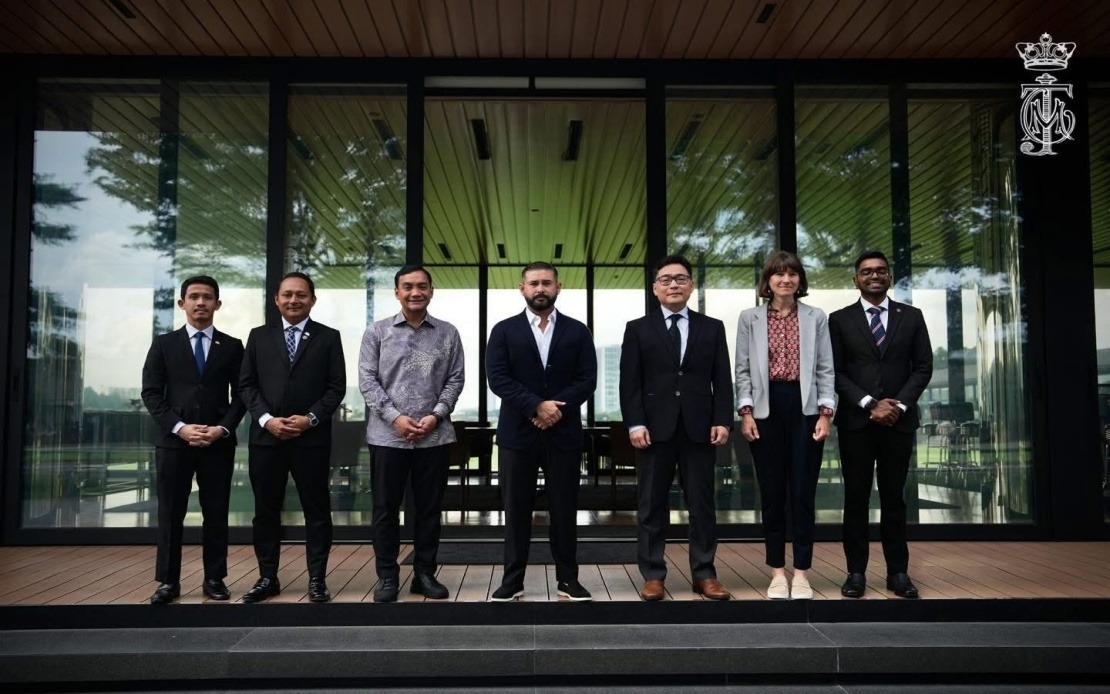
The official endorsement of this partnership came when Tunku Mahkota Ismail received a delegation from Harvard College that included Dr Dominic Mao, assistant director of Undergraduate Studies and a Lecturer in Molecular and Cellular Biology, alongside Dr Andrea Wright, assistant dean of Harvard College. This high-level engagement underscores the university's institutional commitment to the initiative and signals serious intent toward establishing sustained collaboration rather than a token gesture. The presence of senior academic figures demonstrates that Harvard is deploying experienced educators and administrators to guide implementation, lending credibility to the programme's design and execution within the Malaysian context.
Aznan characterised the bilateral engagement as validation of Tunku Mahkota's strategic vision for elevating Johor's educational infrastructure through purposeful connections with elite international institutions. Such international partnerships serve multiple functions simultaneously: they expose local students to global academic standards and comparative learning methodologies, create pathways for knowledge transfer and exchange of best practices, and position Johor as an attractive destination for quality education. For participating students, exposure to Harvard-developed curriculum provides a window into how leading universities approach intellectual development, potentially influencing future educational aspirations and career trajectories.
The Sekolah Rintis Bangsa Johor programme itself operates under a distinctive educational philosophy that balances multiple objectives often treated as competing priorities. The institution prioritises mastery of English proficiency while deliberately avoiding marginalisation of Malay, recognising that bilingual capability serves students' academic mobility and professional prospects without undermining linguistic heritage. Simultaneously, the school emphasises STEM skill development, understanding that scientific and technological literacy increasingly forms the foundation for diverse career pathways across the economy. The integration of personality development alongside academic achievement reflects recognition that educational institutions shape not merely technical competence but character formation.
A further dimension of SRBJ's approach involves implementation of competency assessments calibrated to international standards while maintaining alignment with Malaysia's Ministry of Education directives. This dual calibration ensures that students develop capabilities recognised globally whilst remaining embedded within the national educational framework. The emphasis on student marketability—framed explicitly as an institutional goal—reflects pragmatic awareness that educational quality ultimately demonstrates itself through graduate outcomes and labour market success. By positioning students to acquire credentials and competencies valued internationally, the school strengthens their competitive position in an increasingly globalised employment landscape.
For the broader Malaysian education system, this Harvard partnership carries symbolic and substantive significance. Symbolically, it demonstrates that Malaysian schools and institutions can establish peer relationships with globally leading universities, positioning the country as a legitimate participant in international educational exchange rather than merely a consumer of foreign expertise. Substantively, the programme generates evidence regarding whether and how pedagogical innovations from leading universities translate effectively when implemented in Malaysian school contexts. The outcomes from this pilot will inform whether such partnerships can be scaled or replicated across other states, or whether region-specific adaptations become necessary.
The timing of the initiative—commencing in January 2027—provides adequate runway for preparation, curriculum alignment, and teacher training before students begin the programme. This deliberate sequencing increases probability of successful implementation by avoiding rushed rollout. As Malaysian education policy increasingly emphasises developing critical thinking and preparing students for unknown future challenges, initiatives like the Harvard partnership provide concrete mechanisms through which aspirations translate into classroom reality. The programme's explicit focus on leadership development also addresses a recognised skills gap in regional education systems, where technical training often proceeds without parallel investment in cultivating effective communication and decision-making capabilities essential for advancement into senior roles.