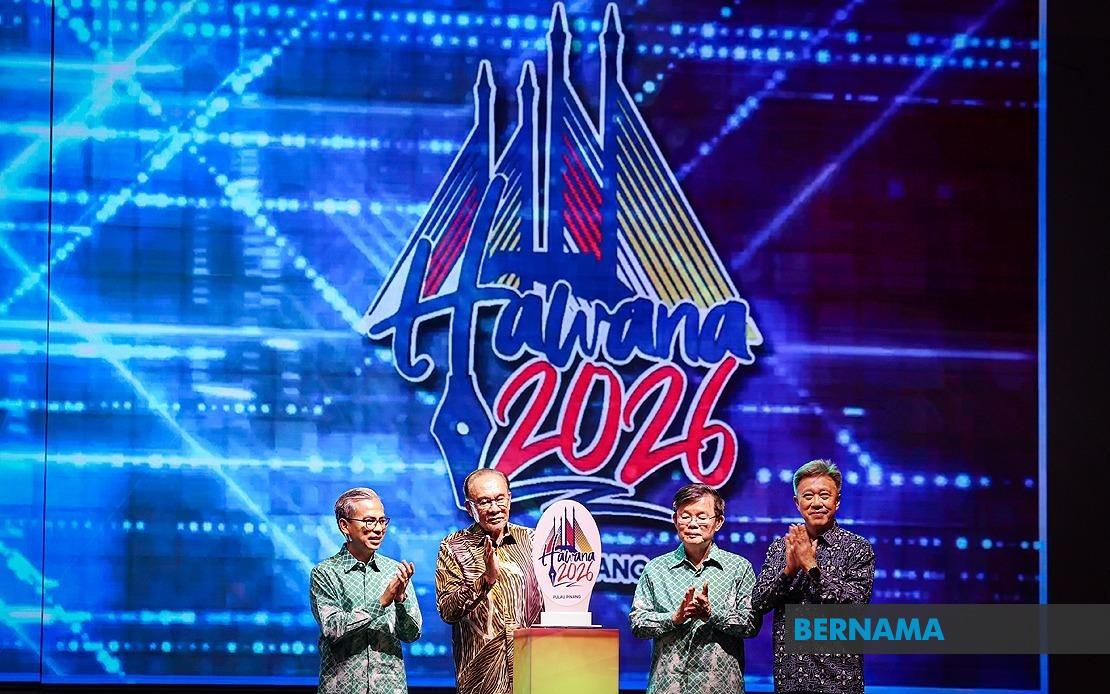
The three-day National Journalists' Day celebration in Butterworth concluded successfully on Sunday, bringing together nearly 1,000 media practitioners from Malaysia and neighbouring ASEAN nations to reinforce the critical importance of journalistic integrity in an increasingly complex information landscape. Held at the PICCA@Arena Butterworth Convention Centre under the theme "Media Integrity Strengthens Credibility", the event underscored Malaysia's commitment to supporting its fourth estate whilst strengthening ties with regional media bodies. Delegates from Indonesia, Cambodia and Timor-Leste joined their Malaysian counterparts in what officials described as a landmark gathering for Southeast Asian journalism.
Prime Minister Datuk Seri Anwar Ibrahim's attendance at Saturday's official ceremony signalled the government's investment in media sustainability and professional standards. During his address, Anwar committed an additional RM1 million to the Tabung Kasih@HAWANA welfare fund, demonstrating tangible support for journalists facing financial hardship. This allocation builds on a fund that has already disbursed RM2.26 million to 773 media practitioners since its establishment in 2023. The announcement reflects growing recognition that media workers in Malaysia, many of whom operate as freelancers or work for smaller publications, require institutional safety nets to continue pursuing their profession without compromising on editorial standards.
Beyond welfare support, the Prime Minister reaffirmed government commitment to accelerating digital transformation across Malaysia's media sector through continuation of the Media Innovation Fund. This initiative addresses a critical challenge facing regional newsrooms: the need to modernise operations, invest in digital platforms and adapt business models to survive rapid technological disruption and changing audience consumption patterns. For Malaysian publications competing with international digital players and social media platforms, such targeted funding becomes essential infrastructure for maintaining professional journalism.
Communications Minister Datuk Fahmi Fadzil announced that Telekom Malaysia had joined as a strategic partner, contributing RM500,000 to the welfare fund. This corporate engagement demonstrates how Malaysia's private sector recognises the value of a healthy, independent media ecosystem. The participation of major telecommunications providers and other industries in supporting journalism through such funds reflects a broader understanding that media credibility ultimately benefits all sectors of the economy and society.
Among the most poignant moments came with the posthumous Special HAWANA Award presented to Azlan Idris, former head of Bernama Radio who passed away in January at age 57. His widow, Wan Syahrina Wan Abdul Rahman, received the recognition as images of her late husband were displayed before the assembly. Azlan's career spanning Bernama, TV3, NTV7 and Channel 9 exemplified the professional dedication that the award seeks to honour. His instrumental role in establishing Bernama Radio since 2007 and his participation in organising four HAWANA editions highlighted how individual journalists and media leaders shape institutional memory and professional culture in Malaysian newsrooms.
Datuk Suhaimi Sulaiman, former Broadcasting director-general, received the main HAWANA Award in recognition of outstanding contributions to broadcasting and journalism. These awards serve a crucial function in Malaysian media culture, providing public validation of professional excellence and setting benchmarks for aspiring journalists. Such recognition becomes particularly important in an era when media credibility faces constant challenges and when journalists themselves may question the value of their increasingly precarious profession.
A significant development emerged with the signing of a memorandum of understanding between Bernama and Timor-Leste's national news agency, Agência Noticiosa de Timor-Leste (TATOLI). Formalised by Communications Minister Fahmi Fadzil and witnessed by Prime Minister Anwar, this agreement represents deepening regional media cooperation and information-sharing frameworks. For Malaysia and Southeast Asia more broadly, such bilateral arrangements strengthen the region's capacity to produce credible regional reporting and reduce dependence on international news agencies for coverage of ASEAN affairs.
The celebration balanced official proceedings with cultural programming. The RIUH Pi HAWANA Carnival featuring local musical acts including Exists, Bunkface and Kugiran Masdo drew attendees beyond the professional media community, incorporating interactive workshops and attracting over 24 local creative brands and 20 food vendors. This approach transformed what could have been an insular industry gathering into a broader cultural event celebrating creative expression and media's role in nurturing Malaysia's cultural industries.
Multiple professional forums ran in parallel to the main celebration, addressing substantive industry challenges. The Malaysia Media Retreat 2.0, organised by the Malaysian Federation of Media Clubs, provided space for strategic discussions. The Malaysian Press Institute's town hall titled "2035: Will Journalists Still Exist?" directly confronted existential questions facing the profession as artificial intelligence, algorithmic content distribution and economic pressures reshape journalism globally. These forums moved beyond ceremonial celebration to grapple with real threats to journalism's future and institutional sustainability.
Penang's selection as host city delivered regional economic benefits whilst showcasing the state's infrastructure and event management capabilities. Governor Tun Ramli Ngah Talib's hosting of a dinner honouring nearly 350 media practitioners from across Malaysia and ASEAN acknowledged journalism's contribution to nation-building. Such state-level engagement in media celebration reflects recognition that journalism operates at multiple scales, from national policy to local community reporting, and that sustaining professional standards requires support at every level of government.
Bernama's successful execution of HAWANA 2026 demonstrated the national news agency's organisational capabilities and technical expertise. The event featured Malaysia's first-ever live television broadcast of the HAWANA celebration, utilising in-house resources and production capacity. This technical achievement underscores Bernama's evolving role not merely as content provider but as infrastructure operator supporting the broader media ecosystem. For a regional news agency working with limited resources compared to international competitors, such capability development becomes strategically important.
The three-day format, preceded by lead-up programming including a Media Forum on May 7 and a Fun Walk on June 14, created momentum and sustained media industry engagement beyond the core celebration. This extended approach contrasts with one-off ceremonial events, instead building a calendar of professional development opportunities and community connection. As Malaysian media continues navigating profound structural changes, such sustained professional engagement becomes increasingly valuable for maintaining industry cohesion and shared professional standards.

