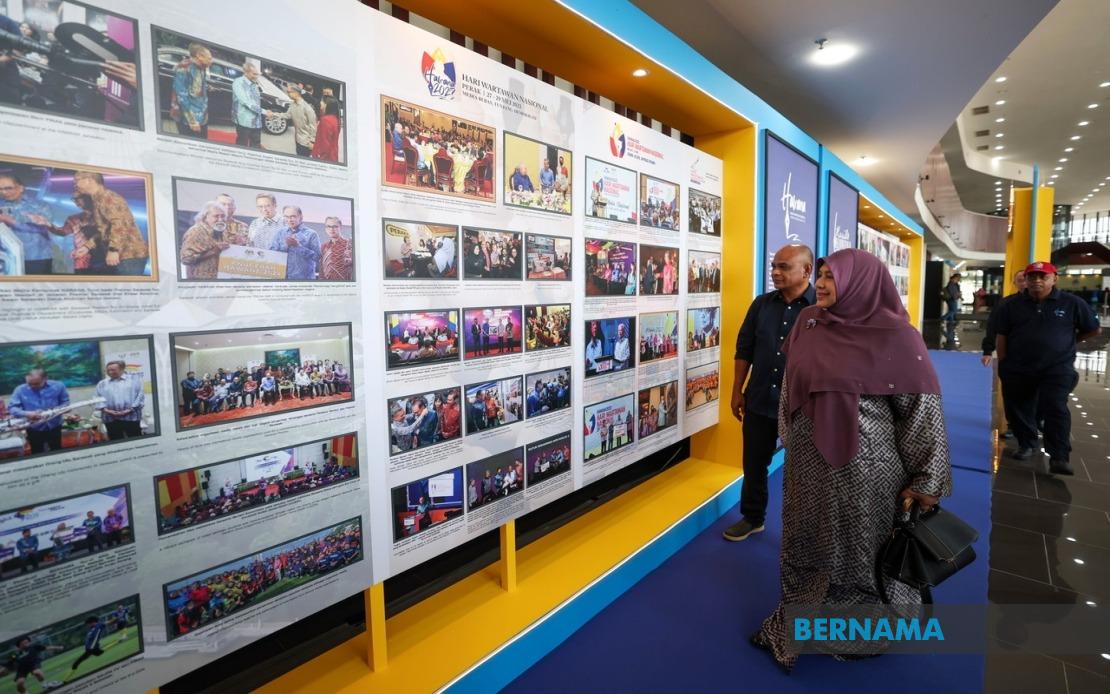
Malaysia's flagship National Journalists' Day summit kicks off tomorrow at the PICCA@Arena Butterworth Convention Centre, marking a significant shift in the annual gathering of the country's media fraternity. The decision to host HAWANA 2026 in Penang rather than the traditional Kuala Lumpur venue represents a deliberate effort to decentralise the event and foster broader engagement across Malaysia's regions, though organisers acknowledge this repositioning will reshape attendance patterns in ways that remain to be fully measured.
With only hours separating the working committee from the opening bell, preparations have reached approximately 80 per cent completion at the Butterworth venue. The National Journalists' Day Working Committee, chaired by Bernama chief executive officer Datin Paduka Nur-ul Afida Kamaludin, has conducted multiple rehearsal cycles over the preceding three days to iron out operational details and ensure seamless programme delivery. This intensive final-stage preparation reflects the complexity of orchestrating a summit expected to draw around 1,000 media practitioners from Malaysia and international locations, each requiring coordination across multiple logistical fronts.
The geographical relocation to Penang introduced unforeseen planning complexities that demanded meticulous attention throughout the preparation phase. Accommodation availability and transportation infrastructure became central considerations, forcing organisers to cultivate relationships with multiple hotel operators across the state and develop alternative transit arrangements to support both the organising team and visiting journalists. Nur-ul Afida explained that this collaborative approach with local hospitality providers proved essential to mitigating the inherent disadvantages of shifting away from a major metropolitan hub.
The shift northward inevitably carries attendance implications that distinguish this edition from predecessors. Kuala Lumpur's centralised location and established media infrastructure historically enabled higher participation rates, as Malaysia's concentrated media industry largely operates from the capital. By contrast, Penang's geographic position and the competing demands on professionals' schedules—work obligations, travel time, and personal responsibilities—will likely suppress attendance figures. This trade-off between geographical inclusivity and participation volume represents a strategic calculation underlying the venue decision.
To offset potential attendance challenges, the organising ministry and implementing agency Bernama have coordinated with allied professional bodies to expand the summit's intellectual footprint. The Malaysian Media Council, Federation of Malaysian Media Clubs (GKMM), and Malaysian Press Institute (MPI) will orchestrate subsidiary programming running concurrently with the main summit, effectively creating a comprehensive industry gathering that transcends the single-venue model. These parallel sessions broaden thematic coverage and provide structured forums for professional networking and knowledge exchange.
Prime Minister Datuk Seri Anwar Ibrahim will officially inaugurate proceedings tomorrow at 3 pm, lending the event executive-level endorsement and signalling government recognition of journalism's institutional importance. His attendance underscores the administration's positioning of media practitioners as stakeholders in national discourse and policy development. This ceremonial dimension elevates the summit beyond a professional convening into a formal acknowledgment of journalism's societal role.
The summit's organising theme, 'Media Integrity Strengthens Credibility', directly addresses contemporary pressures confronting journalism globally and regionally. As Southeast Asian newsrooms navigate challenges ranging from audience fragmentation through digital platforms to questions about editorial independence and fact verification, the thematic framework provides a focused lens for examining how professional standards sustain public trust. For Malaysian journalists particularly, the emphasis on integrity reflects ongoing industry concerns about maintaining credibility amid rapid media ecosystem transformation and evolving audience expectations.
HAWANA itself functions as Malaysia's premier institutional recognition mechanism for media professionals' contributions and dedication to journalism. Organised under the Ministry of Communications with Bernama serving as the executing entity, the annual gathering embodies the government's formal acknowledgment of journalism's professional standards and the individual practitioners upholding them. This institutional framework positions the summit as more than a networking occasion—it represents an official endorsement of journalistic values and a platform for recalibrating industry direction.
The timing of this year's summit, held beyond the capital for the first time, invites reflection on Malaysian journalism's geographic and professional distribution. While major news organisations maintain headquarters in Kuala Lumpur, substantial media operations now extend across other regions, including Penang's growing media sector. Hosting HAWANA in Butterworth symbolically recognises this broader industry footprint and potentially addresses long-standing perceptions of media centralisation. For regional journalists and smaller news outlets, the accessible venue offers rare opportunity for direct participation in high-level industry dialogue previously requiring substantial travel investment.
The anticipated convergence of 1,000 practitioners from multiple nations creates a rare opportunity for cross-border journalism dialogue at a regional scale. International attendees bring comparative perspectives on media challenges, regulatory frameworks, and professional standards operating across different Southeast Asian and global contexts. For Malaysian newsrooms seeking to benchmark their practices and understand international journalism trends, this convening provides valuable exposure to peer experiences and alternative approaches to persistent industry challenges.
As final preparations conclude and the summit approaches, the organisers' navigation of logistical hurdles and the decision to experiment with venue relocation sets precedent for future gatherings. The Penang experiment will generate data about attendance patterns, professional engagement, and event accessibility that may influence whether HAWANA maintains alternating locations or returns to established metropolitan centres. The summit's success will likely depend less on replicating past attendance figures than on generating substantive dialogue that advances Malaysian journalism's professional standards and addresses industry stakeholders' evolving needs.

