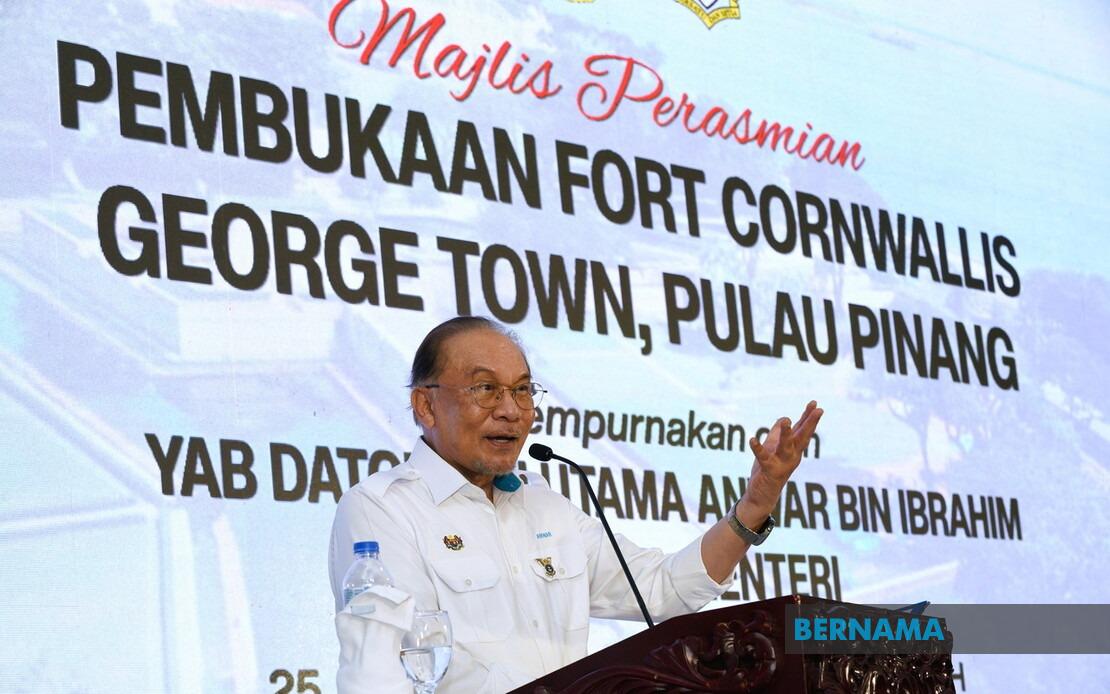
Prime Minister Datuk Seri Anwar Ibrahim has called for a fundamental reimagining of how Malaysia treats its historical sites, arguing that such places should serve as classrooms for national understanding rather than mere scenic backdrops for visitor photos. Speaking at the opening ceremony of Fort Cornwallis in George Town on July 25, the Prime Minister articulated a vision in which young Malaysians visiting heritage locations encounter substantive lessons about the nation's past struggles and achievements, not simply admire architectural features.
The distinction Anwar drew reflects growing concern among policymakers that historical preservation efforts risk becoming hollow commemorative exercises disconnected from their educational potential. When youth visit significant colonial-era monuments, the Prime Minister contended, their experience should encompass narrative context explaining the hardships endured during foreign occupation, the sacrifices made by independence fighters, and the fundamental importance of national cohesion. Without this interpretive layer, historical sites risk serving primarily as Instagram-worthy locations rather than venues for serious civic learning.
Central to Anwar's argument is the need to reclaim Malaysia's historical narrative from the perspective through which colonisers documented it. He emphasised that the country's past should be understood through the lived experiences and suffering of the Malaysian people themselves, not filtered through the colonial administrators' records or interpretations. This reframing carries particular significance for Southeast Asian nations, where colonial archives often marginalised indigenous agency and resistance movements. By presenting history from the colonised perspective, Malaysia can provide younger citizens with a more authentic understanding of their national heritage.
The reopening of Fort Cornwallis presented a timely opportunity for Anwar to advance this argument. Rather than portraying conservation efforts as nostalgia for colonial architecture, he positioned the fort's preservation as a vehicle for critical historical consciousness. The fort, originally constructed as a British military installation, becomes meaningful not as an object of aesthetic appreciation but as a tangible reminder of foreign domination and the necessity of collective resistance against external subjugation.
Anwar highlighted how historical education rooted in actual experiences of colonisation carries particular lessons for contemporary Malaysia. A population educated about the costs of disunity and internal division, he suggested, would better appreciate the fragile consensus that maintains Malaysia's multicommunal stability. The colonial period demonstrated what happens when a society lacks internal strength and cohesion—external powers exploit these weaknesses to serve their strategic interests rather than the population's welfare. This historical pattern remains relevant as Malaysia navigates regional geopolitics and economic competition.
The Prime Minister's comments also address the responsibility of the current generation to maintain the gains secured through independence. By deepening younger Malaysians' understanding of the sacrifices made by previous generations, historical education can foster appreciation for national sovereignty and motivate commitment to strengthening racial harmony. This intergenerational transmission of historical consciousness becomes essential as those who directly experienced colonisation and independence struggle pass from the scene.
Implementing Anwar's vision would require substantial changes to how Malaysia manages its historical sites. Rather than relying on placards with dates and names, institutions would need trained educators capable of contextualising monuments within broader narratives of resistance, suffering, and nation-building. Curriculum connections could ensure school groups visiting heritage sites engage with structured learning objectives rather than casual sightseeing. Digital resources could provide multilingual interpretations accessible to diverse visitors.
The approach also has implications for Malaysia's tourism sector and heritage preservation funding. Reframing historical sites as educational institutions rather than tourist attractions does not necessarily reduce visitor numbers, but it does shift priorities. Sites would be designed and operated primarily to serve learning outcomes, with tourism revenue representing a secondary benefit rather than the driving motivation. This reorientation could actually enhance Malaysia's reputation internationally as a country serious about historical memory and civic education.
For Southeast Asia more broadly, Anwar's remarks contribute to ongoing debates about decolonising history and education. Throughout the region, nations grapple with how to engage heritage from colonial periods without either glorifying foreign domination or erasing historical complexity. Malaysia's approach—using preserved colonial sites as platforms for teaching about resistance and independence—offers one model for this balance. It acknowledges that colonialism was real and consequential whilst rejecting both nostalgia for colonial rule and the erasure of colonial history entirely.
The Prime Minister's emphasis on rebuilding historical narratives relevant to contemporary society also recognises that history serves present purposes. Malaysian identity, national unity, and regional positioning all connect to how citizens understand their past. Historical education that strengthens commitment to multicommunal coexistence and national sovereignty serves Malaysia's current interests far more effectively than tourism-focused heritage management that treats historical sites as archaeological curiosities disconnected from present concerns.
Implementing this vision will require sustained commitment beyond ceremonial speeches. Government agencies responsible for heritage conservation, cultural institutions, and educational departments must coordinate to embed educational missions within site management. Funding mechanisms need to support interpretive infrastructure and educator training rather than prioritising visitor amenities. Political will must translate rhetoric into institutional change, ensuring that when young Malaysians visit Fort Cornwallis and similar sites, they encounter the substantive historical education the Prime Minister envisions.

