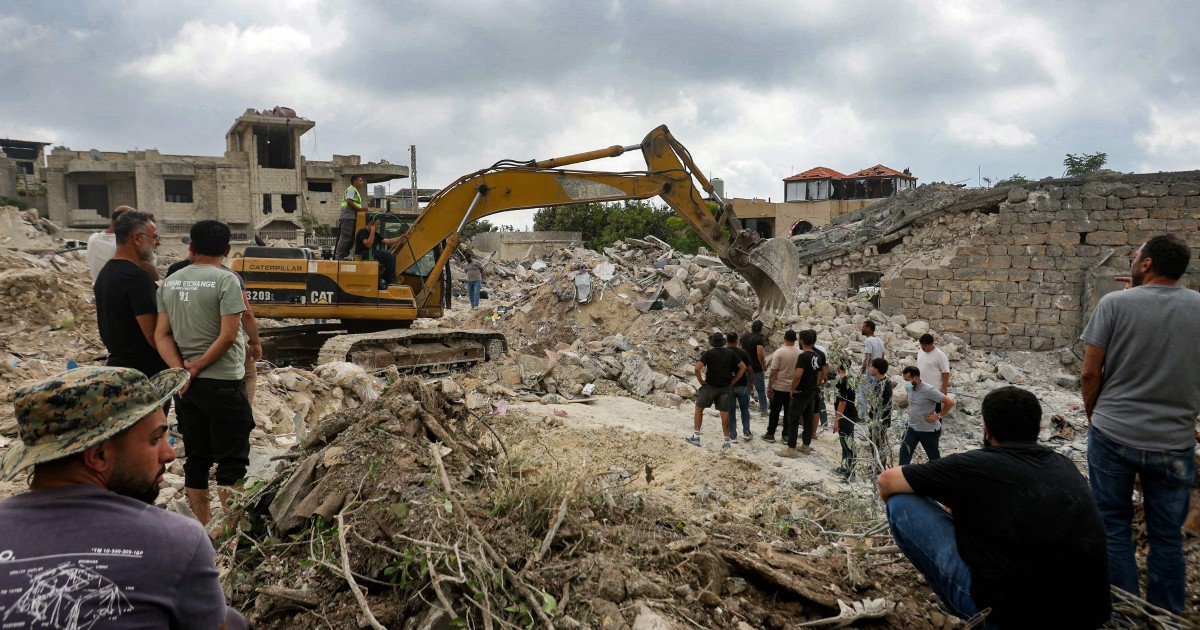
The Lebanese militant group Hizbollah mounted a direct challenge on Sunday to Israel's stated intentions regarding its military footprint in southern Lebanon, with the organisation's leader Naim Qassem firmly denouncing what he characterised as an Israeli security zone. This declaration came in response to Israeli Prime Minister Benjamin Netanyahu's recent assurances to his own government that Israeli forces would occupy the country's southern territories for whatever duration proves necessary to achieve Israeli security objectives.
The escalating rhetoric between Hizbollah and Israeli leadership underscores the precarious situation along the Lebanese-Israeli border, a region that has endured cycles of armed conflict and fragile ceasefire arrangements. Qassem's categorical rejection of any Israeli military demarcation zone signals that the militant group views such arrangements as fundamentally unacceptable to Lebanese sovereignty and its own operational interests. The statement reflects Hizbollah's refusal to tolerate what it perceives as Israeli occupation or military encroachment that would circumvent Lebanon's territorial integrity.
Netanyahu's commitment to prolonged military presence in southern Lebanon represents a policy shift that goes beyond temporary operational deployments. His declaration that troops would remain "as long as necessary" effectively leaves open-ended Israel's timeline for withdrawal, contingent upon undefined security conditions. This approach mirrors historical Israeli military strategies in the region, where initial interventions have sometimes extended far beyond their originally projected durations. For Lebanon—already struggling with economic collapse, institutional dysfunction, and the burdens of hosting millions of Syrian refugees—the prospect of an indefinite Israeli military presence in its southern territories compounds existing state fragility.
The Lebanese-Israeli border represents one of the Middle East's most militarised and sensitive flashpoints. Southern Lebanon has served historically as a theatre for proxy conflicts, harbouring various armed groups and becoming a staging ground for cross-border operations. Israel views its southern border security as paramount, citing threats from Hizbollah's accumulated arsenal and the group's demonstrated capability to strike Israeli territory. Conversely, Hizbollah and Lebanese nationalism broadly frame Israeli military activities in Lebanese territory as violations of sovereignty requiring popular resistance.
The concept of a "security zone" carries particular resonance in Lebanese collective memory, evoking Israel's 1982-2000 occupation of southern Lebanon. That extended presence, supposedly designed to create a buffer against cross-border attacks, resulted in prolonged conflict, significant civilian casualties, and became a rallying point for Hizbollah's formation and subsequent military operations. The invocation of security zones in contemporary discussions thus triggers deep historical sensitivities and shapes how Lebanese interpret Israeli security proposals. Qassem's rejection implicitly references this historical experience, signalling that Hizbollah will not acquiesce to arrangements resembling previous occupations.
Regional implications extend beyond bilateral Lebanese-Israeli dynamics. The wider Middle East faces competing strategic interests regarding Lebanon's stability and its role within regional power balances. Iran, a key Hizbollah sponsor, has vested interests in preventing Israeli military consolidation along Lebanese territory. Meanwhile, Gulf Arab states, already concerned about Iranian regional influence, view Lebanon's instability as potentially advantageous to their geopolitical positioning. For smaller Southeast Asian states, this escalation demonstrates how regional conflicts in the Middle East can affect global stability, energy markets, and international security architecture.
The international community, including major powers with Middle East interests, faces pressure to mediate or prevent further escalation. The United States maintains significant regional military presence and alliance commitments with Israel, while European nations seek conflict de-escalation and Lebanese state reconstruction. The United Nations Interim Force in Lebanon operates within this contested space, tasked with monitoring ceasefire arrangements and preventing cross-border incidents, yet working within severe operational constraints.
From Malaysia's perspective as a regional power concerned with Middle Eastern stability, this particular escalation raises questions about whether conflicts in that region will precipitate broader international involvement requiring Malaysia's diplomatic engagement. Malaysian foreign policy has historically emphasised peaceful conflict resolution and respect for territorial sovereignty, principles directly relevant to assessing the Lebanon-Israel dispute. Malaysia's substantial Muslim population also maintains emotional and religious connections to regional conflicts, making Lebanese stability a matter of domestic political concern alongside international relations considerations.
The fundamental disagreement between Israeli security priorities and Lebanese sovereignty claims remains unresolved. Israel contends that threats emanating from southern Lebanese territory necessitate military control or at minimum sustained military presence and monitoring. Hizbollah and Lebanese nationalist forces maintain that any Israeli military arrangement on Lebanese soil, regardless of its stated limited nature or duration, constitutes unacceptable infringement upon national independence. This mutual incompatibility suggests that the current escalatory cycle may intensify absent external diplomatic intervention that addresses underlying security anxieties on both sides whilst respecting Lebanese territorial integrity.
Qassem's statement carries additional weight as an explicit challenge to Netanyahu's authority and a public reassertion of Hizbollah's commitment to resisting Israeli military expansion. Such declarations, whilst primarily directed at domestic Lebanese and regional audiences, also communicate resolve to Israel and influence how Israeli policymakers calculate the costs and benefits of extended military deployment. The coming weeks will reveal whether both parties seek diplomatic off-ramps or whether escalation continues, with profound implications for regional stability.

