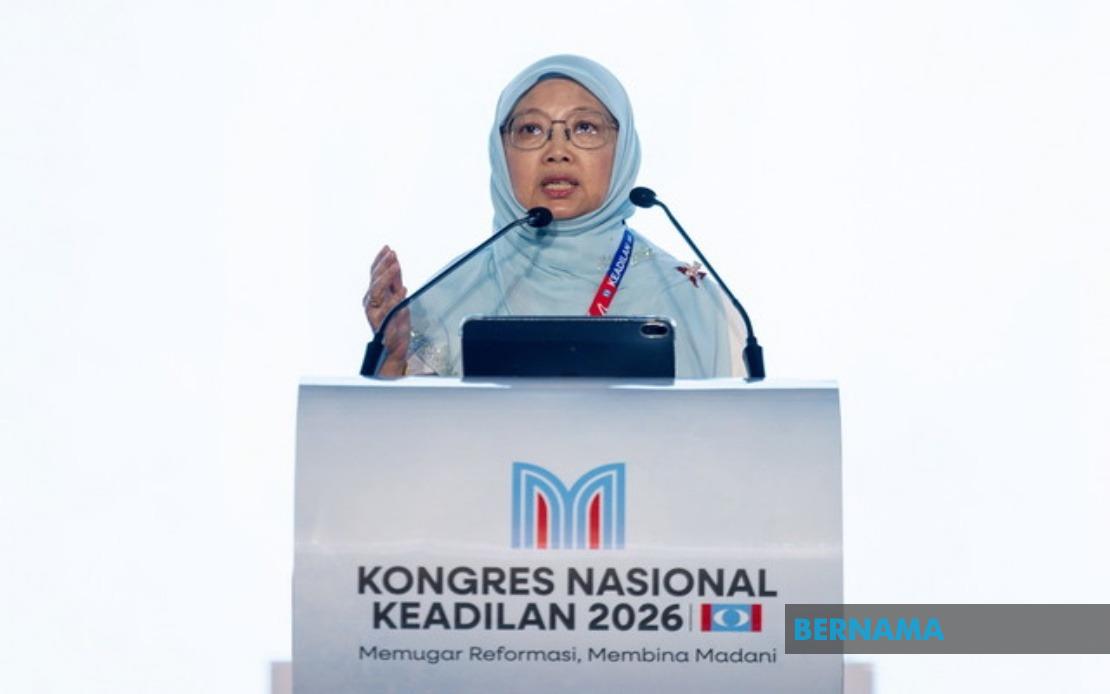
Governing a nation presents an entirely different challenge from campaigning for change, according to Parti Keadilan Rakyat vice president Datuk Seri Dr Zaliha Mustafa, who has repositioned PKR's reformasi agenda as the real work of transformation rather than merely securing electoral victory. Speaking at the PKR 2026 National Congress in Melaka this week, Zaliha delivered a sobering assessment of what it means for the party to have transitioned from opposition challenger to governing coalition member, framing the journey ahead as far more demanding than the decades of agitation that preceded it.
The nature of reformasi itself requires fundamental recalibration as PKR navigates its expanded responsibilities, Zaliha suggested. For 27 years, the party's primary mission centred on dismantling what it characterised as a flawed system of governance, but that ideological clarity becomes murkier once implementation becomes the order of the day. She rejected the notion that the reformasi struggle was ever merely about occupying state institutions, emphasizing instead that meaningful change demands a systematic overhaul of how Malaysia's governance structures operate at every level. This distinction carries significant weight, especially given that many observers have questioned whether PKR and its coalition partners possess the political capital and institutional cohesion to execute substantive reforms once the initial momentum of electoral victory fades.
With PKR now embedded within the machinery of state, the party shoulders obligations that extend well beyond crafting opposition rhetoric. Zaliha outlined three interconnected responsibilities: institutional strengthening and improved governance frameworks, a sustained campaign against corruption and the abuse of power, and ensuring that ordinary Malaysians across all socioeconomic strata experience the tangible benefits of reform. This represents a qualitative shift from opposition politics, where criticism and alternative policy proposals suffice. In government, failure to deliver becomes increasingly visible and attributable directly to the governing coalition rather than blamed on predecessor administrations or structural obstacles.
Perhaps most significantly, Zaliha called upon PKR members to develop what she termed "wisdom" in executing reforms—a recognition that wholesale institutional transformation overnight risks destabilising the entire system and generating backlash that could undermine the broader agenda. Drawing on the historical precedent of Khalifah Umar Abdul Aziz, referenced earlier by PKR president Datuk Seri Anwar Ibrahim, she advocated for a phased approach that distinguishes between immediate changes requiring minimal groundwork and longer-term structural reforms demanding careful negotiation and preparatory work. This gradualism, she insisted, should not be mistaken for dilution of commitment or loss of nerve; rather, it represents a strategic understanding that sustainable change requires building consensus and ensuring that reforms take root deeply enough to survive future political transitions.
The challenge of pace and sequencing looms large for Malaysian reform efforts, particularly given the ideological distance between PKR's stated ambitions and the pragmatic constraints of coalition politics. Southeast Asian democracies frequently encounter this friction between transformative rhetoric and incremental reality, and Malaysia's experience will offer instructive lessons for neighbouring countries navigating similar transitions. The question of which reforms materialise immediately versus which recede into longer timelines will signal whether PKR genuinely prioritises structural change or whether governing compromises have already begun reshaping the agenda.
Zaliha also highlighted a critical vulnerability in PKR's current position: the party's struggle to translate governmental achievements into popular understanding and support. She acknowledged that policy implementation alone guarantees neither public awareness nor endorsement, and that the party has underperformed in communicating its work to ordinary Malaysians. This communication gap threatens to undermine even successfully executed reforms if the public remains ignorant of their impact or attributes improvements to other factors. For a party whose legitimacy rests partly on its claim to represent the interests of ordinary citizens previously excluded from political voice, failing to maintain narrative control represents an existential risk to its political standing.
The competition for narrative supremacy extends into social media spaces, where opposition parties continue to exercise considerable influence and reach. Zaliha urged PKR to develop more sophisticated, rapid, and accessible messaging strategies rather than ceding digital platforms to its critics. This battle for hearts and minds operates on a different temporal register than policy formulation: whereas reforms might unfold over years, the daily social media contest occurs in real time and shapes public perception far more immediately. Malaysian political parties have increasingly recognised that winning elections requires winning arguments, and winning arguments increasingly happens on platforms where PKR has not historically dominated.
The broader context shaping these concerns involves the fundamental instability of Malaysia's coalition politics and the fragility of reform mandates. Unlike countries where single parties command decisive majorities, Malaysian governing coalitions assemble diverse interests that frequently diverge on reform priorities. PKR must negotiate not only with coalition partners but also manage expectations within its own membership, many of whom joined precisely because they believed fundamental transformation was imminent. The gap between membership expectations and governmental reality threatens internal cohesion even as external political pressures mount.
Zaliha's remarks ultimately reflect a maturing reckoning within PKR about the distance between opposition idealism and governing pragmatism. The party's capacity to navigate this terrain—maintaining reform momentum while exercising realistic patience, communicating achievements while managing expectations, and retaining internal discipline while adapting to coalition necessities—will determine whether the 27-year reformasi struggle evolves into lasting institutional change or becomes merely another chapter in Malaysia's pattern of unfulfilled political transformations. The test ahead is not whether PKR can govern competently, but whether governing allows the party to pursue the structural changes that justified its decades-long struggle for power.

