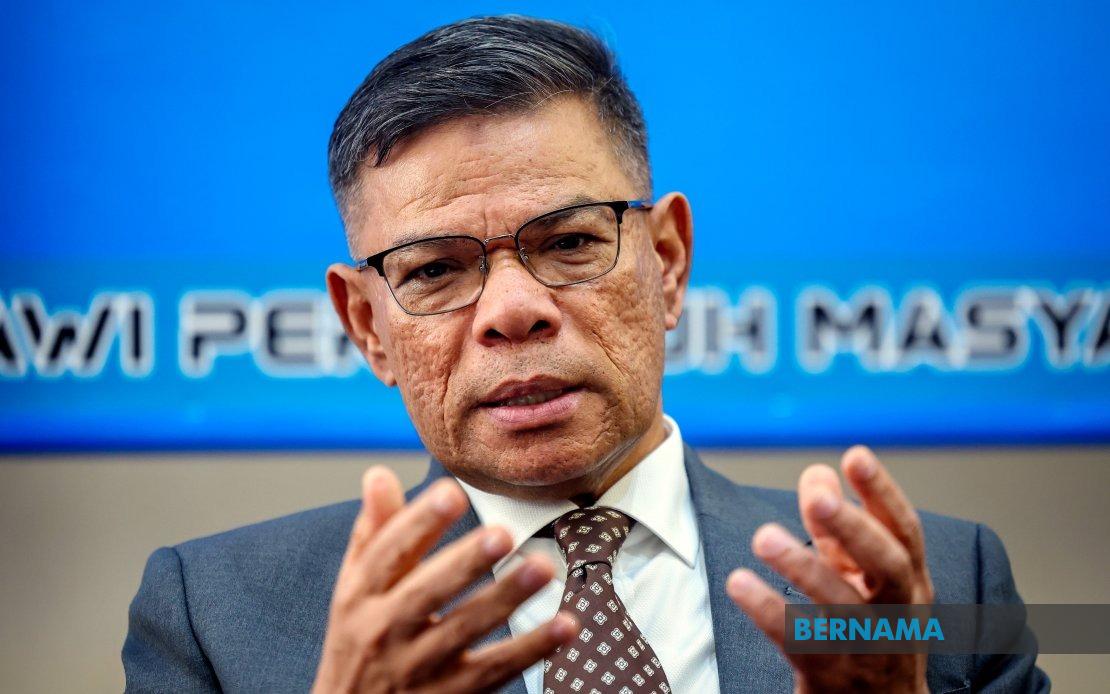
The Home Ministry has committed to sustaining dialogue with key stakeholders before bringing forward revised amendments to the Prisons Act, according to minister Datuk Seri Saifuddin Nasution Ismail. Speaking in Putrajaya on July 27, he emphasised that the government intends to resolve widespread misunderstandings about proposed reforms that would extend legal protections to prison officers operating within the bounds of their authority. His statement addresses growing concerns among civil society groups and parliamentarians that the legislation could amount to a blanket immunity clause for custodial staff.
The proposed amendments have attracted significant criticism from non-governmental organisations and Members of Parliament who view the protections as potentially problematic. Saifuddin Nasution stressed that the initiative differs fundamentally from a blanket immunity framework. Instead, the government seeks to ensure officers who discharge their duties in accordance with the Act receive appropriate legal safeguards. He acknowledged that the framing of the proposals had generated confusion, necessitating clearer public communication about the true intention behind the reforms.
The Prisons (Amendment) Bill 2026 was previously scheduled for parliamentary tabling but has been postponed to enable the Parliamentary Special Select Committee to conduct deeper examination. This deliberate slowdown reflects recognition that the reforms require broader consensus before advancing through the legislative process. The government's willingness to extend the consultation phase signals openness to refining the language and scope of protections to satisfy sceptics who worry about potential gaps in accountability mechanisms.
Beyond legal protections for officers, the proposed amendments encompass several other initiatives aimed at modernising the prison system. The use of electronic monitoring technology to supervise designated inmates represents one technological upgrade. The establishment of volunteer schemes to reinforce rehabilitation programmes demonstrates commitment to supplementing professional staff capacity. These elements collectively suggest the government views the amendments as part of a broader modernisation agenda rather than purely a defensive measure for the custodial workforce.
Saifuddin Nasution highlighted that numerous other Malaysian statutes contain comparable protective provisions for public officials executing statutory duties. He framed this precedent as evidence of consistency across the legislative framework rather than an exceptional concession to the Prisons Department. This comparative approach attempts to normalise the proposal within established legal principles governing how governments protect civil servants against frivolous or malicious litigation arising from lawful actions performed in their official capacities.
The minister invoked specific case examples to illustrate why the amendments have become necessary. One instance involved a prison director facing legal action after overseeing a court-ordered caning that resulted in the inmate's subsequent death. Another scenario comprised cases where prisoners died during their sleep, with medical investigations confirming absence of misconduct, yet the responsible officers nonetheless faced lawsuits. These narratives suggest that without protective amendments, prison personnel could face sustained legal jeopardy despite acting entirely within their mandate and without negligence or wrongdoing.
Significantly, Saifuddin Nasution confirmed that the amendments would not shield officers from legal consequences for negligence or violations of law. He pointed to the Taiping Prison riot as evidence of ongoing accountability mechanisms. That incident triggered investigation by the Human Rights Commission of Malaysia, police inquiries, and internal disciplinary proceedings, demonstrating that the system maintains multiple layers of oversight and sanction. This example serves as reassurance that proposed reforms need not create a prosecutorial vacuum where serious misconduct goes unanswered.
The distinction between legal protection and legal immunity represents the crux of the government's argument. Protections for good-faith action would shield officers from technical liability when they act within authority and without negligence, whereas immunity would prevent all litigation regardless of circumstances. The minister contended that the proposed amendments address the former concern, not the latter objective. This conceptual differentiation underpins the government's counter-argument against critics who equate the reforms with blanket exoneration.
For Malaysian prison reform advocates and human rights observers, the extended consultation period offers opportunity to shape the final legislative language. The willingness to re-engage before retabling suggests the government recognises that lasting implementation requires broader buy-in than what parliament alone can provide. By bringing stakeholders into the refinement process, the authorities hope to craft amendments that balance officer protection against legitimate oversight. This approach aligns with international best practices in prison governance, which increasingly emphasise procedural fairness and transparent accountability alongside operational support for custodial staff. The outcome of these consultations will likely influence how regional neighbours, already monitoring Malaysia's prison reform trajectory, assess the country's commitment to maintaining independent oversight of law enforcement and correctional institutions.

