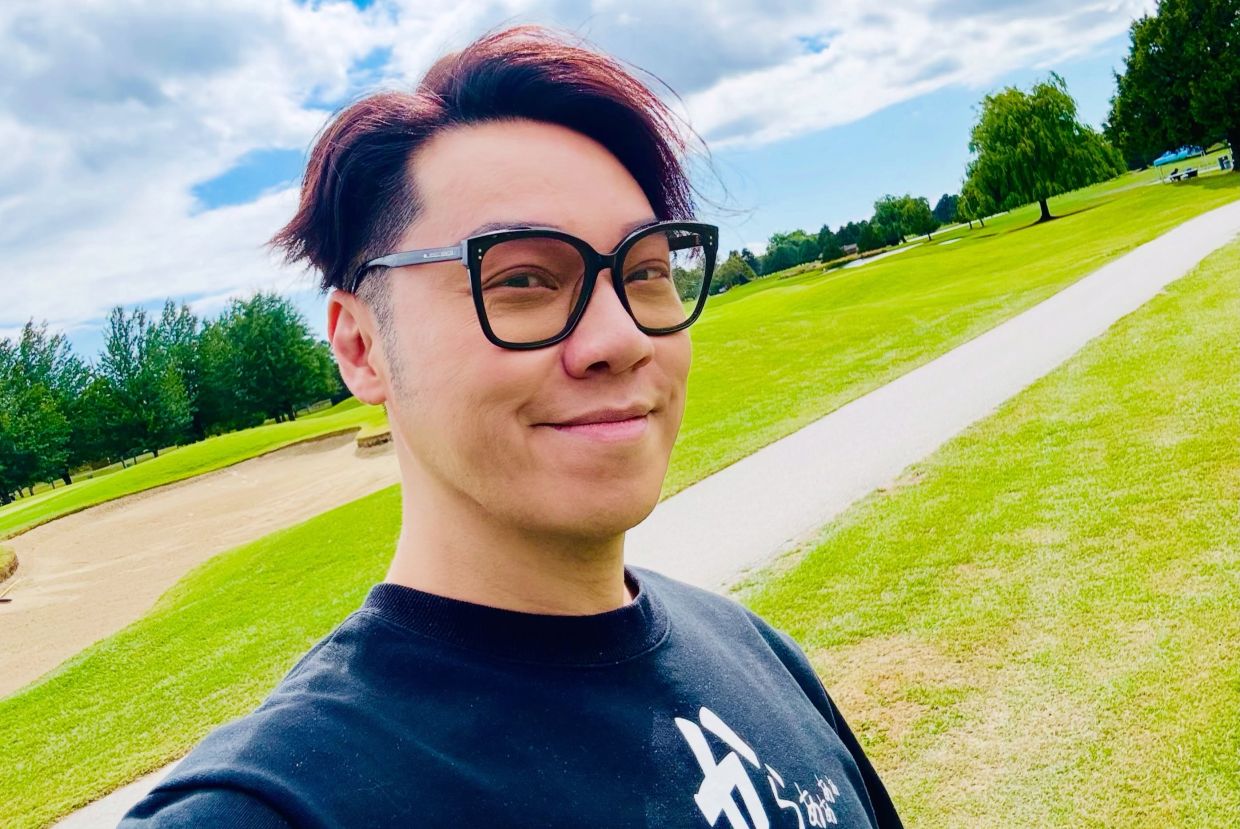
Hong Kong actor Vinci Wong appears to be charting a fresh course overseas, relocating to Canada after navigating a financially turbulent period that culminated in formal bankruptcy proceedings. The 55-year-old television and film performer, whose career once flourished as a fixture on local screens, has emerged from legal and financial difficulties by seeking opportunity in North America, a continent where he maintains existing connections from an earlier chapter of his professional journey.
Wong's bankruptcy ordeal unfolded across the closing months of last year and into early 2024, when Hong Kong's High Court formally declared him insolvent in March. The financial collapse stemmed from a significant debt dispute with a credit firm, which initiated legal action against the actor for his alleged failure to settle an unsecured loan valued at HK$2.8 million—equivalent to approximately RM1.46 million. Rather than contest the claim, Wong filed for bankruptcy in December 2024, a decision that effectively restructured his financial obligations and marked a turning point in his personal circumstances.
Recent social media activity suggests that Wong has transitioned from the distressing bankruptcy process to a period of deliberate reconstruction and perspective-gathering. Through Instagram, the former TVB performer shared photographs and video content documenting his time in Canada, paired with introspective commentary that reflects his current emotional and philosophical state. His posts indicate that he is actively reconnecting with acquaintances from the entertainment sector based in the country, suggesting that existing professional networks may be anchoring his new beginning and potentially opening doors to fresh opportunities in North American media industries.
The actor's written reflections, accompanying his social media updates, convey a deeply personal meditation on adversity and resilience. Wong employed metaphorical language to describe the preceding months as an unexpected deluge, arriving abruptly and departing without pause—a vivid characterization of how sudden and uncontrollable financial and legal setbacks can feel to those experiencing them. By framing recent upheavals as part of a broader life narrative, he suggests a conscious effort to contextualize his challenges within a larger framework of personal growth and evolution.
Wong's philosophical commentary demonstrates an acceptance of change as an inherent feature of human experience rather than an aberration to be resisted. He acknowledged that significant turning points do not always present themselves with the luxury of measured responses or strategic planning. Instead, he emphasized that individuals frequently face disruption with limited control, a sentiment that will resonate with others who have endured sudden reversals of fortune. This realistic acceptance stands in contrast to more sanitized narratives of comebacks that downplay the genuine difficulty of navigating major life transitions.
Central to Wong's reflections is a reframing of previously insurmountable challenges as integrated components of his ongoing personal development. He described how obstacles that once appeared insurmountable have transformed into familiar terrain, essentially becoming the foundation upon which he continues to build. This psychological reorientation—converting retrospective suffering into constructive meaning—represents a common adaptive response among individuals recovering from major setbacks, allowing past pain to serve as evidence of capability and endurance rather than residual trauma.
The actor's biographical trajectory provides additional context for his relocation decision. Wong previously maintained residence in Vancouver before returning to Hong Kong to pursue intensive acting work, suggesting established familiarity with Canadian life and pre-existing social infrastructure. His return to Canada therefore represents a form of geographic and professional regression to a previously inhabited space, but one undertaken from a substantially altered personal position. This move combines elements of retreat and strategic repositioning, allowing him to recalibrate outside the intense scrutiny of Hong Kong's entertainment sector while remaining connected to industry contacts who may facilitate professional opportunities.
Wong's bankruptcy case illuminates broader financial vulnerabilities that can affect high-profile individuals in Hong Kong's entertainment industry. Even established performers with decades of screen presence and name recognition remain exposed to unexpected debt obligations and liquidity crises. The specific circumstances of his case—a contested unsecured loan from a credit firm—suggest potential issues with personal financial management or circumstances that remain partially undisclosed. His formal insolvency resolution through the court system provides legal closure but necessitates genuine economic restart rather than mere reputation rehabilitation.
For Malaysian audiences, Wong's situation carries particular resonance given parallels within our regional entertainment ecosystem and shared cultural contexts between Hong Kong and Malaysia. The bankruptcy case underscores how financial mismanagement or unexpected obligations can devastate even established media personalities, a cautionary narrative relevant to Malaysian celebrities navigating complex financial landscapes. Additionally, Wong's deliberate geographic displacement to initiate personal recovery reflects broader patterns of regional migration among Southeast Asian entertainment professionals seeking fresh opportunities and temporary distance from previous contexts.
Wong's public gratitude toward individuals who provided support during his difficulties represents an important acknowledgment of social capital's role in recovery processes. Rather than presenting himself as entirely self-reliant, he explicitly credited interpersonal relationships as instrumental to weathering his challenging circumstances. This recognition of interdependence contradicts individualistic narratives of triumph and suggests that meaningful recovery necessarily involves sustained connection with supportive networks, whether familial, professional, or circumstantial.
Moving forward, Wong's trajectory in Canada will likely determine whether his relocation constitutes temporary refuge or permanent repositioning. Should he successfully re-establish professional footing in North American entertainment contexts, his case may eventually exemplify cross-Pacific career resilience. Conversely, if he eventually returns to Hong Kong as circumstances stabilize, his sojourn in Canada may represent a necessary interim period of financial stabilization and emotional restoration. Either scenario underscores how contemporary career trajectories, particularly in entertainment sectors, increasingly feature geographic mobility and adaptability as central components of professional sustainability and personal resilience.

